
Last updated September 20, 2026
Free on-site gate assessment - hinges, posts, and your LiftMaster or Nice gate operator checked before anything is quoted
The assessment is free and the quote is the invoice.
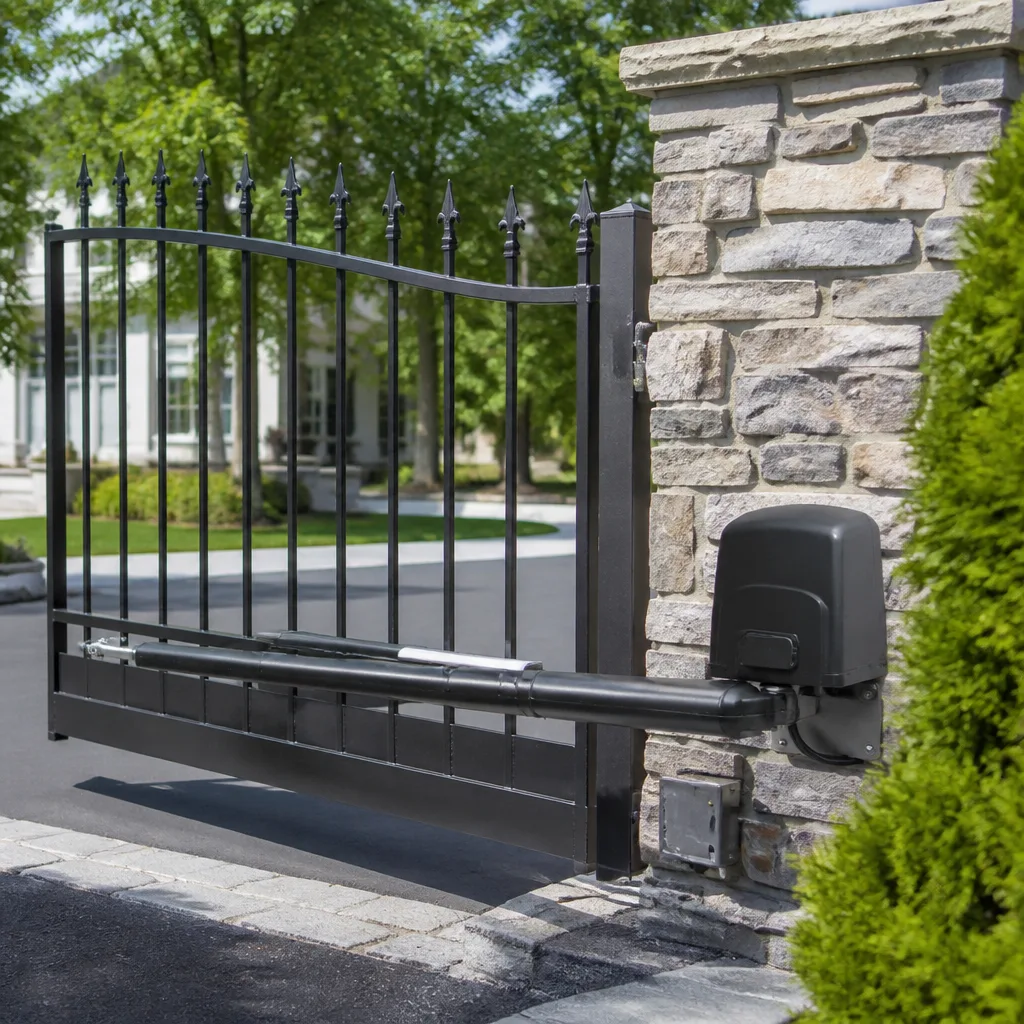
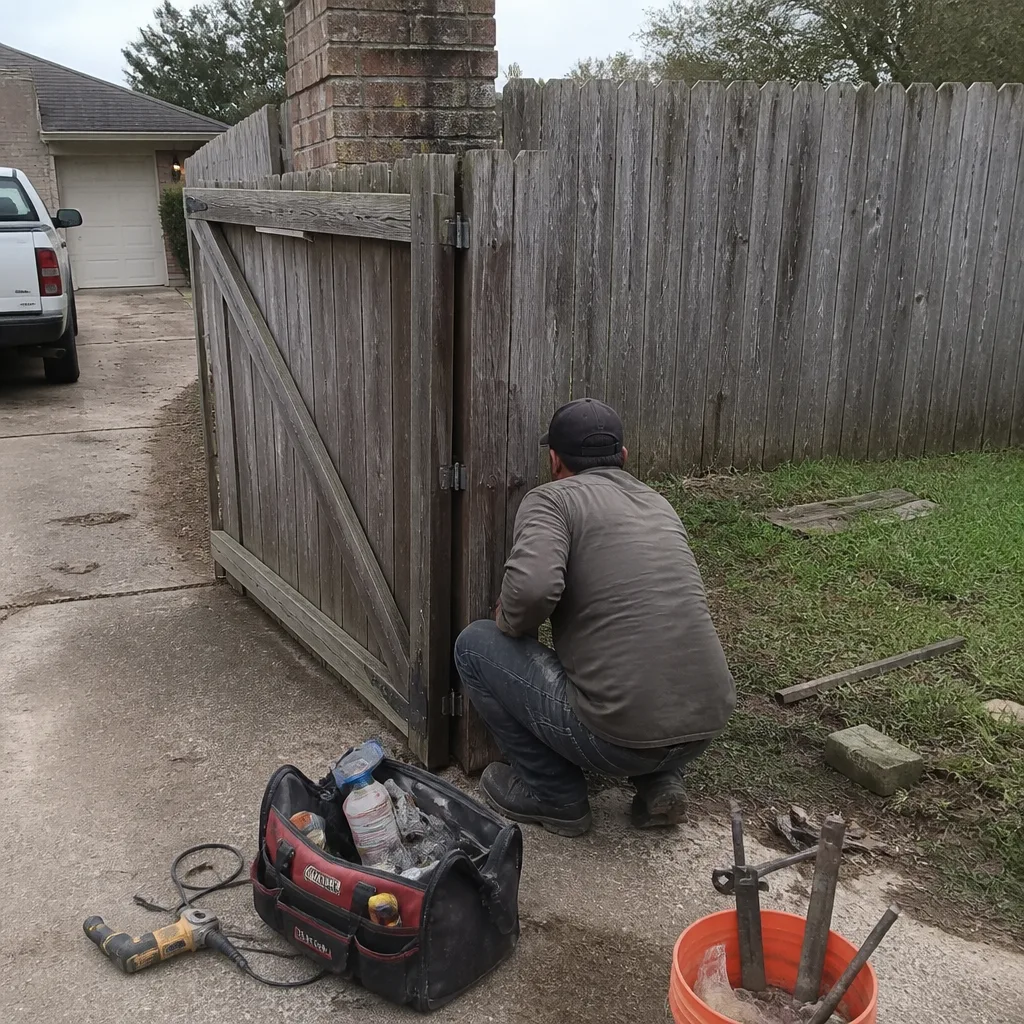 Before
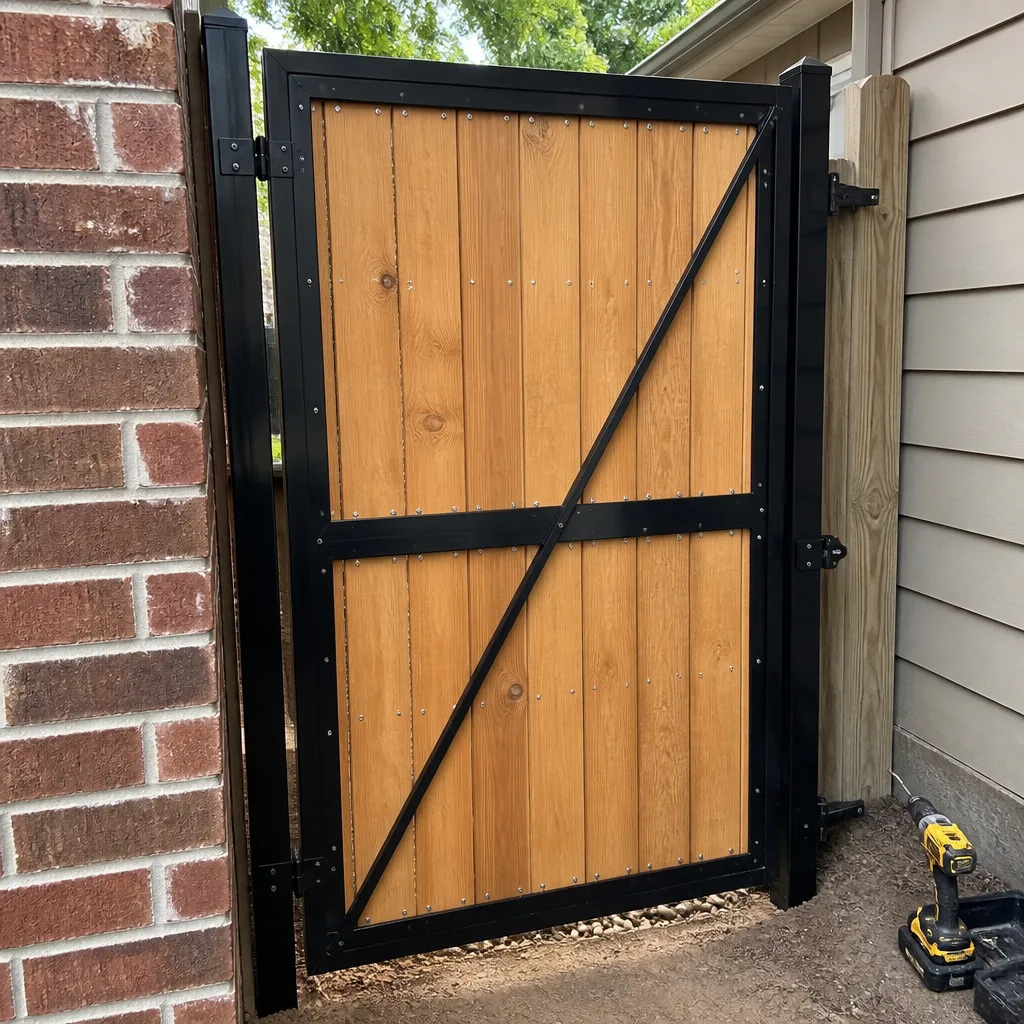 After
After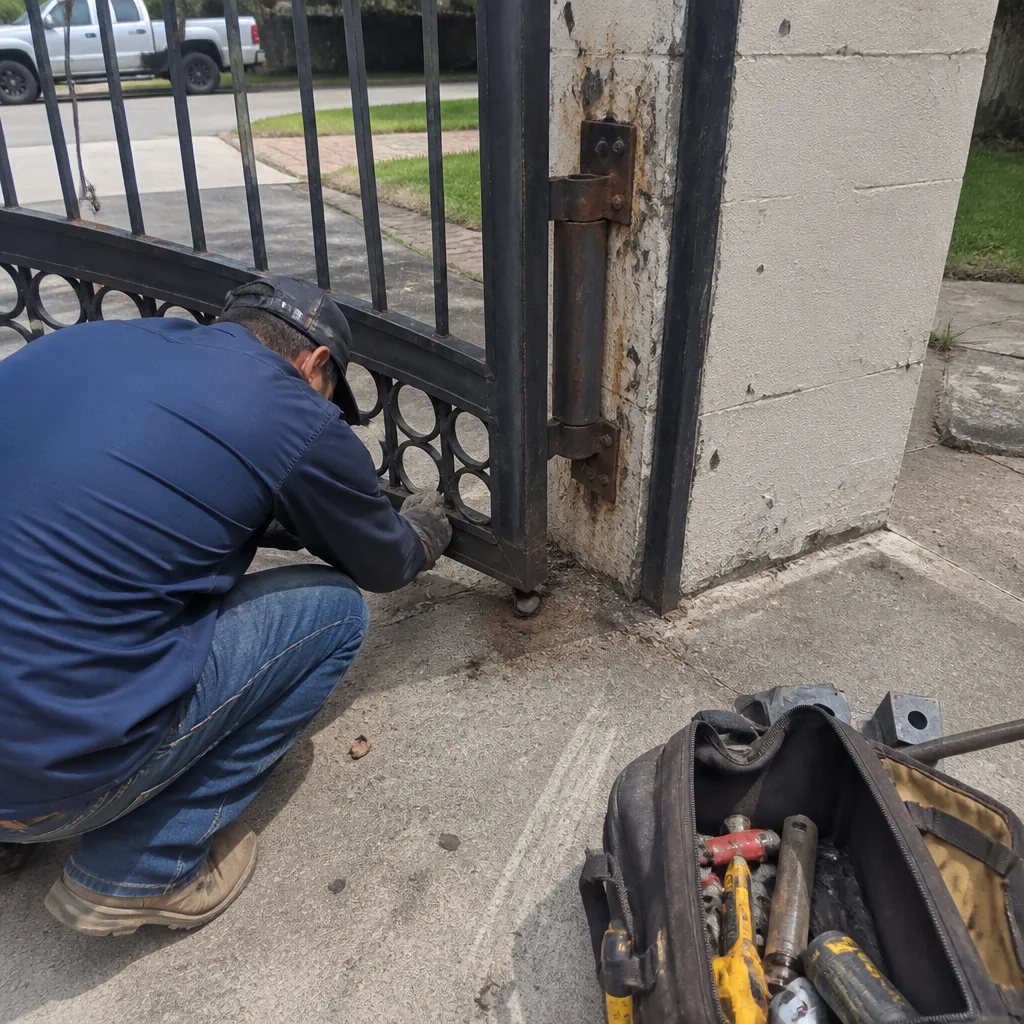 Before
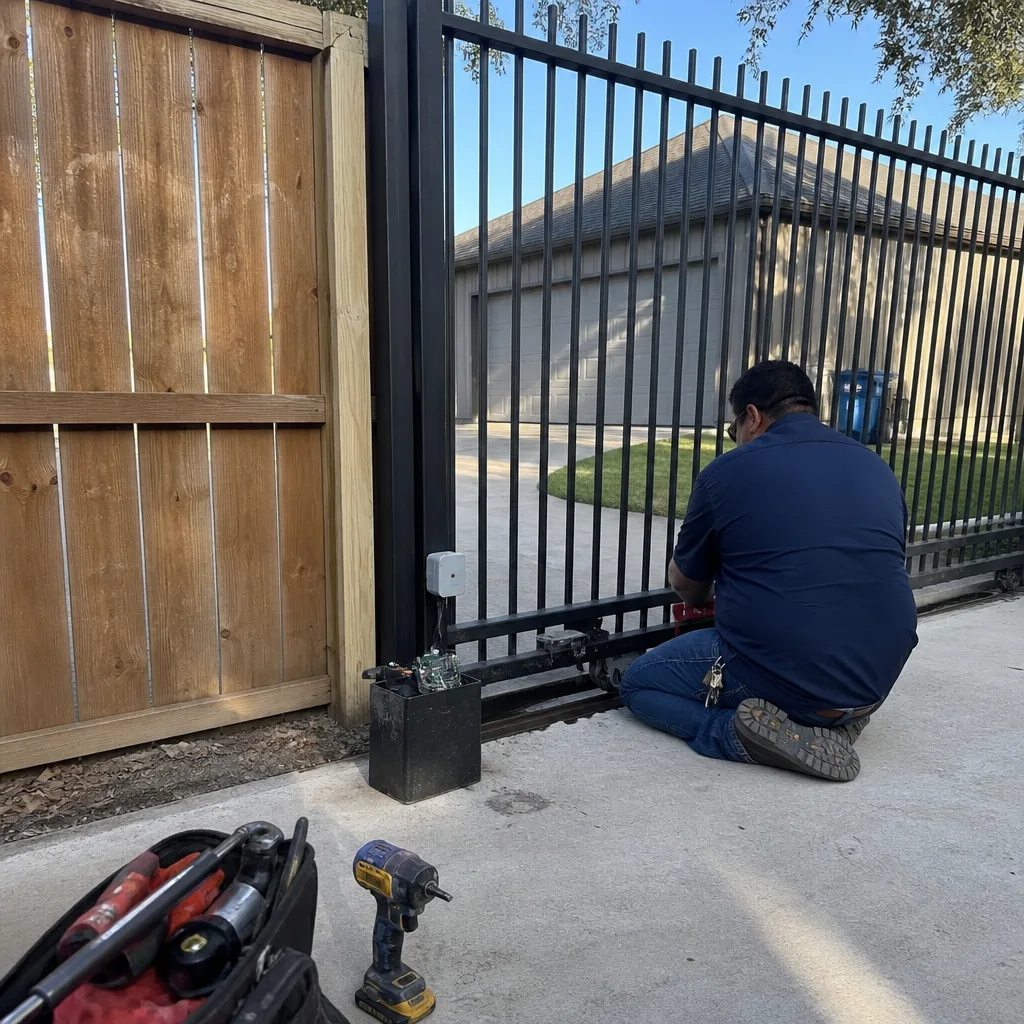 After
After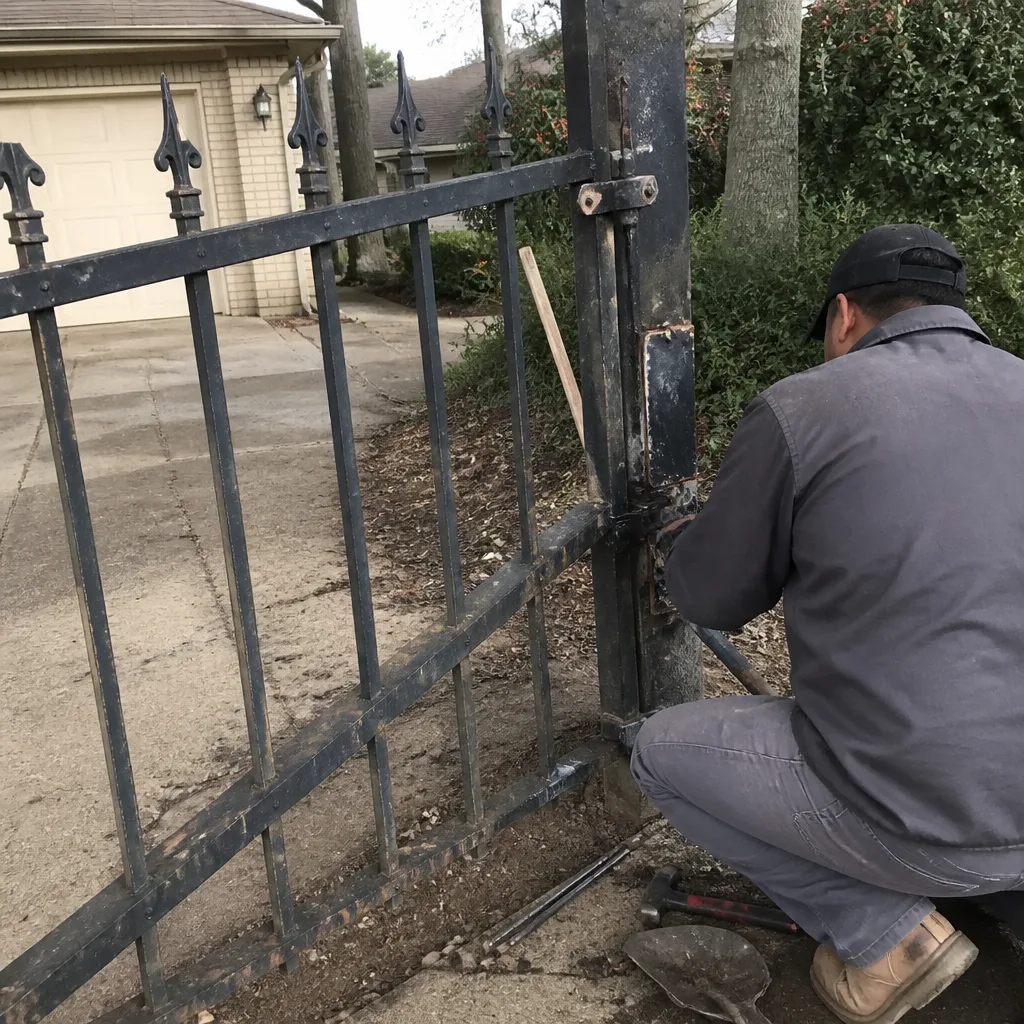 Before
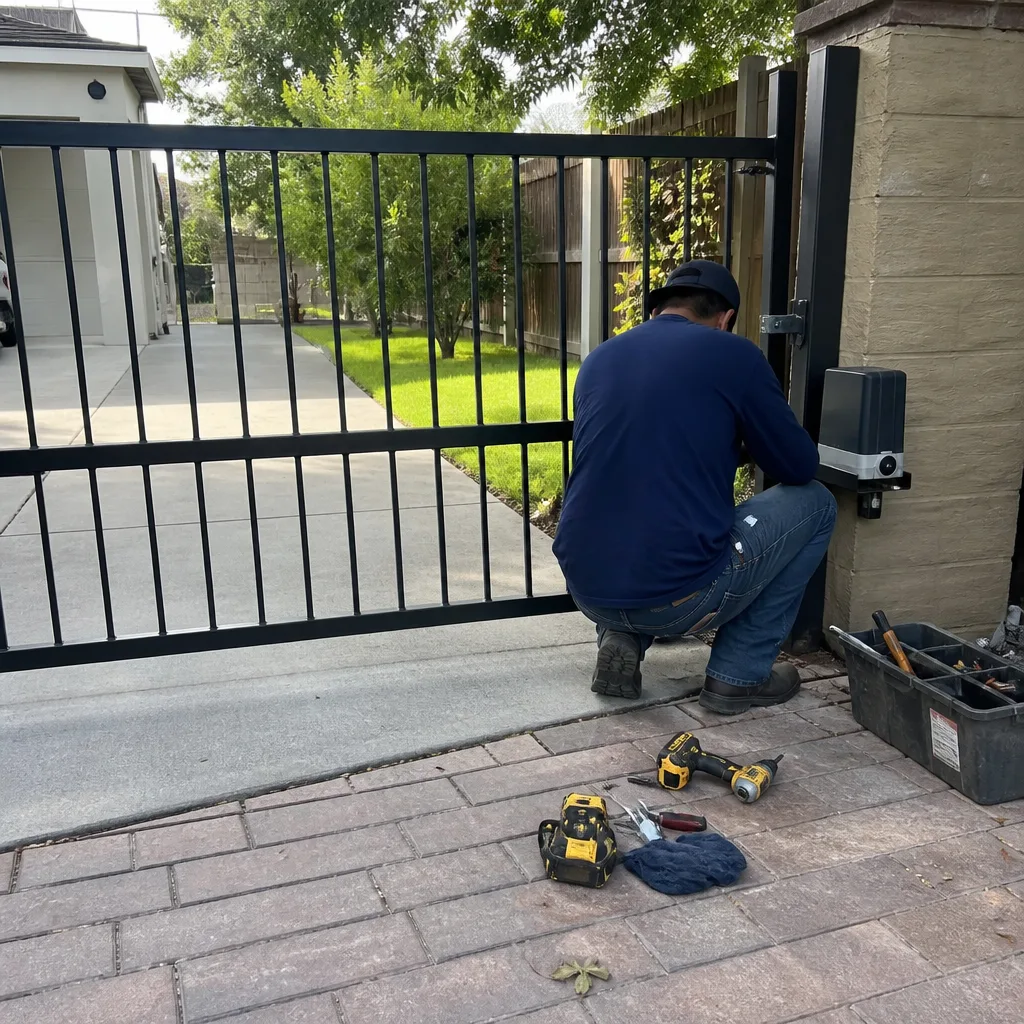 After
AfterGate Repair Permits, Codes & Inspections in TX: What You Need to Know
Most gate contractors in Texas will tell you gate work never needs a permit. They’re right about 70% of the time. The problem is the other 30% clusters around exactly the jobs Katy homeowners are actually paying for: a new motor on a masonry pillar, a fresh power run to the control box, posts set in concrete along a shared fence line. This guide draws the line between mechanical work the county doesn’t regulate and electrical or structural work it does, mapped to the specific rules that apply depending on which side of the Harris-Fort Bend county line your Katy address falls on. We’ll cover permit triggers, inspection sequences, HOA overlays, and the documentation a contractor should hand you before anyone starts digging or wiring.
Quick Answer
Most gate repairs in Texas, including motor swaps on existing brackets and hinge replacements, do not require a permit because they’re classified as routine maintenance. However, any gate project that involves new electrical wiring to a panel, a new circuit, or structural posts set in concrete can require a permit, and Katy addresses split between Harris County and Fort Bend County rules plus HOA overlays that can be stricter than either. Always get a written confirmation from your contractor stating whether the planned scope does or does not trigger a permit requirement.
Table of Contents
- The Harris-Fort Bend County Split: Why Your Zip Code Changes the Answer
- Mechanical vs. Electrical Work: Where the Permit Line Actually Sits
- The Five Specific Triggers That Move Gate Work into Permit Territory
- HOA Overlays in Katy Master-Planned Communities: The Second Layer of Approval
- What the Inspection Sequence Looks Like When a Permit Is Required
- Unpermitted Work and Insurance Claims: What Homeowners Risk
- How to Request Written Permit Confirmation From a Contractor
- Common Mistakes to Avoid
- When to Call a Professional
- Frequently Asked Questions
- The Bottom Line
BeforeAfterThe Harris-Fort Bend County Split: Why Your Zip Code Changes the Answer
Katy is not one jurisdiction. The city’s incorporated limits sit mostly in Harris County, but a large swath of what people call Katy, including neighborhoods along Grand Parkway and south of I-10, falls in Fort Bend County. The two counties enforce different versions of the International Residential Code and, more importantly, different administrative thresholds for what counts as a permit-triggering alteration. Harris County tends to focus permit review on new construction and major electrical service changes. Fort Bend County, particularly in unincorporated areas, has historically been stricter about accessory structures and site work. If you live in Cinco Ranch, Firethorne, or Cross Creek Ranch, you’re in Fort Bend. If you’re in Old Katy, Nottingham Country, or Kelliwood, you’re in Harris. The distinction matters because a gate post footing or a new electrical circuit may be handled differently on one side of the line than the other.
In practical terms, here’s what we’ve seen in both counties. A straightforward hinge weld or a gate repair in Katy that swaps a sagging wheel for a new one crosses no permitting desk in either county. But change the scope to a new operator arm mounted on a brick column where the control box needs its own dedicated circuit, and suddenly the electrical inspector has a reason to be involved. The county line isn’t a paperwork inconvenience. It’s the difference between a job that’s done in an afternoon and a job that needs a rough-in inspection before the wire gets covered.
Mechanical vs. Electrical Work: Where the Permit Line Actually Sits
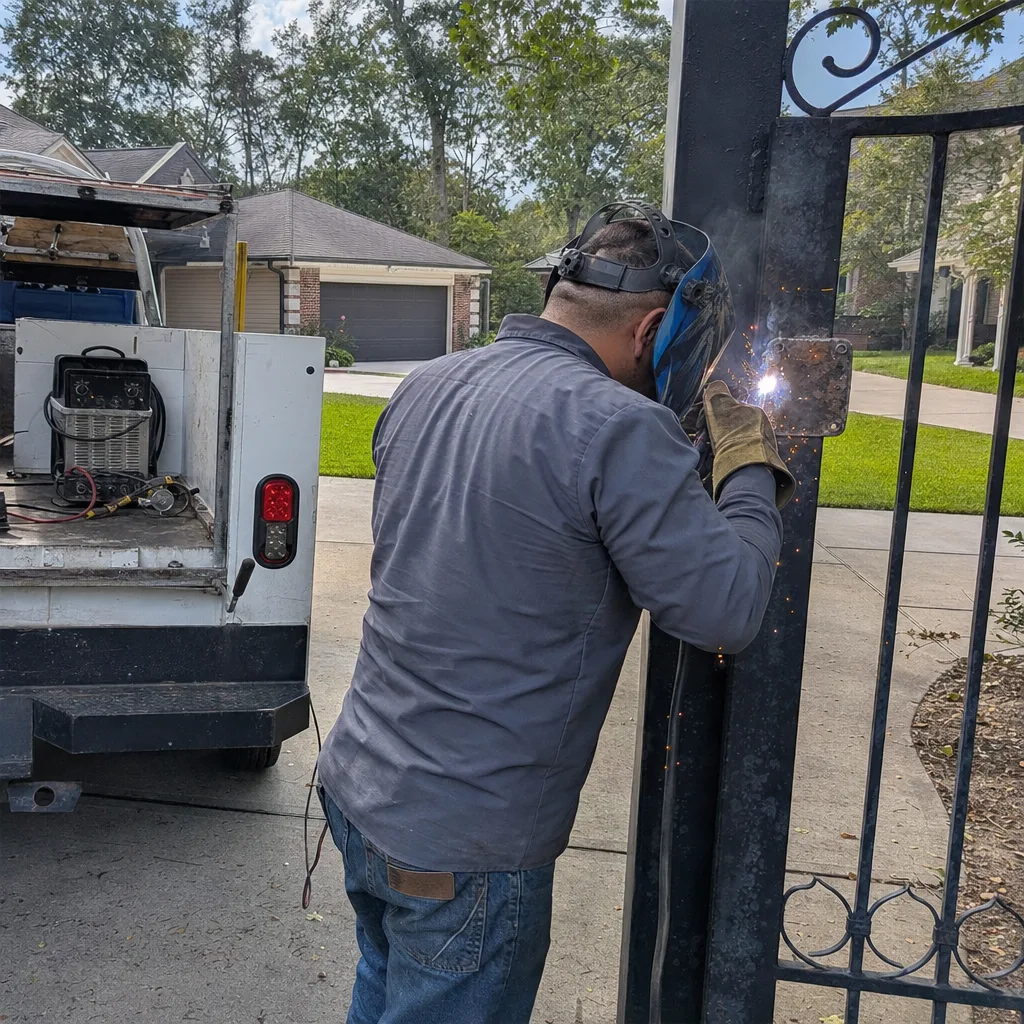
Texas treats gate work as two separate categories: mechanical and electrical. Mechanical work means anything that moves, pivots, hinges, welds, or bolts. A gate leaf off its hinges and rehung, a bent track straightened, a wheel replaced, a chain re-tensioned. None of that requires a permit anywhere in Harris or Fort Bend counties. It’s classified the same as fixing a fence rail or replacing a door hinge.
Electrical work is where the permitting conversation begins. The National Electrical Code, which both counties adopt with local amendments, treats a gate operator as a permanently connected appliance. If the operator is plugged into an existing GFCI-protected outlet that was already there, that’s appliance-level work and generally stays permit-free. But if the job requires running new conduit from a breaker panel, adding a circuit, or replacing an undersized feed, that’s an electrical alteration and both counties want it permitted. The line isn’t the motor. The line is the wire. A gate motor or opener replacement in Katy that reuses the existing electrical feed is a maintenance task. The same motor installed where new wire has to reach the panel is an electrical project.
The same logic applies to low-voltage accessories. A photo-eye (the infrared beam that stops a closing gate when something crosses the path) added to an existing operator runs off low-voltage terminals inside the control board. That’s mechanical accessory work. A keypad that requires a 120-volt outlet installed at the driveway edge crosses into electrical territory. If the device plugs in, it’s an appliance. If the house has to give it power it didn’t have before, that’s a permit.
The Five Specific Triggers That Move Gate Work into Permit Territory
After working on gates across Katy since 2014, including thousands of residential visits, we’ve identified five gate repair warning signs and scope items that consistently flip a job from no-permit to permit-required. These are the triggers to ask about before the work starts:
- New electrical circuit from the panel. If the operator needs a dedicated breaker because the existing circuit is shared with garage outlets or under-sized for the motor’s draw, that’s an electrical permit. Both Harris and Fort Bend counties require it, and the inspection will look at wire gauge, conduit, and whether the disconnect meets NEC 430 requirements for motor circuits.
- Posts or columns set in concrete. A new gate installation that requires digging footings below the frost line, which in Katy is effectively 12 inches but county code often specifies 18-24 inches for gate columns, is structural work. Some counties classify it under fence permits, some under accessory structures. Either way, if concrete is being poured to hold a post, ask.
- Masonry column construction or modification. If the job involves attaching a heavy operator arm to an existing brick or stone pillar, the structural loading changes. Fort Bend County in particular has asked for engineering letters on masonry gate columns over 6 feet tall. Harris County tends to be lighter here, but HOA architectural committees in both counties treat this as a review item regardless.
- New power run from the house to the gate. This is the most commonly missed trigger. A homeowner decides to automate a previously manual gate, which means trenching a line from the panel or an exterior outlet to the gate post. The trench depth, conduit type, and burial method are all code items under NEC 300.5. Unpermitted direct-burial cable at the wrong depth is one of the most common findings when these jobs get inspected after the fact.
- Work that alters a shared fence line or easement. If the gate sits on a property line shared with a neighbor, or if the post work touches a utility easement, the county may have an interest even when the work itself is mechanical. Easement encroachment is a separate review process, and some Katy HOAs require written neighbor acknowledgment for shared-line gate work.
The pattern across all five triggers is the same: the permit obligation comes from what the work touches, not from what the gate is made of. A steel gate leaf can be repaired, welded, and rehung with no permit. Attach it to new concrete, new wire, or new structure, and the county’s interest appears.
HOA Overlays in Katy Master-Planned Communities: The Second Layer of Approval
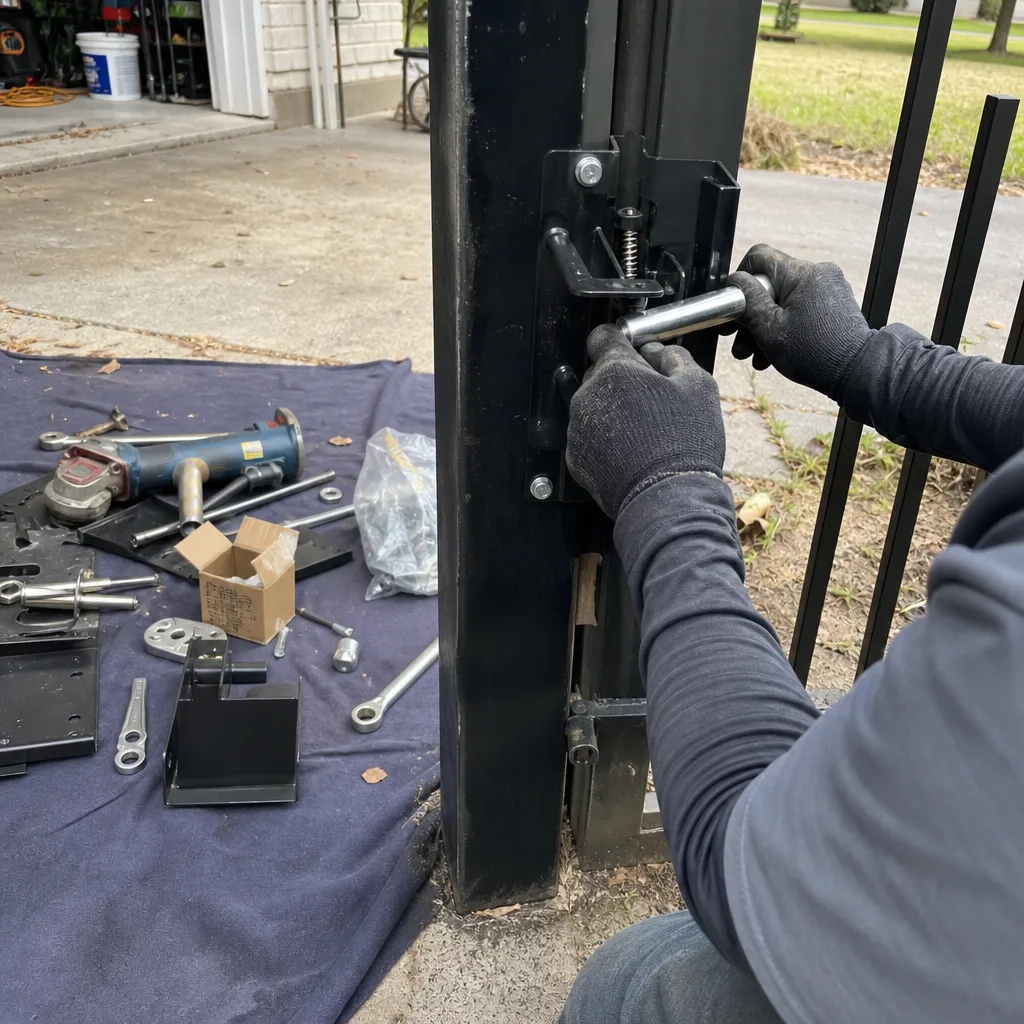
County code is only the floor. Many of Katy’s largest neighborhoods operate a second approval layer through their homeowners associations, and that layer frequently has stricter rules than either Harris or Fort Bend County. Cinco Ranch, Firethorne, Grayson Lakes, Seven Meadows, and Cross Creek Ranch all maintain architectural control committees that can require design review before a gate is replaced, repainted, or automated. This isn’t a Texas code issue. It’s a deed restriction issue, and it runs on a separate timeline.
What HOAs in Katy typically regulate on gates includes:
- Materials and color: A wrought-iron replacement for a previously steel gate may need color approval. Powder-coated finishes in specific colors are often prescribed by the community’s design standards.
- Height and opacity: Many communities cap residential gate height at 6 feet and restrict solid panel infill. A privacy gate that blocks sightlines may be rejected even if the county has no objection.
- Automation equipment visibility: Some HOAs require operator arms and control boxes to be screened from street view or painted to match the column. LiftMaster and FAAC operators both have mounting profiles that design committees have opinions about.
- Access to the panel: If an HOA provides the perimeter wall, which several Cinco Ranch sections do, the gate structure may be HOA-owned, meaning the HOA itself needs to approve and possibly file any county permit.
The practical advice here is to check the HOA’s architectural guidelines before signing a gate installation contract in Katy. A permit from Fort Bend County doesn’t override a deed restriction, and a gate installed without HOA approval can be ordered removed. That’s a far more expensive problem than any county fine.
What the Inspection Sequence Looks Like When a Permit Is Required
If your project hits one of the five triggers, the process in both Harris and Fort Bend counties follows a predictable sequence. Here’s the step-by-step order most Katy homeowners will experience:
- Permit application submission. The contractor or homeowner files with the county’s permitting department, including a site plan or diagram showing the gate location, the electrical scope, or the footing plan. Both counties accept residential trade permits filed by licensed electricians for the electrical portion.
- Plan review and fee payment. Fees for residential gate-related electrical permits in this region typically run from $60 to $225 depending on the scope and the county. Fort Bend’s fee schedule is generally higher than Harris for electrical work, but both are in the low hundreds for a single circuit.
- Rough-in inspection. If new conduit or a new circuit is being installed, the inspector visits after the wire is pulled but before it’s covered by earth or drywall. This is the point where NEC violations get caught. Direct-burial cable at 6 inches instead of 18, missing expansion fittings on conduit, and unmarked wire are the common failures.
- Final inspection. Once the operator is wired, the photo-eyes are set, and the gate is operational, the inspector returns to confirm the work matches the approved scope. They’ll check the disconnect, the grounding, the low-voltage separation, and in Fort Bend County sometimes the column footings.
- Permit closeout. The county marks the permit as final, and the homeowner receives a record. This closeout documentation is what an insurance adjuster will ask for if the gate is ever involved in a claim.
The realistic timeline for a permitted electrical gate project in Katy is one to three weeks from application to final sign-off, depending on inspector availability. That’s not a reason to avoid the permit. It’s a scheduling factor to build into the project, and a contractor who quotes a one-day completion on a trigger-point job without mentioning inspections is cutting a corner somewhere.
Unpermitted Work and Insurance Claims: What Homeowners Risk
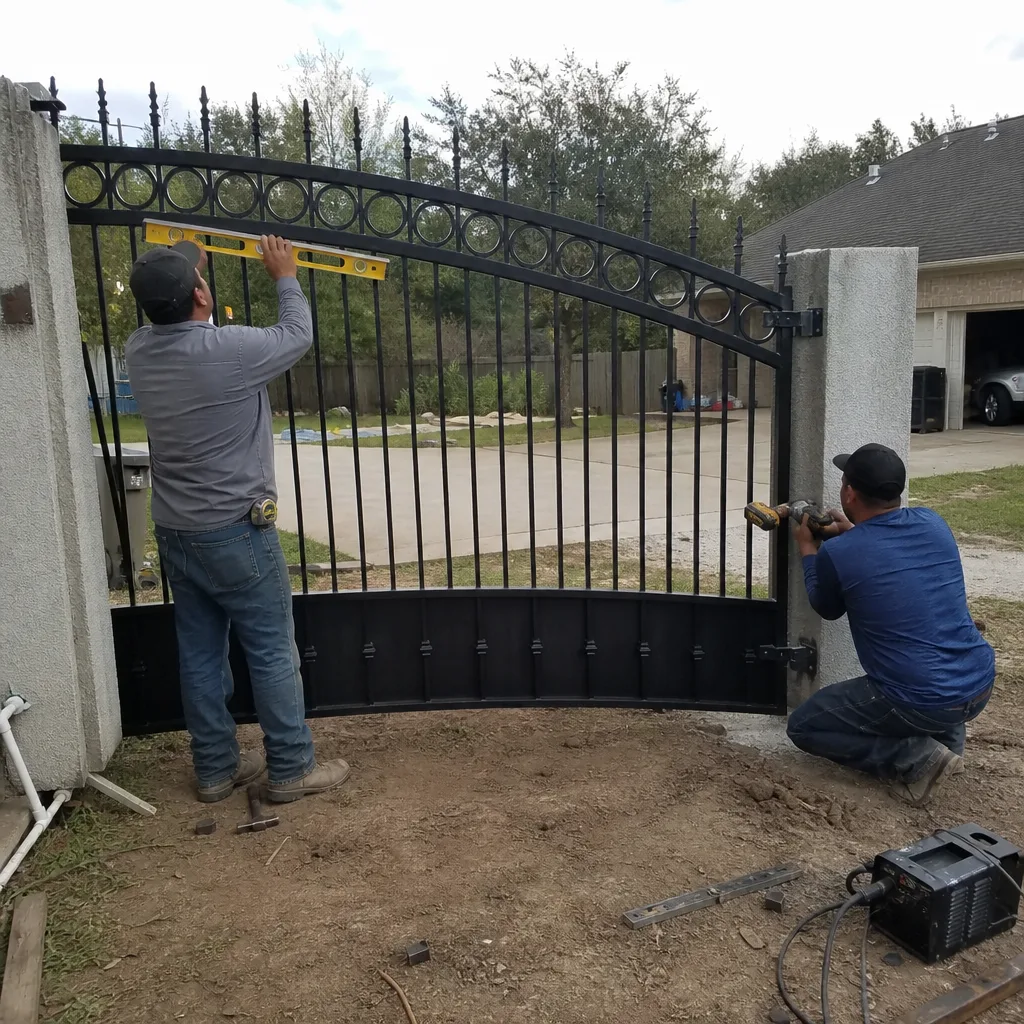
Here’s the part most contractors won’t discuss because it makes the conversation uncomfortable: an unpermitted gate modification can become the reason a homeowner’s insurance claim is denied or reduced. If a vehicle strikes a gate column and the subsequent investigation finds the column footings were poured without a permit and at a depth below code, the insurer can argue the damage resulted from non-compliant construction. The same logic applies to an electrical fire traced to an unpermitted operator circuit. The homeowner’s policy typically requires that modifications to the property comply with local code and that required permits were obtained.
We’re not saying every unpermitted gate job ends in a denied claim. Most don’t, because most claims never get investigated to that depth. But the risk profile changes when the gate is the thing involved in the incident. A gate that falls on a child’s bicycle, a gate that fails and strikes a parked car, a column that cracks and drops masonry onto a driveway. In those cases, an adjuster looking for a coverage defense will find an unpermitted structural or electrical modification quickly. The permit is not bureaucracy. It’s the paper trail that proves the work was done to code when the work gets questioned later.
For Katy homeowners specifically, this matters more than in rural Texas because the gates in question are heavier. A 16-foot double-leaf steel gate with a full operator system weighs several hundred pounds per leaf. The forces involved, especially on masonry pillars, are significant enough that structural review exists for a reason. Elite and LiftMaster operators both specify column requirements in their installation manuals, and those specifications exist because a motor pulling against an under-built column is a known failure mode.
How to Request Written Permit Confirmation From a Contractor
The most useful document a gate repair contractor can give you is not the permit itself. It’s the written determination of whether one is needed. Under our Haven Standard, every job starts with a written scope and a written price, and the scope includes a permit determination line. That line says either “No permit required for this scope” or “Permit required: electrical / structural, filed by [entity], expected timeline [window].” Getting that determination in writing matters because it assigns the responsibility to someone accountable.
Here’s a numbered sequence any homeowner can use to get this confirmation from any contractor:
- Ask the question directly before signing: “Does this scope trigger a permit requirement in Harris or Fort Bend County for my address?” Write it in an email or text so the answer is in writing.
- Request the code reference: If the contractor says no permit is needed, ask for the code section that classifies the work as exempt. For electrical work, that’s typically the NEC allowance for appliance replacement or existing circuit use. For structural, it’s the county’s accessory-structure threshold.
- Request the HOA determination: If you live in a managed community, ask the contractor to confirm in writing whether they checked the community’s design guidelines. If they haven’t, that’s a red flag.
- Ask who files: If a permit is required, confirm in writing that the contractor or their licensed electrician will file it, not you. A homeowner-pulled permit can leave you as the responsible party for code compliance.
- Request the closeout record: Once work is done and inspections are passed, ask for a copy of the final inspection or permit closeout documentation. This is what you’d produce to an insurer or a future buyer.
That last step is the one homeowners skip and later regret. A gate alteration, permitted and inspected, becomes part of the home’s documented improvement history. It’s a selling point, not a liability. A gate alteration with no paper trail becomes a question mark in a title review or an insurance renewal.
Common Mistakes to Avoid
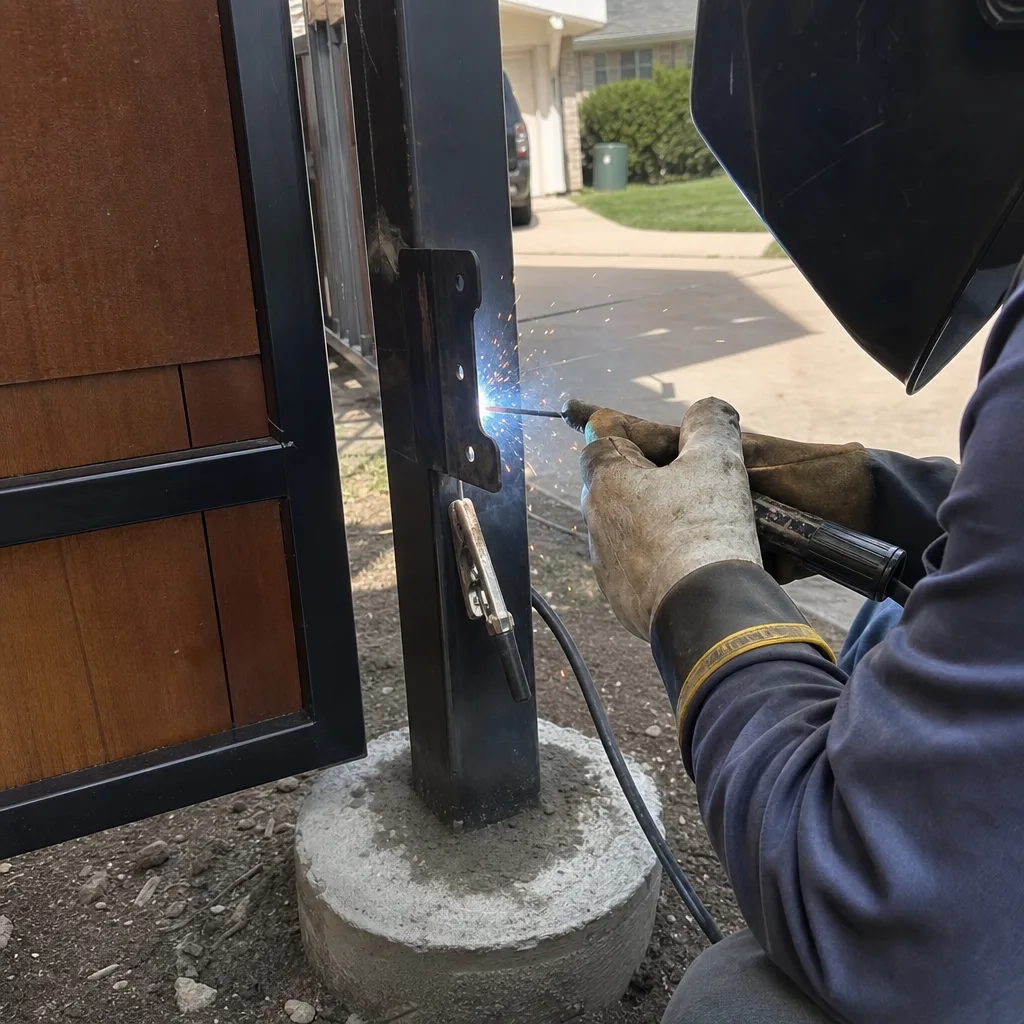
- Trusting a blanket “gates never need permits” claim. The statement is directionally true for mechanical work and flatly wrong for new electrical circuits or concrete footings. Ask which county applies to your Katy address and get the answer in writing.
- Skipping the HOA design review because the county didn’t require a permit. County approval and HOA approval are separate processes with separate enforcement powers. A Cinco Ranch or Firethorne homeowner can pass county code and still be ordered to modify or remove a gate the design committee never saw.
- Letting the contractor make the permit decision without documentation. A verbal “you don’t need one” leaves the homeowner holding the exposure if the gate is later involved in an incident. The written determination is the entire point.
- Direct-burying electrical cable at the wrong depth. The NEC requires 18 inches of cover for residential branch circuits in conduit, or 24 inches for direct-burial cable under specific conditions. Shallow burial fails inspection and creates a shock hazard if the line is ever struck by a shovel or an aerator.
- Oversizing a gate motor without checking the column structure. A heavy-duty operator pulling against a hollow brick column can crack the masonry over time. The motor’s torque spec and the column’s construction need to match, and sometimes a structural review is the only way to know.
- Not keeping the final inspection record after a permitted gate job. The closeout paper is the proof the work was done to code. Without it, a future insurance claim or home sale can treat the work the same as if no permit was ever filed.
When to Call a Professional
If your gate project involves a new operator on an existing masonry column, a new power run from the panel, or posts being set in concrete, you’re in the territory where a professional with local code familiarity earns their fee. The same applies if you’re in a Katy master-planned community with design review requirements and you’re not sure whether your planned change needs committee approval. A contractor doing this work locally knows which county has jurisdiction over your address, what the HOA overlay requires, and which triggers a permit. At Vance Gate Repair Katy, we include a written permit determination in every scope document, and we file for the permits we identify as required. Vance Gate Repair Katy offers free estimates in Katy, call (346) 818-3319, and our team is available to answer questions. If you already have a written estimate from another company, we’ll review it at no cost and tell you whether the permit analysis on the page matches what the county will actually ask for.
Frequently Asked Questions
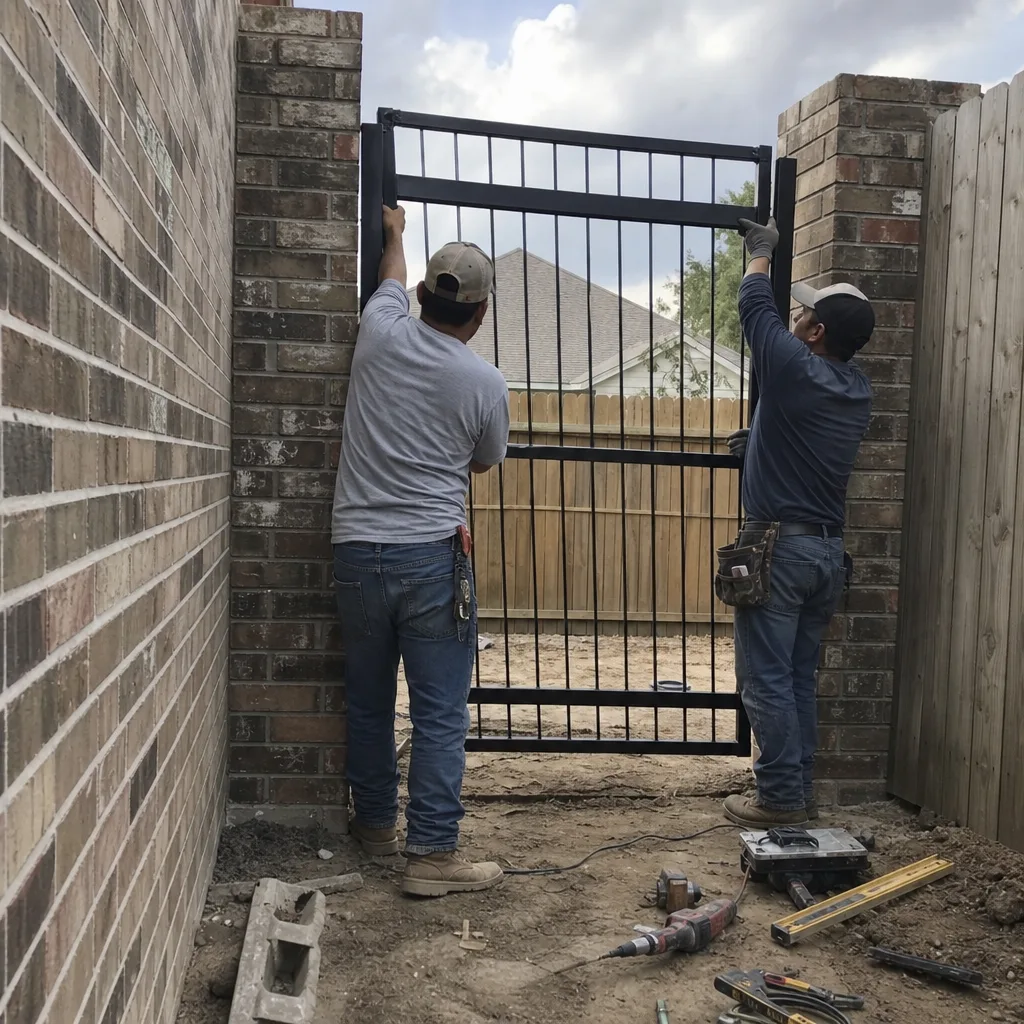
No permit is required for mechanical gate repairs such as hinge replacement, weld repair, wheel replacement, or rehanging an existing leaf, because these are classified as routine maintenance under both Harris and Fort Bend County codes. A permit is only triggered when the work involves new electrical wiring, new concrete footings, or structural column modifications. Always confirm which category your specific scope falls into before the work starts.
In Katy, a permit is typically required for a new electrical circuit serving a gate operator, a new power run from the house to the gate, posts or columns set in new concrete, or masonry column modifications over 6 feet tall. The county with jurisdiction, Harris or Fort Bend depending on your address, determines the exact filing requirement, and any HOA with architectural control adds a second approval layer.
Residential electrical permits for gate work in the Katy area typically run between $60 and $225 depending on the scope and the county, with Fort Bend’s fee schedule generally running higher than Harris for comparable work. The permit fee is separate from the inspection scheduling, and both counties require the electrical portion to be filed by a licensed electrician.
A gate operator replacement does not require an electrical permit when the new motor connects to the existing electrical feed and the circuit already meets code for the motor’s amperage draw. If the replacement requires a new circuit, a larger wire gauge, or a panel upgrade, the electrical alteration triggers a permit in both Harris and Fort Bend counties.
Yes, an unpermitted gate modification can become grounds for a claim denial or reduction if the gate is involved in a vehicle or injury incident and the investigation finds the structural or electrical work did not comply with code. The permit closeout record is the document that proves the work was inspected and compliant, and insurers will ask for it when the gate itself is the thing that failed.
A gate contractor should provide a written scope document that states whether the planned work triggers a permit requirement in their jurisdiction and identifies who will file the permit if one is needed. After completion, the contractor should provide the final inspection record or permit closeout documentation, along with a photo record of the work performed. This written trail is what protects the homeowner if the gate is ever scrutinized by an insurer, an HOA, or a future buyer.
The Bottom Line
Gate repair permits in Texas are narrower than most homeowners fear and more specific than most contractors admit. Mechanical work on an existing gate stays permit-free in both Harris and Fort Bend counties. Electrical feeds, concrete footings, and masonry columns move the job into regulated territory, and Katy’s HOA overlays add a design-review layer that no county permit replaces. Get the permit determination in writing before the work starts, keep the closeout record when it finishes, and treat any contractor who refuses to put the answer on paper as a contractor who hasn’t answered the question. If you’re in Katy and you want a scope that includes a written permit determination, a fixed price, and a documented record of the work, call Vance Gate Repair Katy at (346) 818-3319 for a free estimate.
Written by Adrian Vance, Owner at Vance Gate Repair Katy, serving Katy since 2014. For more guides & resources, visit our blog.