
Last updated September 20, 2026
Free on-site gate assessment - hinges, posts, and your LiftMaster or Nice gate operator checked before anything is quoted
The assessment is free and the quote is the invoice.
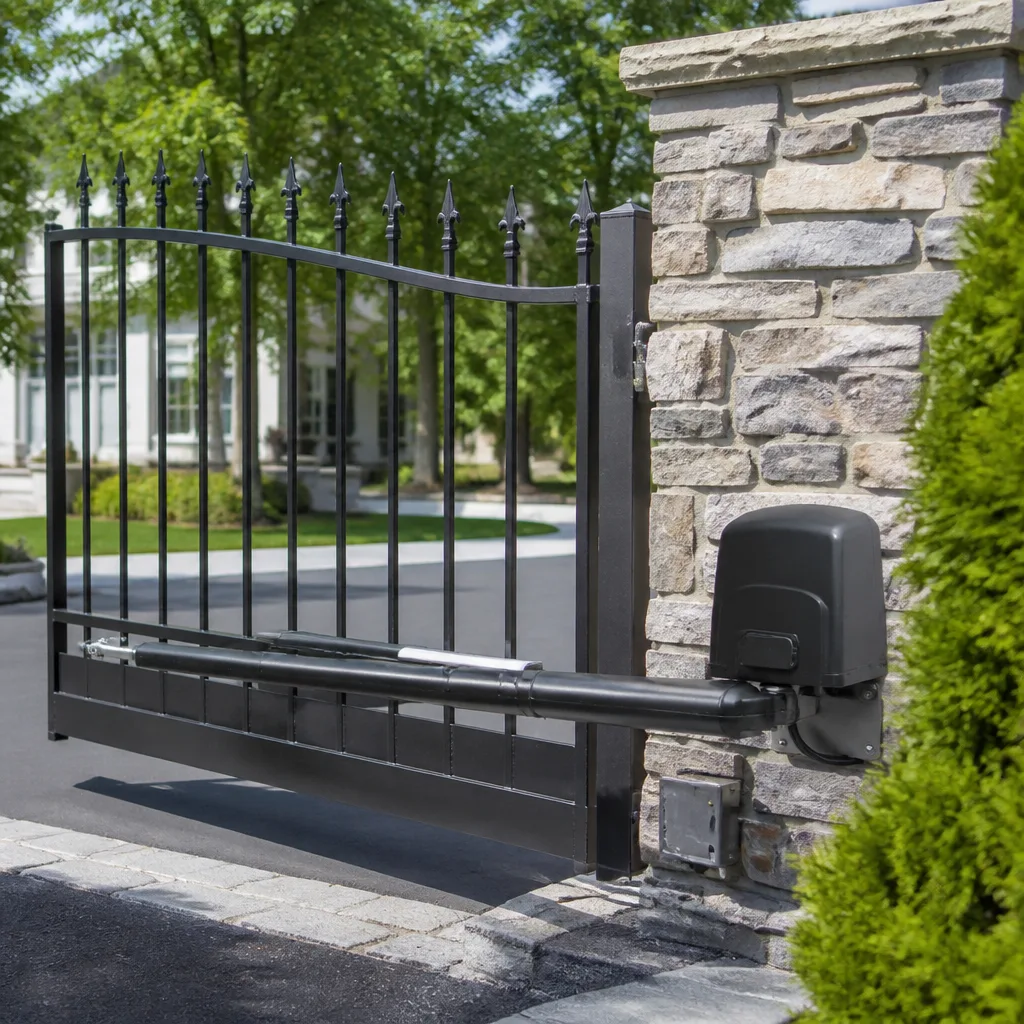
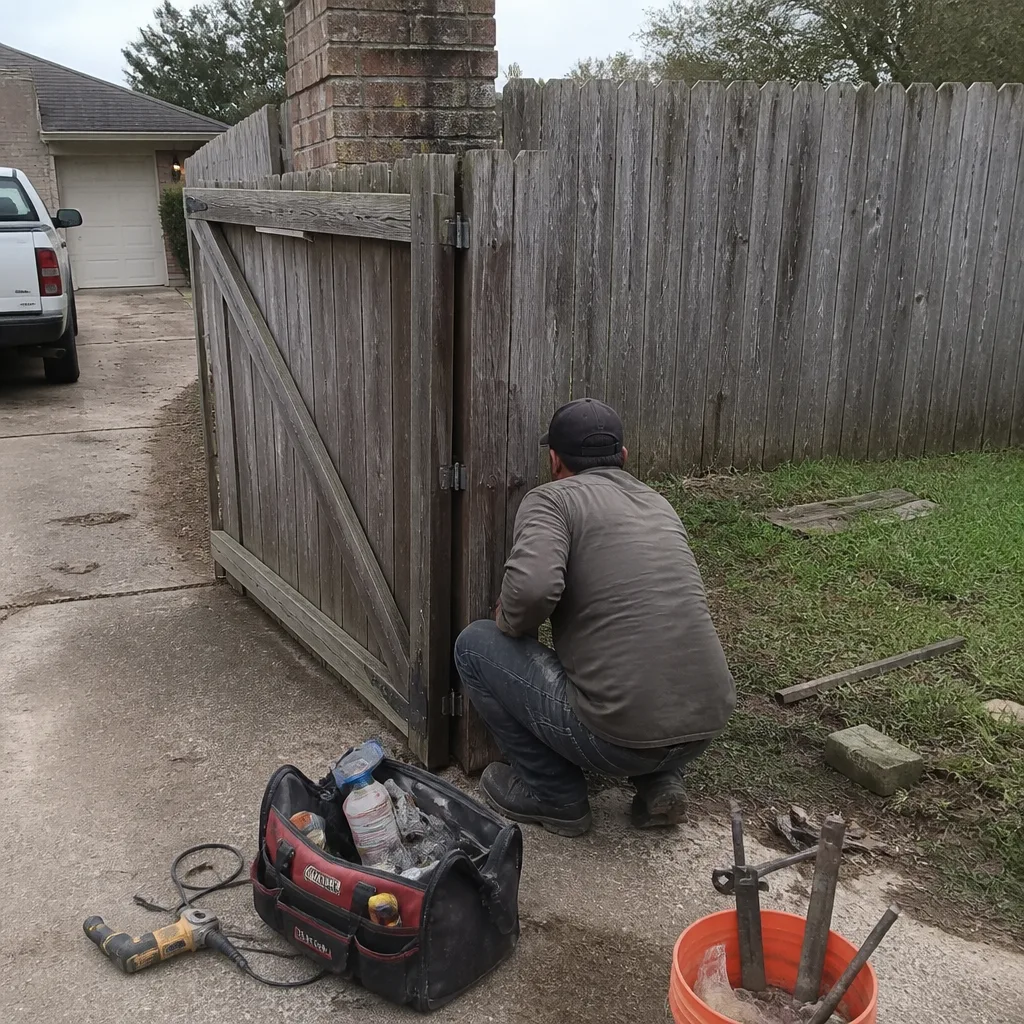 Before
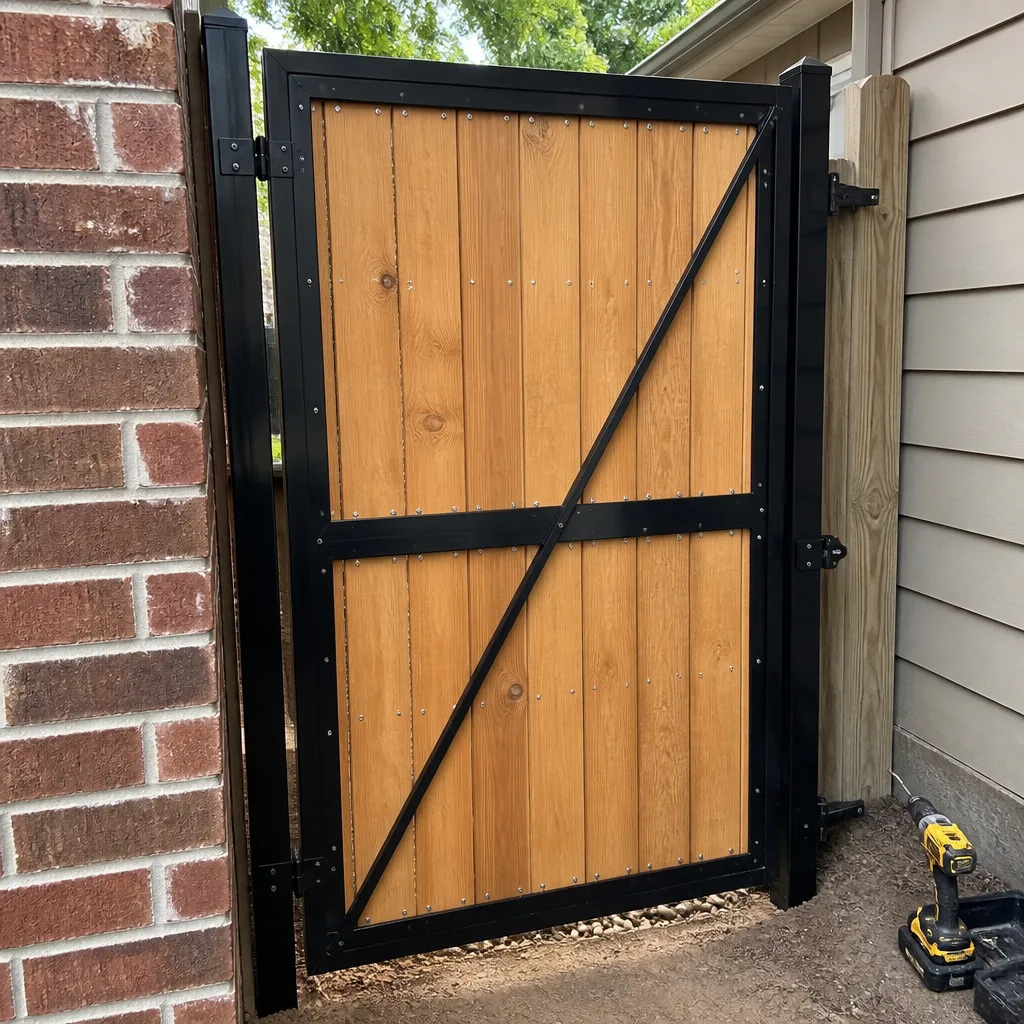 After
After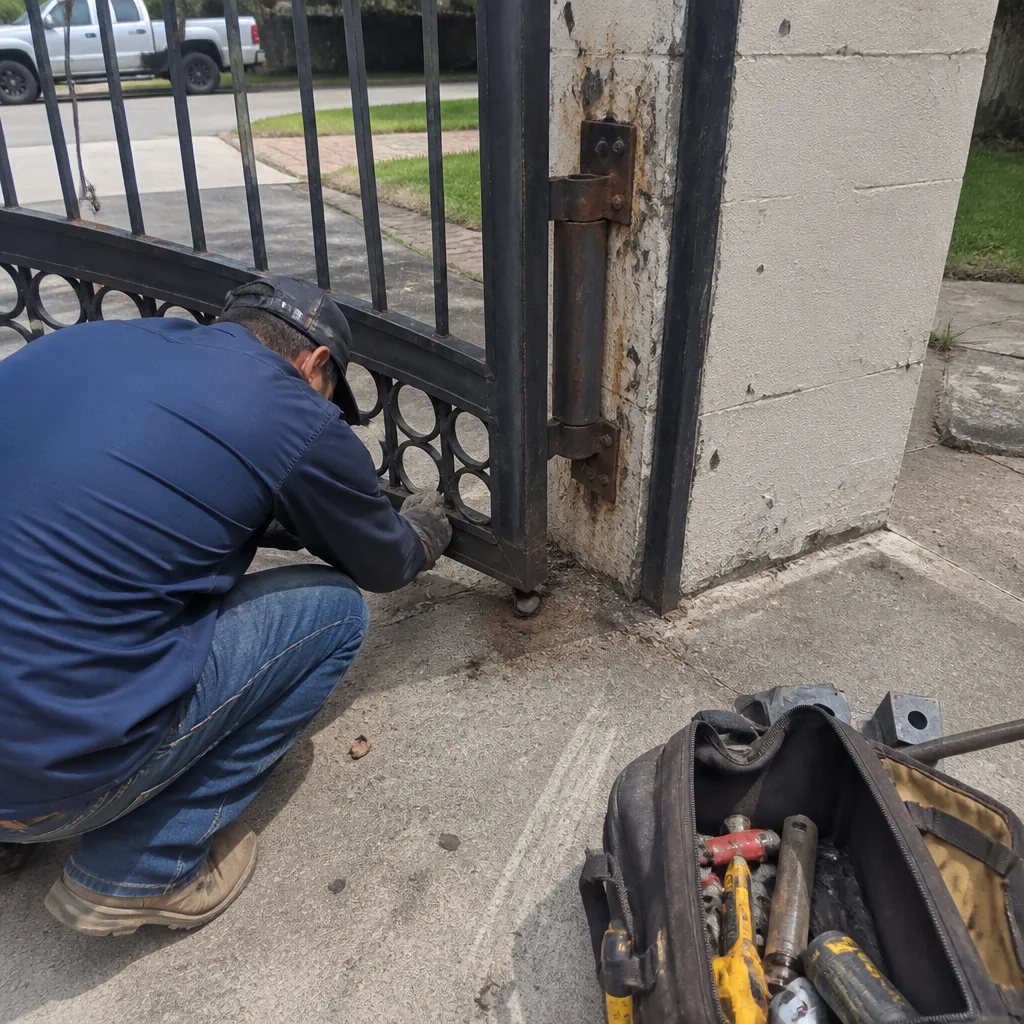 Before
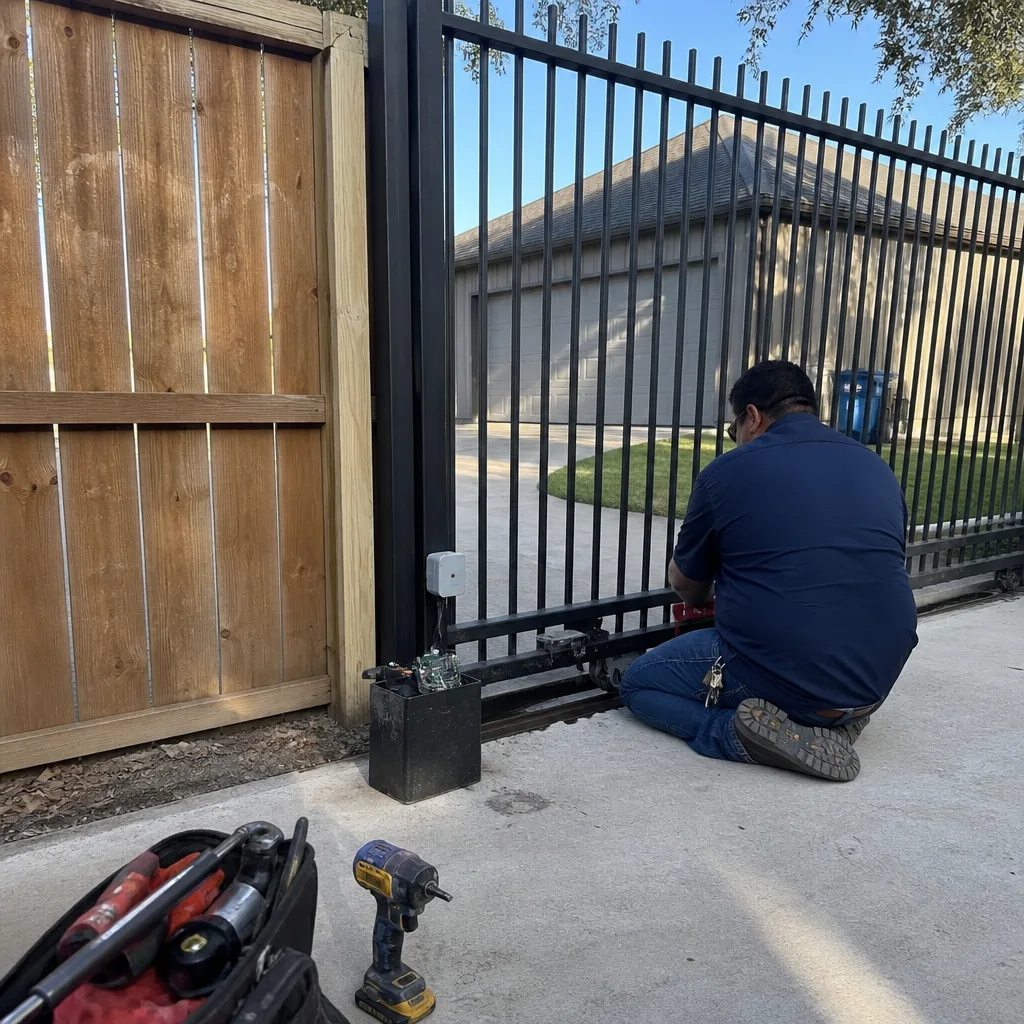 After
After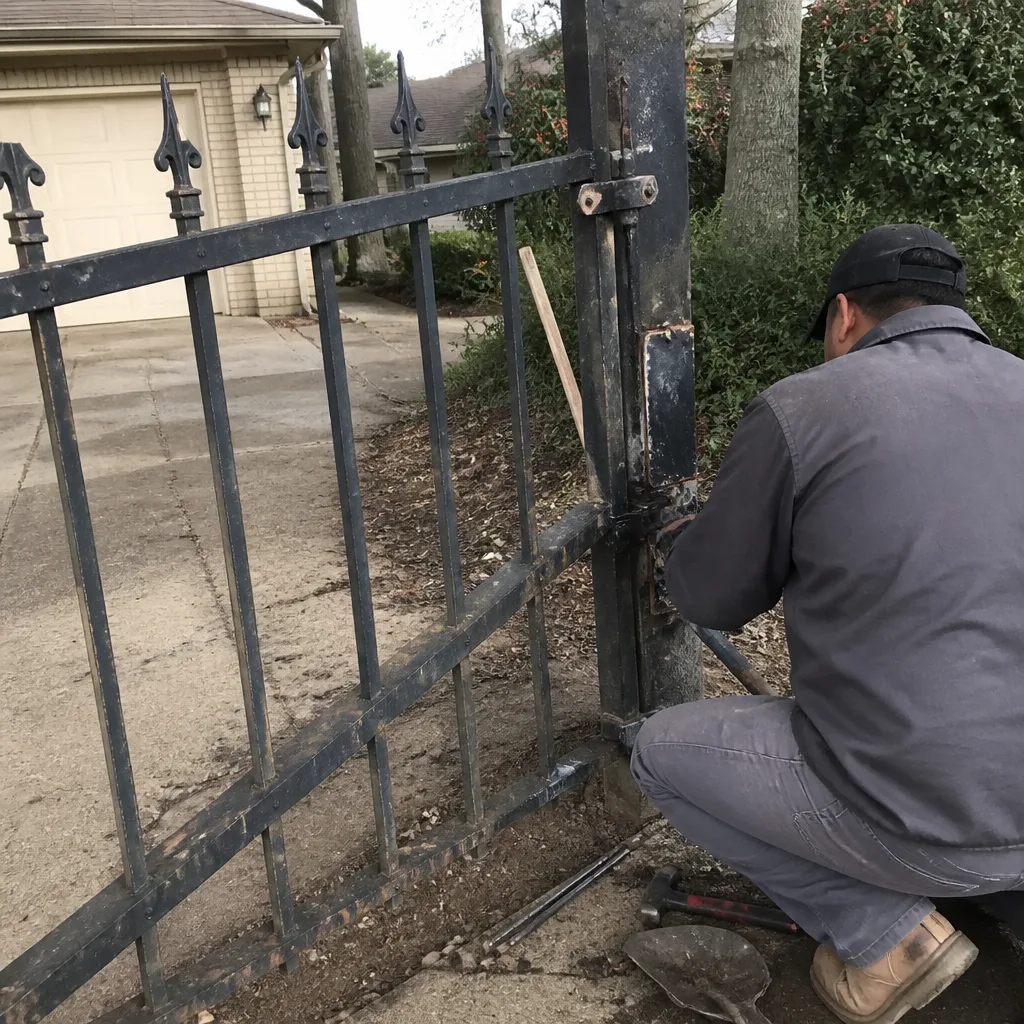 Before
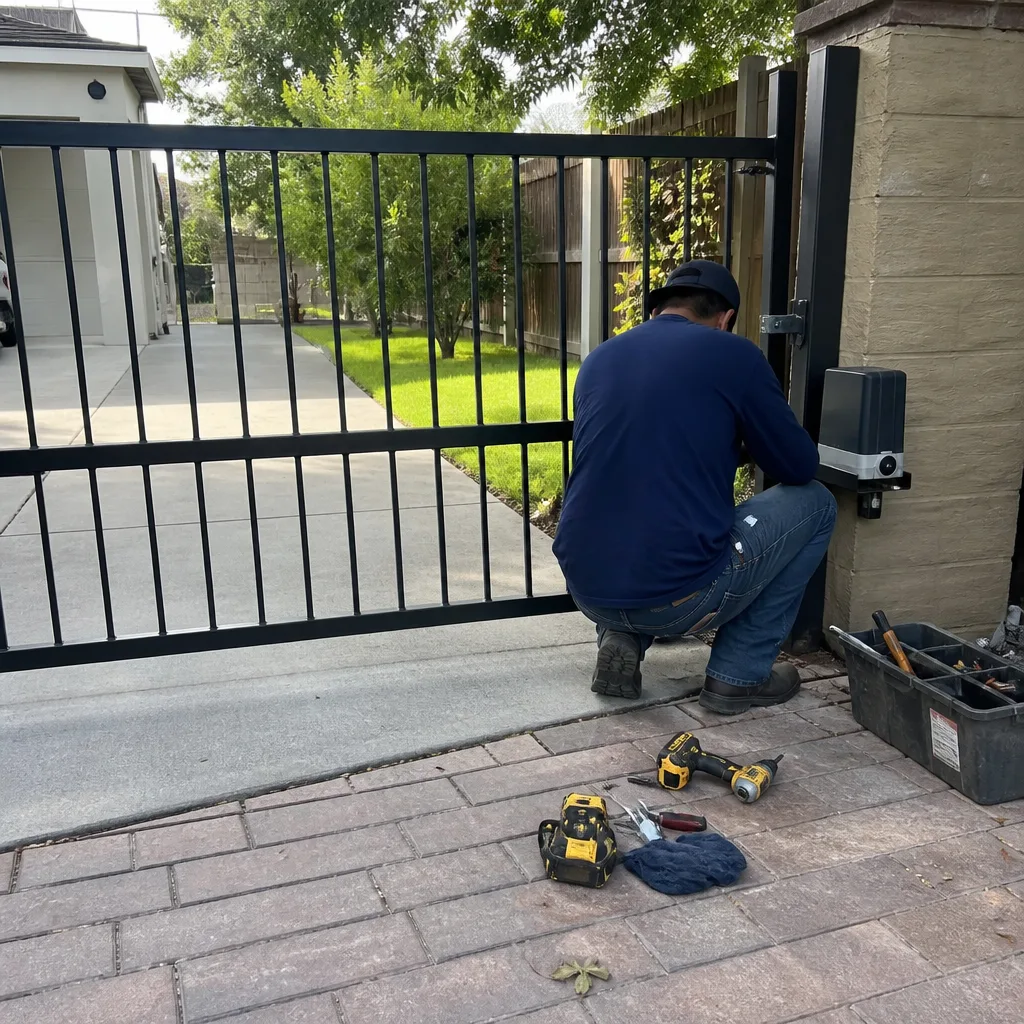 After
AfterGate Repair Warning Signs: A Katy Homeowner’s Reference Guide
A grinding noise on a swing gate and a grinding noise on a slide gate point to completely different components. One is a hinge. The other is a rack-and-pinion. Yet most warning-sign guides lump every “grinding noise” into a single entry, which tells you nothing about what to do next. This guide sorts gate warning signs by urgency and by gate type, so you know which symptoms mean stop using the gate today and which ones mean schedule service within 30 days. It’s written for Katy homeowners, where clay soil, summer heat, and spring storms each leave a distinct fingerprint on gate hardware.
Quick Answer
Gate repair warning signs fall into three urgency tiers: stop using the gate immediately, schedule service within 30 days, or note and monitor. The signs that demand immediate attention are a gate that reverses direction mid-cycle, a gate that sags more than two inches at the free end, exposed or frayed wiring at any hinge or junction point, and any grinding noise that gets louder over a two-week period. Most other symptoms can wait a few weeks for a scheduled visit without risking a larger failure, but documenting what you see and hear right now cuts diagnostic time and cost when a technician from a Gate Repair in Katy team arrives.
Table of Contents
- The Three-Tier Urgency System
- Warning Signs on Swing Gates
- Warning Signs on Slide Gates
- Warning Signs on Overhead Gates
- Why Intermittent Problems Cost More to Ignore
- How to Document a Warning Sign Before You Call
- Katy-Specific Triggers: Weather, Soil, and Seasonal Failures
- Common Mistakes to Avoid
- When to Call a Professional
- Frequently Asked Questions
- The Bottom Line
BeforeAfterThe Three-Tier Urgency System
Every gate symptom belongs in one of three buckets. Putting a symptom in the wrong bucket is expensive either way: you either ignore a hinge that’s about to shear, or you pay for an emergency call on a gate that would have waited three weeks without consequence. Here is how we sort them in our own Gate Repair services across Katy.
Tier 1: Stop Using the Gate Today
These signs mean the gate is actively unsafe or a component is about to fail in a way that will cause more damage. Stop cycling the gate and call for service.
- The gate reverses direction mid-cycle without anything in the path. That’s a limit-switch or control-board fault, and a gate that reverses unpredictably can strike a vehicle or a person.
- The gate sags more than two inches at the latch end. A sagging swing gate puts the full weight of the leaf on the hinges and the opener. Left alone, it pulls hinge bolts out of the post or bends the operator arm.
- Exposed or frayed wiring at any hinge point, junction box, or conduit fitting. A gate is a moving metal object carrying live voltage. Frayed insulation in a wet Katy spring is a shock and fire hazard.
- A grinding noise that gets louder or more frequent over two weeks. That’s a bearing, hinge, or rack-and-pinion set wearing faster than normal, and it’s one good cycle away from binding entirely.
- The gate sits on the ground when it should sit half an inch clear. On a slide gate, that means a wheel or roller has collapsed. On a swing gate, it means a hinge has failed or the post has moved.
Tier 2: Schedule Within 30 Days
These signs indicate a developing problem that will get worse but doesn’t pose immediate risk. Schedule a visit on your timeline, not the gate’s.
- A new squeak or chirp at a hinge, roller, or jackshaft. Lubrication may quiet it temporarily, but the sound means metal is wearing against metal.
- The gate slows noticeably at the same point in its travel every cycle. That’s a mechanical bind that’s consistent enough to locate.
- Photo-eye false triggers. The gate starts closing and then reverses with nothing in the path. This usually means an alignment drift or a dirty lens, but repeated false triggers encourage homeowners to disable the safety device, which is never the fix.
- Remote range that shrinks over time. The receiver or antenna may be fine today but failing gradually. It’s a 30-day problem, not a today problem.
- Rust blooms at weld joints or hinge welds. Surface rust is cosmetic. Rust at a structural weld is a strength question.
Tier 3: Note and Monitor
These signs are worth writing down and watching but don’t require a service call on their own.
- A single photo-eye misalignment after a storm. Reset the beam and note the date. If it recurs, the bracket is too flexible, not the beam.
- Cosmetic surface rust on the frame. Note it, clean it, and monitor the weld joints separately.
- A slightly longer close cycle after a temperature drop. Cold changes hydraulic fluid viscosity and capacitor behavior. Note the ambient temperature and the cycle time.
- Visible wear on the chain or belt that hasn’t yet produced a symptom. Photograph it and check again in 60 days.
Warning Signs on Swing Gates
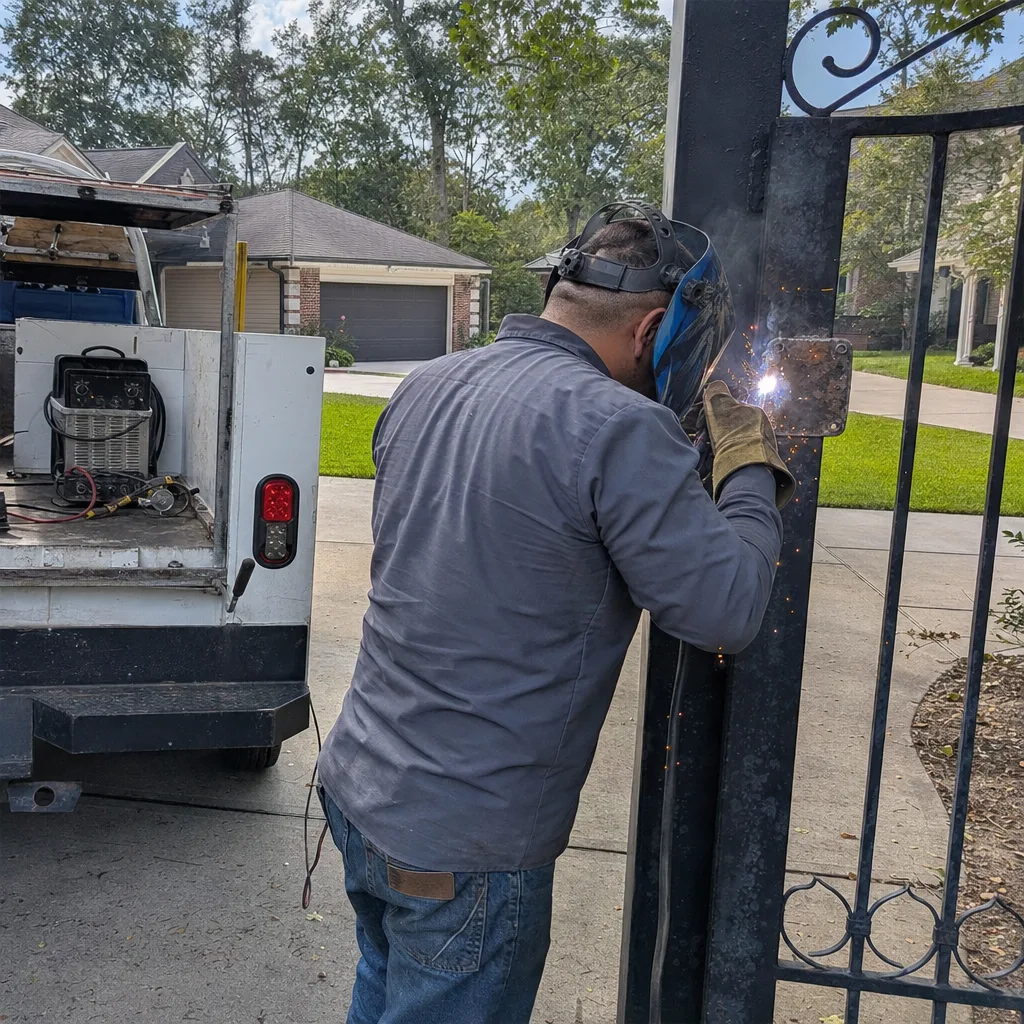
Swing gates are the most common gate type on Katy residential properties, and almost every swing-gate failure traces back to one of three things: the hinges, the operator arm, or the posts. Here is what each one sounds like and looks like before it fails.
Hinge Wear
A swing gate hangs its entire weight on two or three hinges. When a hinge wears, the gate leaf drops at the latch end. The first visible sign is a diagonal gap at the top of the gate that’s wider than the bottom. The first audible sign is a low groan as the gate moves, because the leaf is dragging across the hinge barrel instead of rotating on the pin. In Katy, where summer temperatures push 100 degrees and winter brings occasional freezes, the steel expands and contracts enough to accelerate hinge wear that’s already started.
Operator Arm Failure
Most swing-gate openers sold in Katy today are linear-arm or articulated-arm operators. Linear arms are the ones that look like a piston. Articulated arms are the ones that fold. When a linear arm fails, you usually see an oil weep at the seal first. When an articulated arm fails, you hear a click or a clunk at the knee joint as the gate changes direction. Both signs are Tier 2. Ignore them long enough and the arm locks up entirely, which is usually a replacement, not a repair.
Post Movement
Katy sits on expansive clay soil. It swells when wet and shrinks when dry, and it exerts more force on a buried post than most homeowners realize. The first sign of post movement is a gate that was plumb and level and now isn’t. The second sign is a crack in the masonry or concrete collar around the post base. A moved post is a structural problem. No opener adjustment corrects it. The post has to be reset or replaced, which is a Gate Installation in Katy level scope, not a parts swap.
Warning Signs on Slide Gates
Slide gates fail differently than swing gates because they carry their weight on wheels and rollers instead of hinges. The symptom that means “hinge” on a swing gate means “rack” on a slide gate, which is the point of this guide: never sort warnings by symptom alone.
Rack-and-Pinion Grinding
A slide gate that grinds while moving is almost always a rack-and-pinion problem. The rack is the toothed rail running along the bottom of the gate. The pinion is the gear on the operator’s output shaft. If the gate sags even a quarter inch, the pinion teeth stop meshing cleanly with the rack teeth and start chewing the edges. You’ll hear a rhythmic grumble that matches the gate’s speed. Left long enough, the rack teeth wear into points and the repair becomes a rack replacement rather than a height adjustment. We see this most often on slide gates installed on driveways with a slope, where one end of the track settles faster than the other.
Wheel and Roller Collapse
Slide gate wheels are usually polyurethane or steel. Polyurethane wheels crack with age. Steel wheels rust, especially in a climate like Katy’s where humidity runs high nine months a year. A collapsed wheel drops the gate onto the track, and the operator then drags the gate instead of rolling it. The motor works harder, draws more current, and burns out faster. The sign to watch for is a gate that moves with a stutter instead of a smooth glide, or a gate that’s visibly lower at one end than the other.
Track Debris and Binding
Katy yards produce a lot of organic debris: oak leaves, pine needles, grass clippings, and the occasional mud washout after a heavy rain. On a slide gate, that debris collects in the V-track and compacts into a paste. The gate then rides up onto the compacted material and binds. The fix is simple: clean the track. The damage from ignoring it is not: a bound track forces the operator to trip its torque limiter repeatedly, which overheats the capacitor and shortens motor life.
Warning Signs on Overhead Gates
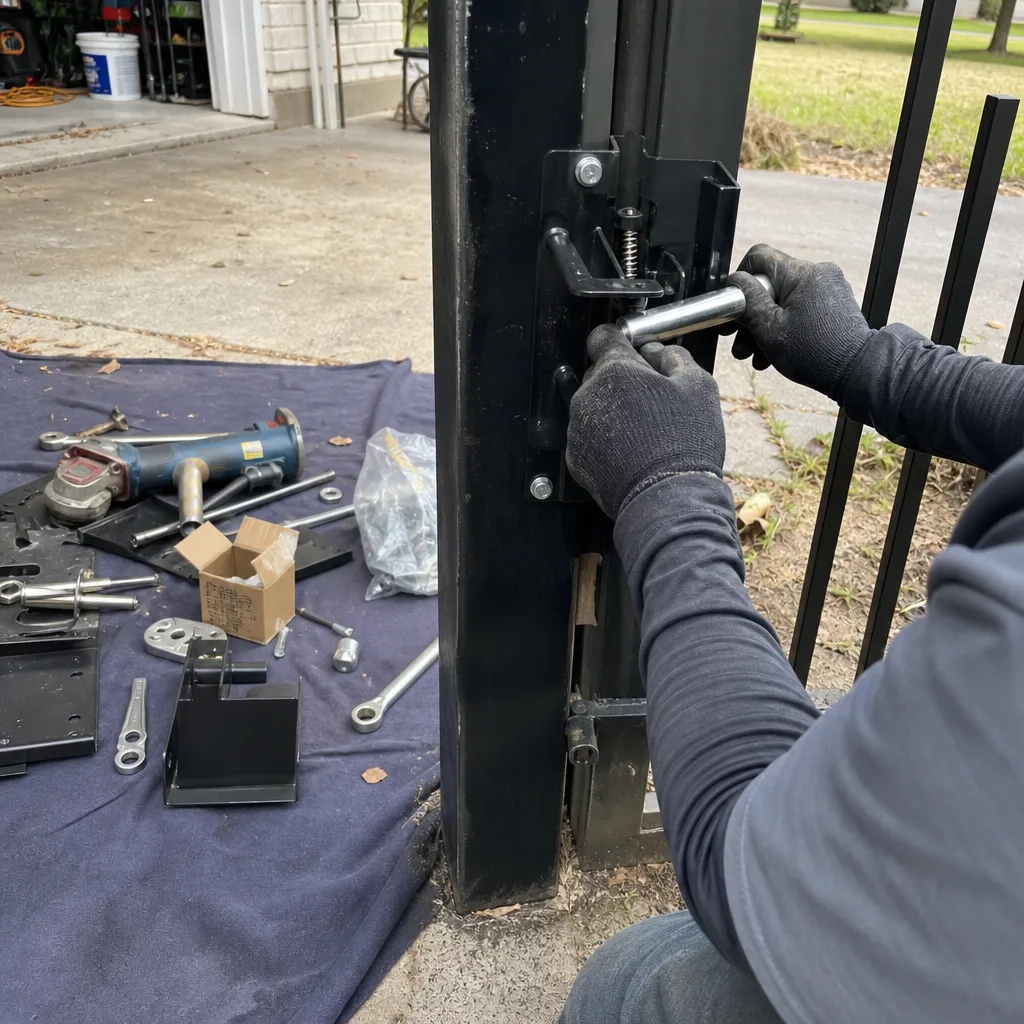
Overhead gates are less common on Katy driveways than swing or slide gates, but they appear often enough on side-entry garages and workshop access points that the warning signs deserve their own section. An overhead gate uses a track, rollers, and a counterbalance system, usually a torsion spring.
Torsion Spring Fatigue
The torsion spring is the component that carries the weight of the gate so the operator doesn’t have to. Torsion springs are rated for a number of cycles, usually between 10,000 and 20,000. When a spring is near the end of its life, the gate feels heavy when you release it from the operator and lift it by hand. The gate may also creep down an inch or two after the operator stops it at the open position. Both are Tier 2 signs. A spring that breaks while you’re nearby is a Tier 1 event. Torsion springs on gates carry enormous tension. Never attempt to adjust or replace one without training and the correct winding bars. A spring that lets go can cause serious injury.
Roller Wear and Track Misalignment
Overhead gate rollers run inside a steel track. When a roller wears, the gate shudders on the way up and down. When a track bracket pulls loose from the header, the gate hangs at an angle and the rollers bind. The audible sign is a metallic scraping sound. The visible sign is a gap between the gate panel and the weatherstripping that wasn’t there before. Both are Tier 2. Ignored, a bound roller carves a groove into the track, and the repair scope expands from a roller swap to a track replacement.
Operator Force Imbalance
An overhead gate opener has force settings that control how hard the motor pushes. If the gate has gotten heavier because of a tired spring or a dry roller, the operator compensates by working harder. The sign is a gate that closes faster than it opens, or a gate that visibly strains at the halfway point. This is Tier 2. Check the spring and the rollers before adjusting the force settings, because adjusting force to compensate for mechanical drag just burns out the motor faster.
Why Intermittent Problems Cost More to Ignore
Most homeowners treat a gate that works fine most of the time as a gate that works. That’s the expensive assumption. An intermittent failure is a component that’s reached the edge of its tolerance and is falling off and recovering. In our experience across 22,000-plus gate repairs and installs since 2014, intermittent problems are the ones that turn into full replacements, because by the time the failure becomes permanent, the failing part has usually damaged the parts around it. For more on protecting your investment, see our guide on Seasonal Gate Repair Care for Katy: Year-Round Homeowner’s Guide.
What Intermittent Failure Usually Means
- A gate that opens fine but sometimes won’t close usually points to a photo-eye that’s right at the edge of alignment. The beam works in the morning, then the sun angle changes and the receiver loses the signal. That’s a 20-minute alignment fix today. It’s a new photo-eye and possibly a new board if it goes on for a year.
- A gate that works from the keypad but not the remote points to an antenna or receiver issue. Antennas crack. Receiver modules drift. The intermittent nature means the signal is right on the edge of receivable. It’s cheap to fix now, expensive to replace later when the board that hosts the receiver is no longer in production.
- A gate that stalls mid-travel on hot afternoons but works fine in the morning points to a thermal issue: a capacitor that’s losing capacity, a transformer that’s overheating, or a motor winding that’s breaking down. Heat-related intermittent failure is the classic precursor to a motor that won’t start at all one July afternoon.
The Katy Heat Factor
Katy summers are brutal on gate electronics. A control board that runs fine at 80 degrees can reset itself at 105. A capacitor rated for 85 degrees Celsius will cook inside a black metal operator housing that’s been sitting in direct Texas sun for four hours. If your gate misbehaves only on the hottest days, that’s not bad luck. That’s a thermal fault finding its voice. A Gate Motor & Opener in Katy technician can identify and replace the failing component before it takes the rest of the board with it.
How to Document a Warning Sign Before You Call
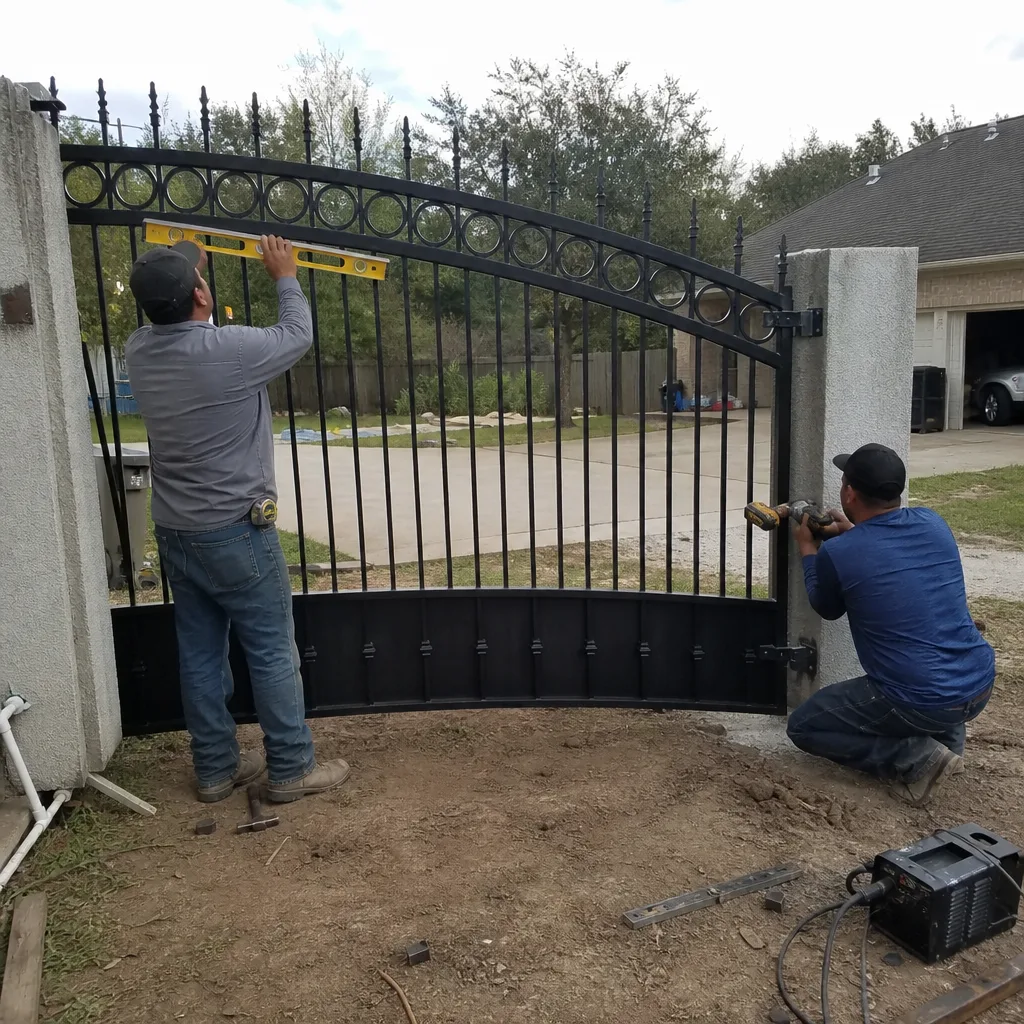
The single most useful thing a Katy homeowner can do before calling a gate technician is to document what the gate is doing. Not after the tech arrives. Before. A written record of symptoms, sounds, and timing cuts diagnostic time roughly in half, and diagnostic time is the part of a service call that homeowners feel most acutely on the invoice.
Step 1: Note the Exact Symptom
Write down what the gate does, not what you think is wrong. “The gate reverses halfway closed” is a symptom. “The limit switch is bad” is a conclusion. Let the technician draw the conclusion. Write down whether the symptom happens every cycle, every few cycles, only in the morning, only after rain, or only when it’s hot.
Step 2: Record the Sound
Use your phone. A 15-second video with audio of the gate cycling is more useful than a two-minute verbal description. Grinding, squealing, clicking, and groaning are different sounds produced by different problems, and a technician who hears the sound once has a working hypothesis before they’ve even unloaded the truck. Photos help too, but sound is the one most homeowners skip.
Step 3: Photograph the Suspect Area
Take three photos: a wide shot of the whole gate, a medium shot of the area where the sound or problem seems to originate, and a close shot of any visible wear, rust, fraying, or sagging. The close shot is the one that matters.
Step 4: Note the Timing
Write down when the symptom started and whether it has gotten worse. A gate that has been grinding for two weeks tells a different story than one that started grinding two days ago. The former suggests progressive wear. The latter suggests a sudden event, like a storm or an impact.
Step 5: Keep a Simple Log
Three columns: date, symptom, and what you did about it. That’s it. A log like this is what allows a technician to rule out weather-related triggers and pattern-related causes in the first ten minutes instead of asking you to remember whether the gate was bad before or after the last rain.
Katy-Specific Triggers: Weather, Soil, and Seasonal Failures
Katy has a set of environmental conditions that push gate hardware toward failure on a predictable schedule. Homeowners who understand these triggers stop blaming bad luck and start seeing a pattern they can plan around.
High-Wind Events
Katy sits close enough to the Gulf to catch the edge of tropical systems and the occasional straight-line wind event. A swing gate is a large vertical surface. A 50-mph gust pushes against it with enough force to bend an operator arm, pull a hinge, or shear a stop. After any high-wind event in Katy, walk your gate through a full cycle and look for a new binding point, a new rattle, or a change in how the gate sits in the closed position. The damage is often not a break. It’s a bend that accelerates wear over the next six months.
Heavy Rain and Drainage
Katy gets intense, short-duration rainfall, especially in spring and fall. The relevant issue for gates is not the rain itself but where the water goes. Standing water around a gate post softens the clay soil that holds the post. A post that was solid in June can be loose by October after a wet summer. The sign to watch for is a gate that’s harder to latch, or a latch that doesn’t line up anymore. That’s often the first visible evidence of post movement.
Freeze-Thaw Cycles
Katy doesn’t freeze often, but it freezes enough to matter. When water works its way into a weld joint, a hinge barrel, or a conduit fitting, and then freezes, the expansion opens a crack slightly wider than it was before. Repeated cycles turn a hairline crack into a structural crack. The cracks don’t appear in the summer. They appear in the winter, and they’re often attributed to age when the actual cause was water plus temperature cycling.
Summer Heat and Electronics
Control boards, capacitors, and transformer coils all have temperature limits. Many residential gate operators are packed into black metal housings that sit in direct sun. On a 105-degree Katy afternoon, the temperature inside that housing can exceed 140 degrees. That’s a hostile environment for electronics. Components degrade faster, and the failures often appear as intermittent or heat-only symptoms. If your gate only acts up on the hottest days, the problem is probably already there, just waiting for the temperature to reveal it.
Common Mistakes to Avoid
- Lubricating a grinding hinge or rack. Grease quiets the sound for a week, but the wear that caused the sound is still there. You’ve just hidden the evidence until the failure is worse.
- Disabling the photo-eyes. Some Katy homeowners respond to a gate that won’t close by disconnecting the safety beam. That makes the gate close, and it also makes the gate dangerous for anyone in its path. The right fix is aligning or replacing the beam.
- Adjusting the force settings to compensate for a dragging gate. The operator works harder, the motor draws more current, and the failure moves from the mechanical side to the electrical side, which is the more expensive side.
- Ignoring a sagging swing gate because it still opens. A sagging gate is a hinge problem that becomes a post problem that becomes a gate-replacement problem. The repair cost goes up at each stage.
- Waiting for a gate to fail completely before calling. A gate that won’t open at all is easier to diagnose than a gate that sometimes won’t open, but the repair bill is usually higher because the failed part took something else with it.
- Buying a replacement part based on a photo without identifying the brand and model first. Gate openers are not interchangeable. A FAAC arm doesn’t bolt to a BFT operator. A Linear control board doesn’t drop into a Viking housing. Identify the unit before you buy anything.
When to Call a Professional
Call a professional the moment a Tier 1 sign appears: the gate reverses mid-cycle, the gate sags more than two inches, wiring is exposed or frayed, or a grinding noise is getting louder. These are not do-it-tomorrow situations. For Tier 2 signs, schedule within 30 days and document the symptom before the visit. For anything involving a torsion spring on an overhead gate, always call a trained professional. The tension in a torsion spring is lethal if it releases unexpectedly. Vance Gate Repair Katy offers free estimates in Katy, and every visit includes a written price before work starts and a documented photo record when we leave. Call (346) 818-3319 to schedule.
Frequently Asked Questions
Most residential gate repairs in Katy run between $180 and $450 depending on the component and the gate type. A photo-eye alignment is on the low end. A rack replacement on a slide gate or a hinge rebuild on a swing gate is on the higher end. Every Vance Gate Repair job includes a written price before work starts, so you know the number before anyone picks up a tool. Call (346) 818-3319 for a free estimate.
Yes. A live person answers the phone 24/7 at Vance Gate Repair Katy, and if the gate is stuck closed or stuck open and it’s a genuine emergency, we’ll tell you on the phone what we can do and when. No voicemail loop. Call (346) 818-3319.
A full swing gate repair to a homeowner usually means the hinges, the operator arm, the stop, and the latch. We inspect and quote each component separately so you can see what’s worn and what isn’t. Every job ends with a photo record of what was found, what was set, and what was installed.
Yes. We service nine major gate-automation brands, including FAAC, BFT, Linear, and Viking. We don’t steer a homeowner toward replacing an operator just because we don’t stock that brand. If the motor is repairable, we repair it.
A gate that misbehaves only on hot days usually has a component that’s near its thermal limit. The heat pushes it over the edge. It’s a real fault, not a bad-luck event, and it won’t fix itself when the weather cools. The component just drops back under its threshold until the next hot day.
Watch the latch alignment and the gap at the top of the gate. If the latch stops lining up without any hinge work, or if the gap at the top changes width over a few months, the post is likely moving in the expansive clay. A photo taken today and another taken in 60 days will show it clearly.
The Bottom Line
Gate warning signs are only useful when you sort them by urgency. The signs that mean stop using the gate today are a reversing gate, a sag of more than two inches, exposed wiring, and a grinding noise that’s getting worse. Everything else can be documented and scheduled. The most expensive mistake a Katy homeowner makes is treating an intermittent gate as a working gate, because intermittent failures are the ones that quietly damage surrounding components before they announce themselves. Document what you see and hear, and call (346) 818-3319 when the symptom lands in Tier 1. You can also start with our Vance Gate Repair Katy home page to see the full scope of what we service.
Written by Adrian Vance, Owner at Vance Gate Repair Katy, serving Katy since 2014. Explore more guides & resources on gate maintenance and repair.