
Last updated September 20, 2026
Free on-site gate assessment - hinges, posts, and your LiftMaster or Nice gate operator checked before anything is quoted
The assessment is free and the quote is the invoice.
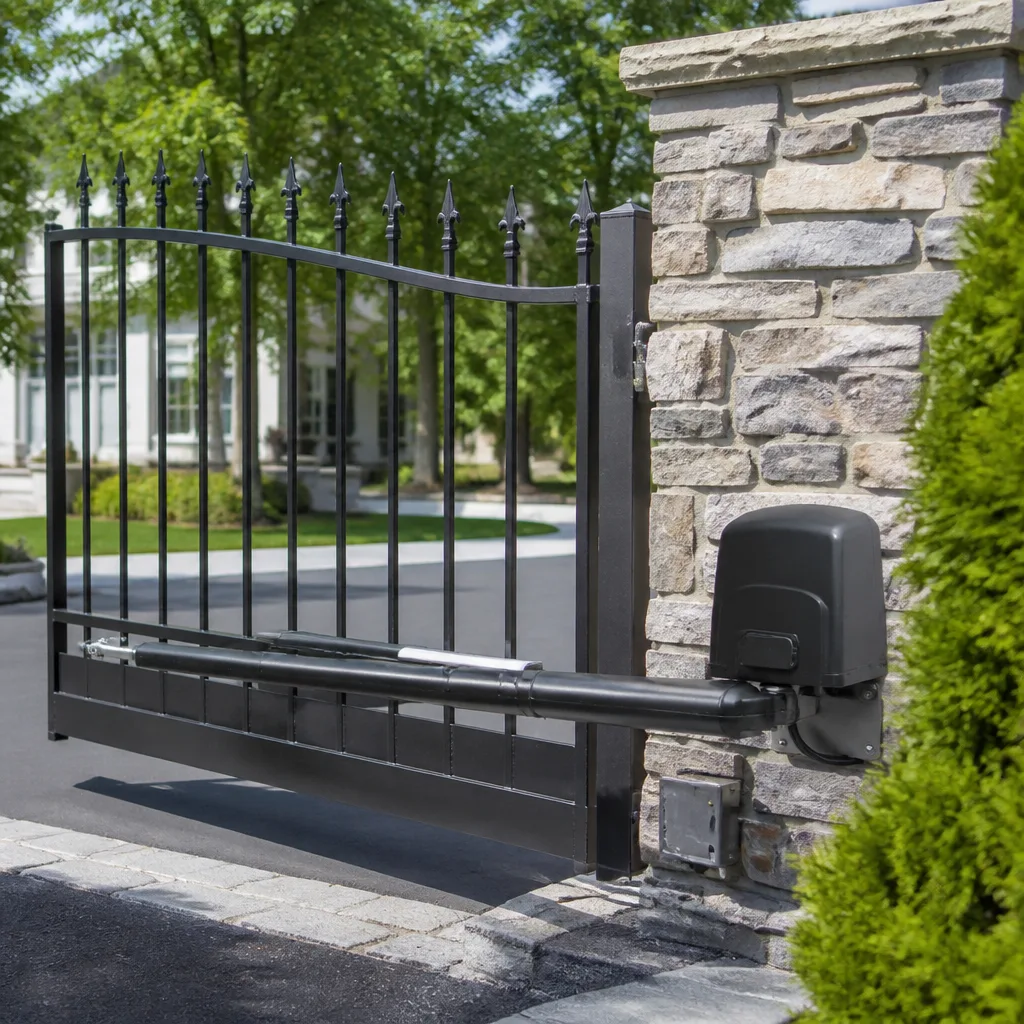
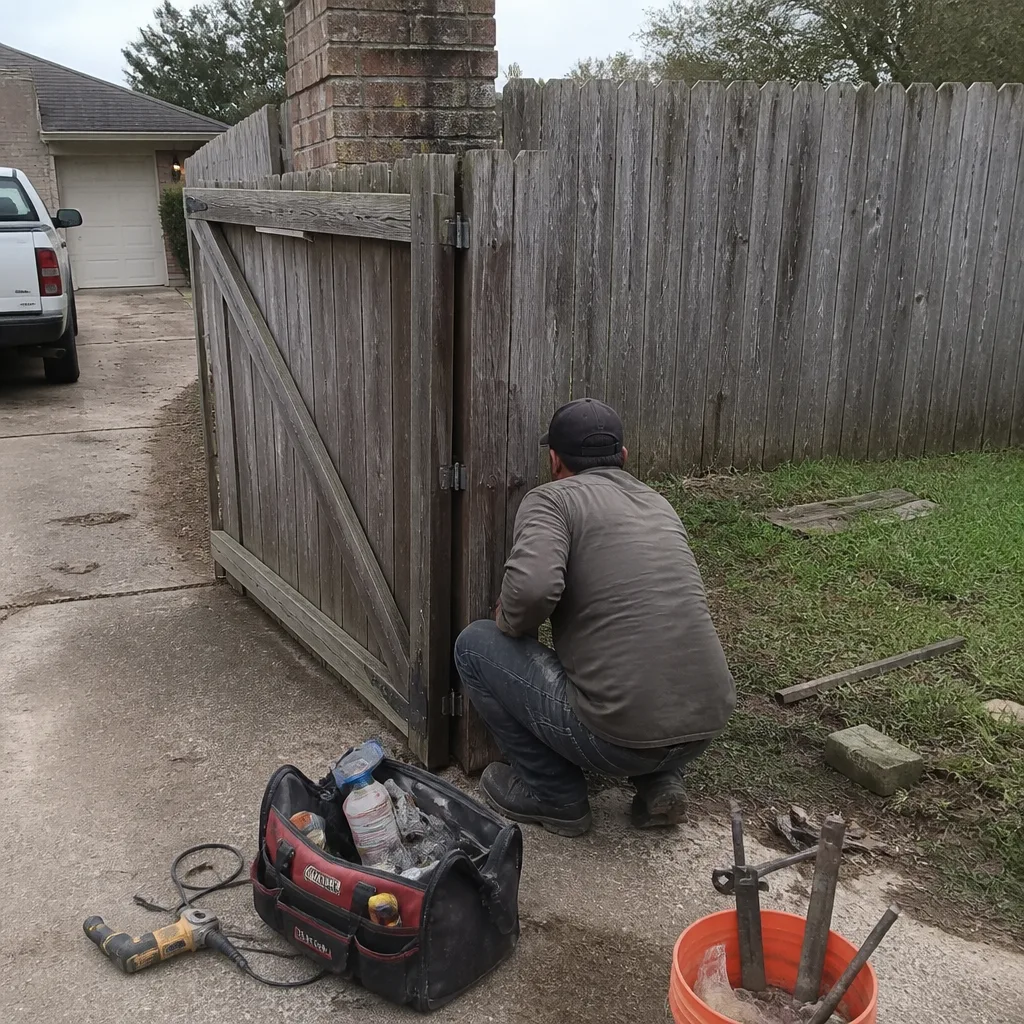 Before
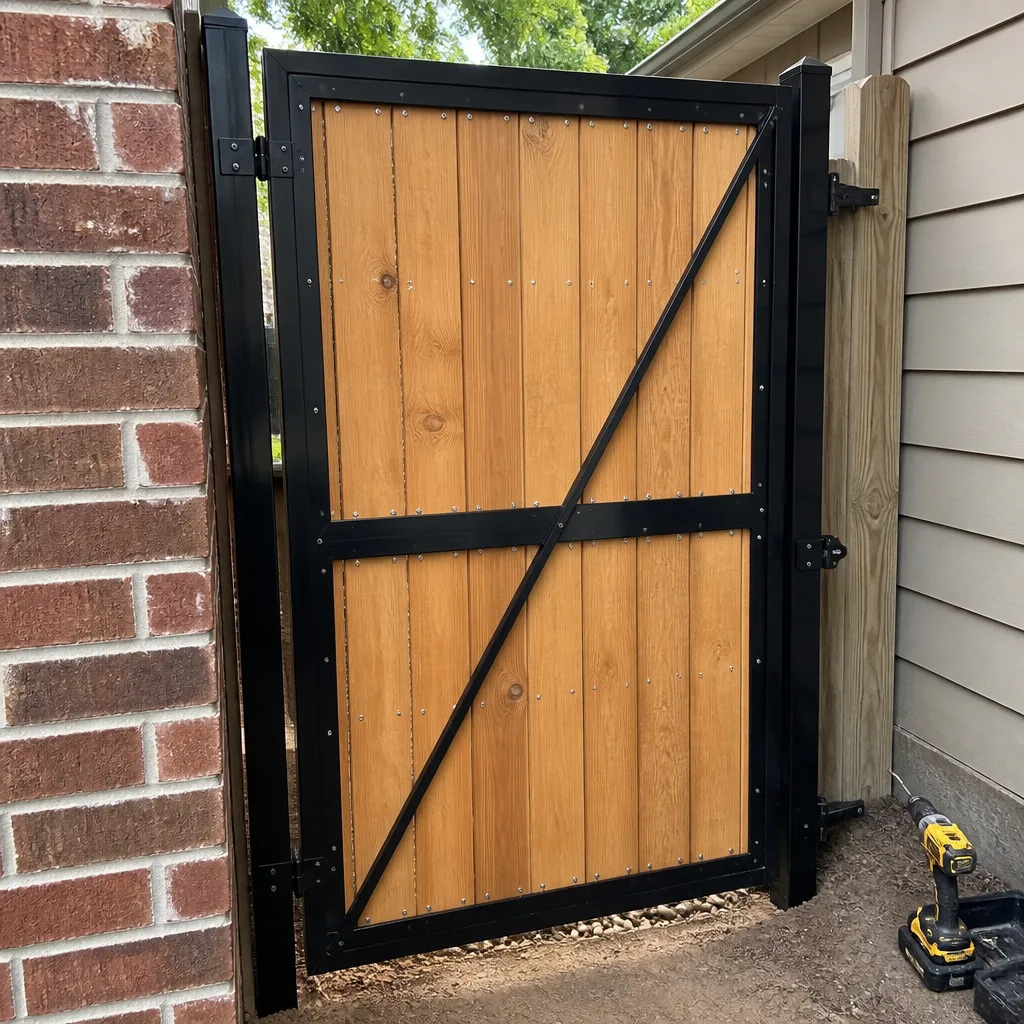 After
After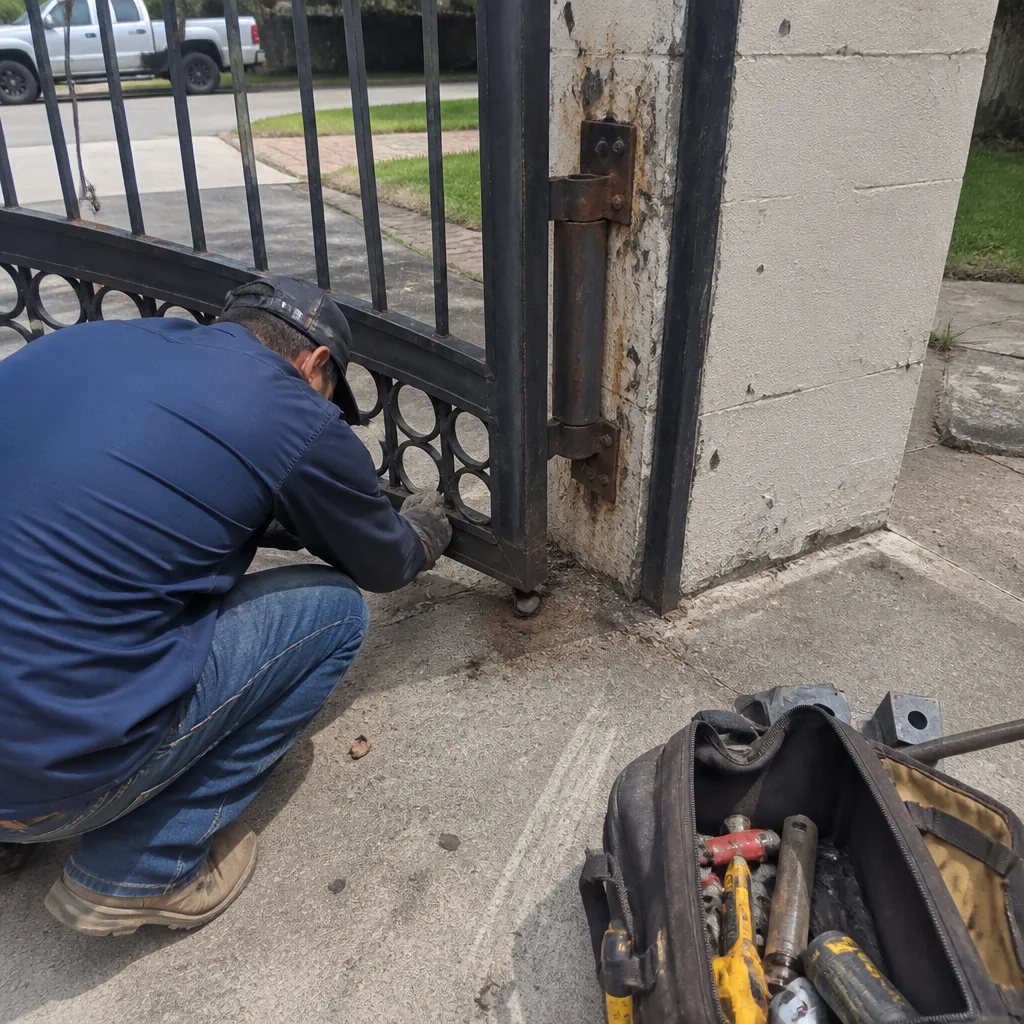 Before
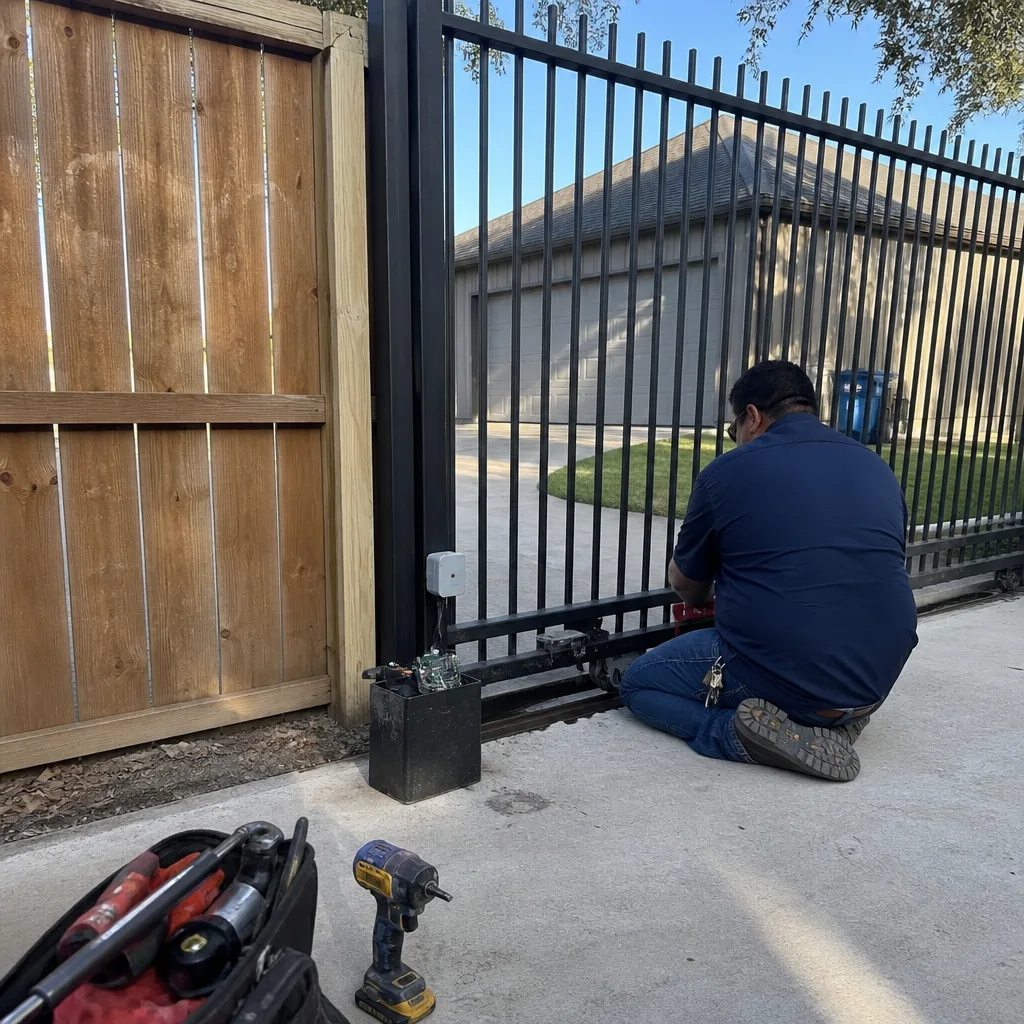 After
After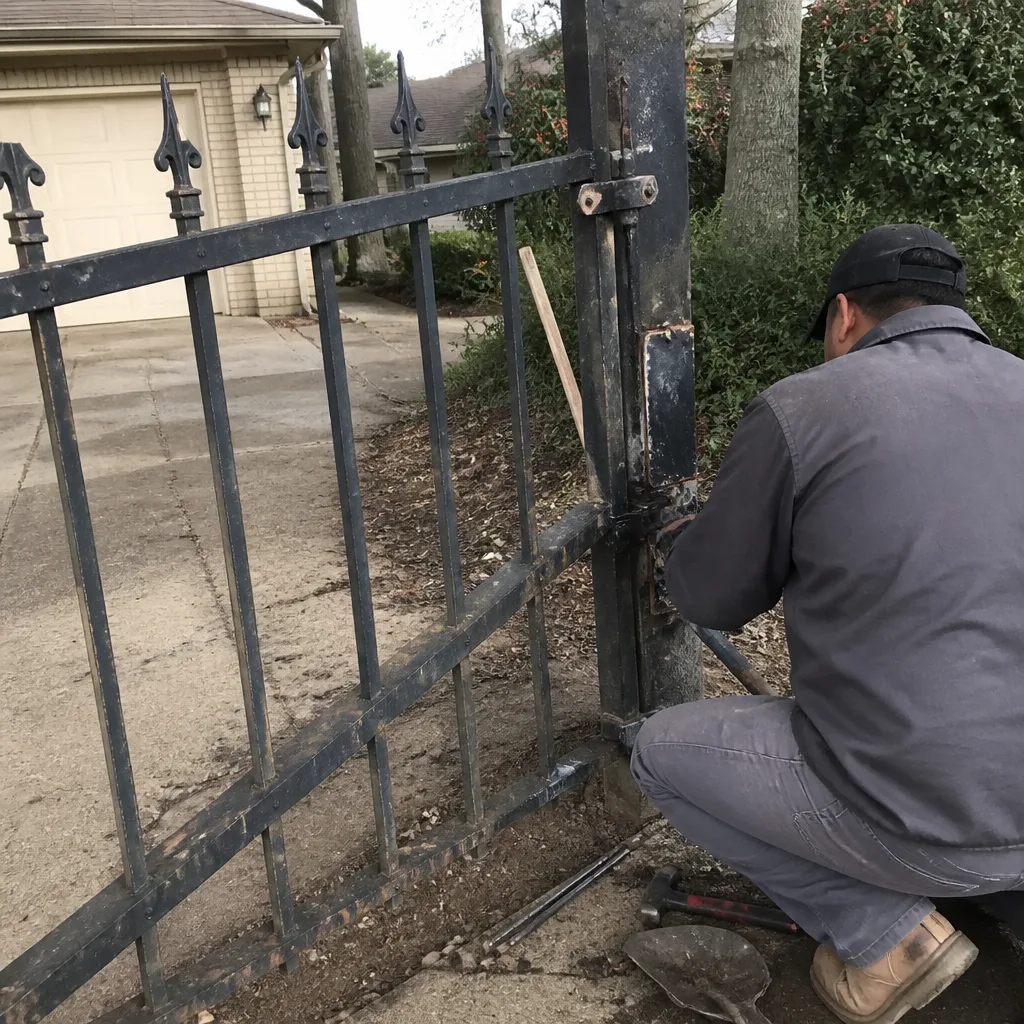 Before
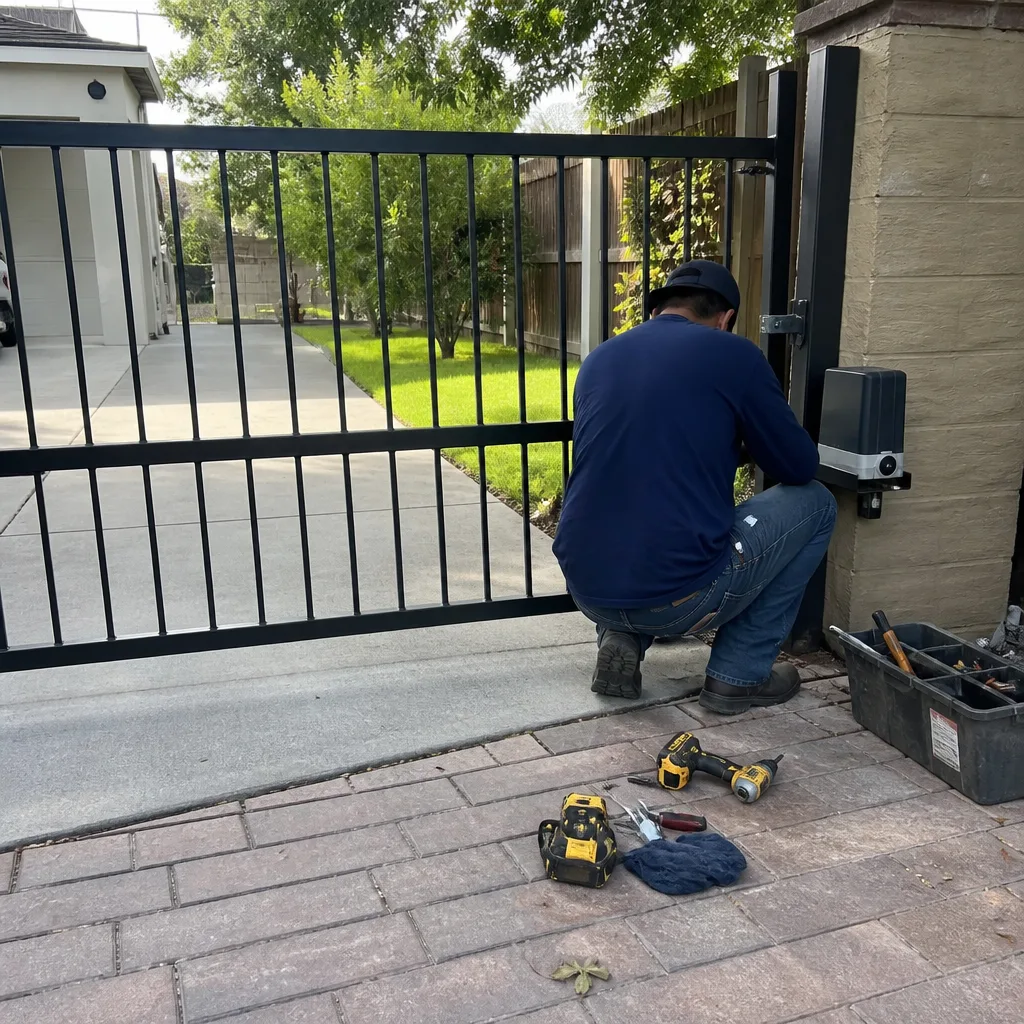 After
AfterSeasonal Gate Repair Care for Katy: Year-Round Homeowner’s Guide
January freeze events in Katy reliably produce a wave of gate repair calls, but here’s what most homeowners don’t realize: the damage those calls uncover was already developing in October. That’s when thermal cycling starts working loose connections that summer heat had already weakened. Katy’s climate doesn’t deliver four equal seasons of gate stress. It delivers two aggressive ones, summer heat and brief hard freezes, and two transitional seasons where deferred damage surfaces. This guide explains which season creates problems, which season reveals them, and what to check during each window so a minor fix doesn’t become a midnight emergency call. For deeper reading, see The Complete Guide to Gate Repair in Katy.
Quick Answer
Seasonal gate care in Katy means checking gate alignment and operator wiring in spring and fall, protecting batteries and seals before summer, and running a pre-freeze inspection in late November or early December. Most gate failures in Katy trace back to heat-degraded components or clay soil movement, not the freeze itself. A documented inspection at each season transition catches developing problems before they become emergency repairs. If damage is already present, our Gate Repair services can address it before the next season hits.
Table of Contents
- Why Katy’s Climate Is Harder on Gates Than You’d Expect
- Spring: Alignment Resets and Post-Freeze Inspection
- Summer: Heat, UV, and Battery Stress
- Fall: The Critical Pre-Freeze Window
- Winter: What Actually Breaks During a Katy Freeze
- Clay Soil Movement and Gate Posts in Katy
- What Seasonal Gate Care Costs in Katy
- Common Mistakes to Avoid
- When to Call a Professional
- Frequently Asked Questions
- The Bottom Line
BeforeAfterWhy Katy’s Climate Is Harder on Gates Than You’d Expect
Katy sits in a transitional climate zone that most gate maintenance guides ignore. The Houston metro area gets 200-plus days of temperatures above 80°F, high humidity, and UV indexes that stay elevated from April through October. Then, once or twice a winter, a cold front drops temperatures below freezing for 24 to 72 hours. That pattern, sustained heat followed by sharp cold snaps, stresses gate components differently than either a year-round hot climate or a true four-season climate.
The mechanical reality: heat expands metal and softens plastic. Cold contracts both. In Katy, that cycle repeats roughly 180 to 200 times per year, not the 40 or 50 cycles a gate in a milder climate would see. Every expansion and contraction works on wire connections, hinge bolts, slide track anchors, and operator mounting brackets. A connection that was tight in March may be loose by November, not because anyone did anything wrong, but because the metal moved.
We service gates across Katy, including Cinco Ranch, Cross Creek Ranch, Firethorne, Grand Lakes, and Westlake. What we see consistently is that gate failures cluster in predictable seasonal patterns. In late summer, it’s capacitor failures and overheated control boards. In January, it’s seized hinges and tripped limit switches. In March, it’s misaligned photo-eyes and sagging gates that shifted during winter soil contraction. Knowing the pattern is most of the battle.
Spring: Alignment Resets and Post-Freeze Inspection
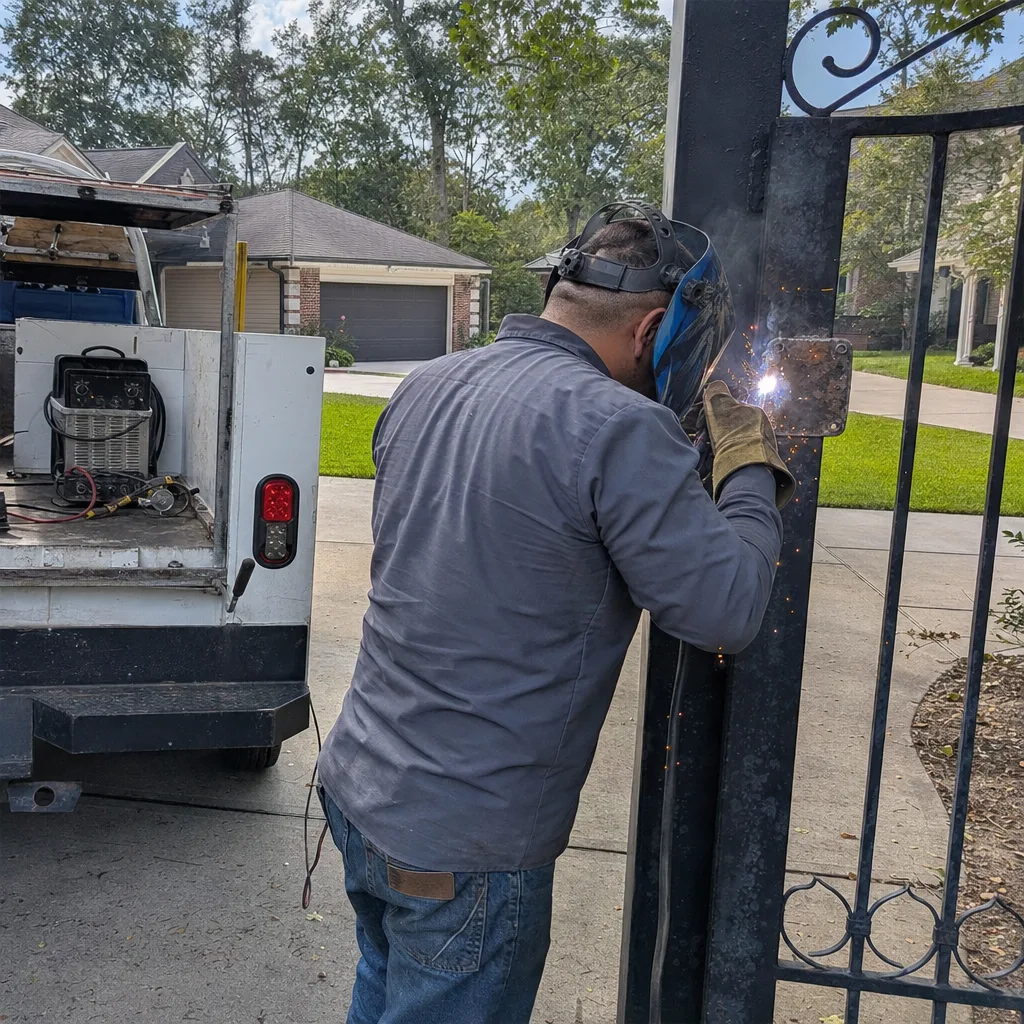
Spring in Katy is the season when deferred damage surfaces. The ground is wet from late winter rains, the clay soil is expanding, and freeze-damaged components begin to show symptoms that weren’t obvious while everything was cold and brittle. A gate that operated sluggishly in January may now refuse to close fully, or reverse mid-travel, or grind against the track. These are not new problems. They’re January problems finally becoming visible.
Here’s the spring inspection sequence we recommend, in order of importance:
- Check gate travel and alignment. Operate the gate through a full cycle and watch the gap between the gate leaf and the post, and between the gate and the ground. A gap that changes by more than half an inch during travel means hinges or post anchors have shifted. On slide gates, look for the gate riding up on the track wheels or scraping the guide rollers.
- Test the photo-eyes. A photo-eye is the infrared beam near the bottom of the gate opening that stops or reverses the gate if something crosses the path. Block the beam with your hand while the gate is closing. If the gate doesn’t stop and reverse immediately, the eyes are misaligned or the reflector is dirty. This is the single most common call we run in March, and in our experience, about a third of those calls are misalignment from January freezes.
- Inspect wire connections at the operator. Turn off the breaker for the gate operator, open the control box, and look for loose terminals, white or green corrosion on copper, or insulation that is cracked or peeling near connection points. Loose connections from thermal cycling cause intermittent failures, the kind that come and go and never seem to happen when a technician is standing there.
- Lubricate hinges and track wheels. Use a white lithium grease on hinge pins and a dry silicone spray on track wheels and guide rollers. Avoid WD-40 for this. It displaces water but does not leave a lasting lubricant film, and it can attract dust that accelerates wear in Katy’s dry summer months.
- Check the operator battery. If your gate opener has a backup battery, this is the time to test it. Disconnect power at the breaker and run the gate three or four full cycles on battery only. If it bogs down or the gate moves noticeably slower, the battery is near the end of its service life. Heat accelerates battery capacity loss, so batteries that survived one Katy summer rarely make it through two at full capacity.
Spring is also the right time to schedule any post-freeze repairs you deferred. The parts that failed in the cold are now accessible, the ground is workable, and you’re ahead of the summer rush that starts in late May when heat-related failures spike.
Summer: Heat, UV, and Battery Stress
Summer is when Katy’s climate creates problems rather than reveals them. From June through early September, average high temperatures hover in the mid-90s, and the surface temperature of a metal gate panel can reach 140°F or higher in direct afternoon sun. A black iron driveway gate facing west in Katy will absorb enough heat to make the panel uncomfortable to touch by 3:00 PM. That heat does specific, predictable damage to gate components.
What heat does to each component
- Operator housing seals. Most residential gate operators use rubber or foam gaskets at wire entry points and control board access panels. Sustained heat bakes these seals, causing them to harden, crack, and eventually allow moisture and insects into the enclosure. Once a seal fails, ants move in, and ants are a genuine problem for control boards. In our experience, ant infiltration causes more control board failures in Katy than lightning or electrical surges combined.
- Wiring insulation near the motor. The area inside an operator housing near the motor runs 20 to 40 degrees hotter than ambient air. Over repeated summer cycles, PVC wire insulation becomes brittle. It doesn’t fail immediately. It cracks, exposes copper, and sets up a short circuit that often doesn’t trip until a humid day in September or a cold snap in January.
- Battery capacity. Lead-acid and gel backup batteries lose capacity faster at high temperatures. A battery rated for a 3 to 5 year service life in a mild climate typically lasts 2 to 3 years in Katy when installed in an unshaded operator box. If your operator has been through two full Katy summers, test the battery or plan to replace it before the next one.
- Control board capacitors. Capacitors are the small cylindrical components on the control board that store and release electrical charge. Heat accelerates their failure. A capacitor that fails in August typically causes the gate to stop mid-operation or fail to respond to remote commands. It’s a $40 part with a $100 to $180 service call attached, and the best prevention is keeping the operator enclosure shaded and ventilated.
- Lubricant evaporation. Grease and oil applied in spring break down and evaporate faster in summer heat. Lubricate hinges and track components again in late July or early August, especially on gates that face west or are in full sun for most of the afternoon.
Summer care checklist
- Shade the operator box. If it faces west or southwest, add a small awning or shade panel. Keeping direct sun off the enclosure can reduce internal temperature by 15 to 25 degrees.
- Replace cracked seals now. A $12 gasket is cheaper than a $400 control board replacement.
- Clean the photo-eye lenses monthly during pollen season and early summer. Katy’s oak pollen season coats photo-eye lenses with a fine film that scatters the infrared beam and causes nuisance gate reversals.
- Re-lubricate hinges and track wheels in late July.
- Run the gate once a week even if you don’t use it daily. Gates that sit for weeks in summer heat are more likely to bind when finally operated, because grease has evaporated and moisture has condensed inside the operator housing.
Fall: The Critical Pre-Freeze Window
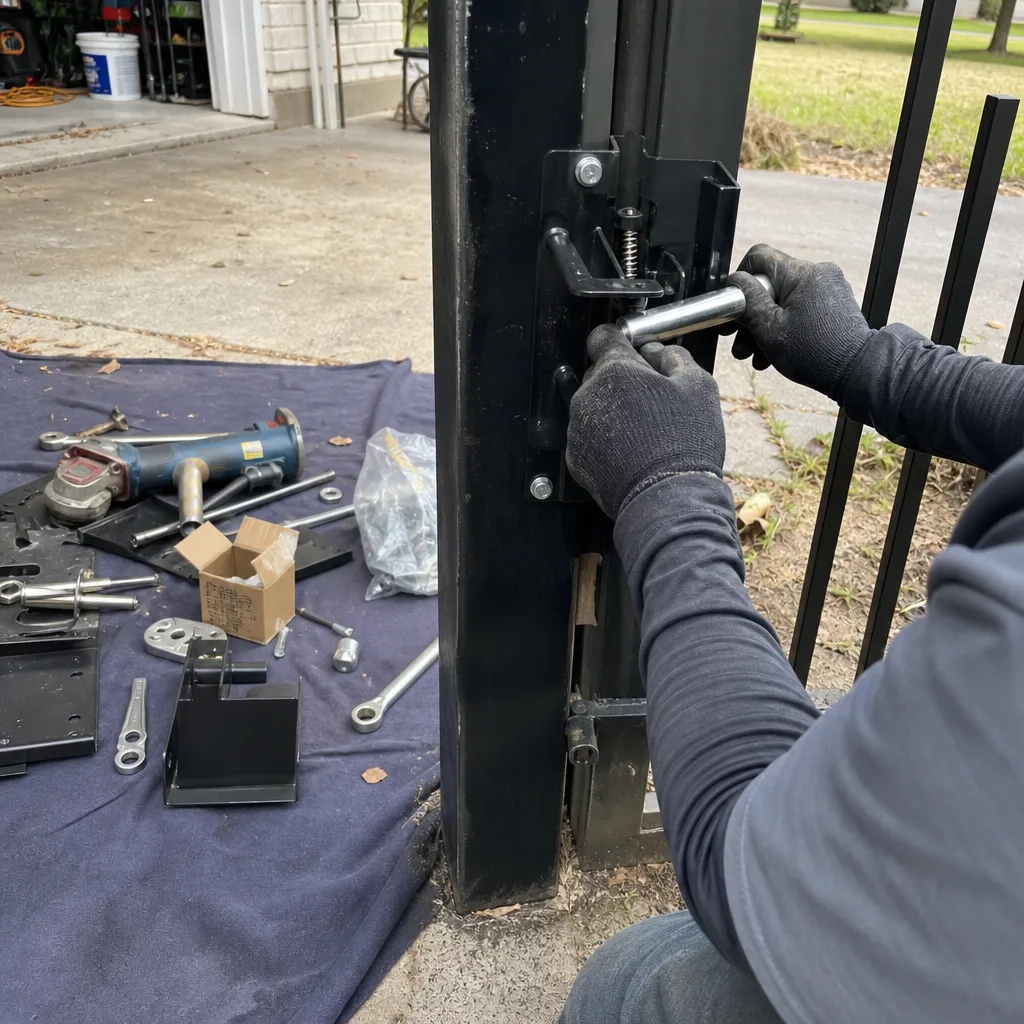
October and November in Katy are deceptive. The weather is mild, the gate is working fine, and there’s no obvious reason to think about the freezes that usually arrive between late December and early February. But fall is exactly the season when the damage that will surface in January gets locked in. Here’s why: as fall temperatures swing 30 to 40 degrees between day and night, every metal connection in the gate system expands and contracts daily. A connection that was marginal after summer heat degradation becomes intermittent. A hinge pin that was slightly worn in August becomes loose in November. And a gate that was slightly out of alignment in September becomes noticeably out of alignment after the first sustained cool snap.
The pre-freeze inspection window in Katy is reliably from mid-November through early December. Before that, the thermal cycling has not had enough swing to expose problems. After that, the first freeze may arrive before you act. Here’s the pre-freeze checklist specific to Katy’s freeze profile, short and sharp cold events rather than prolonged below-freezing periods:
- Tighten every accessible connection. This means hinge bolts, slide track bracket bolts, operator mounting bolts, and terminal screws in the control board. We find loose terminal screws on roughly one in five pre-freeze inspections we run in Katy. Each one is an intermittent failure waiting for the coldest night of the year.
- Test the gate’s reversing sensitivity. Place a small object in the gate path, a 2×4 or a filled gallon jug, and run the gate closed. The gate should reverse before applying significant force. Cold temperatures stiffen the operator’s internal lubricant, which changes the force curve, and a gate that reversed fine in October may not reverse adequately in January. Resetting sensitivity in November prevents gate damage in December.
- Check the operator battery charge. Freeze events in Katy bring wind and sometimes brief power outages. If the operator’s backup battery is weak, the gate may fail to operate during exactly the weather event when you want it functional. Test under load, four full cycles, and replace if it bogs down.
- Lubricate with cold-weather product. Switch to a low-temperature lithium grease on hinge pins and a silicone spray on track components. Grease that works fine at 80°F can turn stiff at 28°F, making the operator work harder and drawing higher amperage through the control board.
- Inspect the gate post bases. Look for hairline cracks in concrete around the base of gate posts, or for soil pulling away from the post line. This is the signature of clay soil contraction as fall rains taper off. Cracks wider than a quarter inch indicate the post is moving, and a moving post will only get looser when January freezes arrive.
If you only do one thing in fall, tighten the connections. If you only do two things, tighten the connections and test the battery. Those two steps prevent more January emergency calls in Katy than everything else combined.
Winter: What Actually Breaks During a Katy Freeze
Katy freezes are short and sharp, usually one to three days below freezing, occasionally with freezing rain or sleet, rarely with meaningful snow. The brevity matters. It means the typical winter gate failure in Katy is not frost heave or operator housing ice accumulation. It’s cold-temperature stiffening of moving parts, followed by the operator forcing the gate through resistance it was not designed to overcome.
Here’s the sequence we see every January in Katy:
- Temperatures drop into the 20s overnight. Grease on hinge pins thickens. The gate leaf, which is now physically contracted by the cold, sits tighter on its hinges.
- The homeowner cycles the gate at 6:30 AM on the first cold morning. The operator draws higher current than normal to overcome the stiffened hinges.
- The higher current causes the control board to read the resistance as an obstruction and reverse the gate mid-travel, or it trips the closing force limit and leaves the gate stuck open, or it overheats an already-degraded capacitor and the gate stops responding entirely.
- The homeowner calls for emergency repair. The technician finds a loose connection from thermal cycling, a stiffened hinge from evaporated lubricant, or a failed capacitor from summer heat. The freeze didn’t cause the problem. It exposed it.
That’s the central insight about seasonal gate care in Katy: the freeze is a revealer, not a cause. The causes are summer heat degradation and fall thermal cycling. A well-maintained gate, with tight connections, fresh lubricant, and a healthy battery, will usually ride out a Katy freeze without incident. A gate that got no pre-freeze attention may fail on the coldest morning, and when it does, the repair is an emergency call rather than a scheduled service. For help deciding whether to tackle issues yourself, read DIY vs Professional Gate Repair: The Katy Homeowner’s Decision Guide.
During an actual freeze event, there are two things worth doing. First, cycle the gate manually once if you have a manual release, just to verify the release mechanism is not frozen in place. Second, if the gate moves sluggishly on the first cold morning, let it be. Forcing repeated cycles through stiffened hinges is how limit switches get knocked out of adjustment and gears get stripped. One slow cycle tells you the gate needs lubrication. Three forced cycles tells the operator something is wrong, and then both of you are stranded.
For a full breakdown of the repair services we provide during and after freeze events, see our Gate Repair in Katy page.
Clay Soil Movement and Gate Posts in Katy
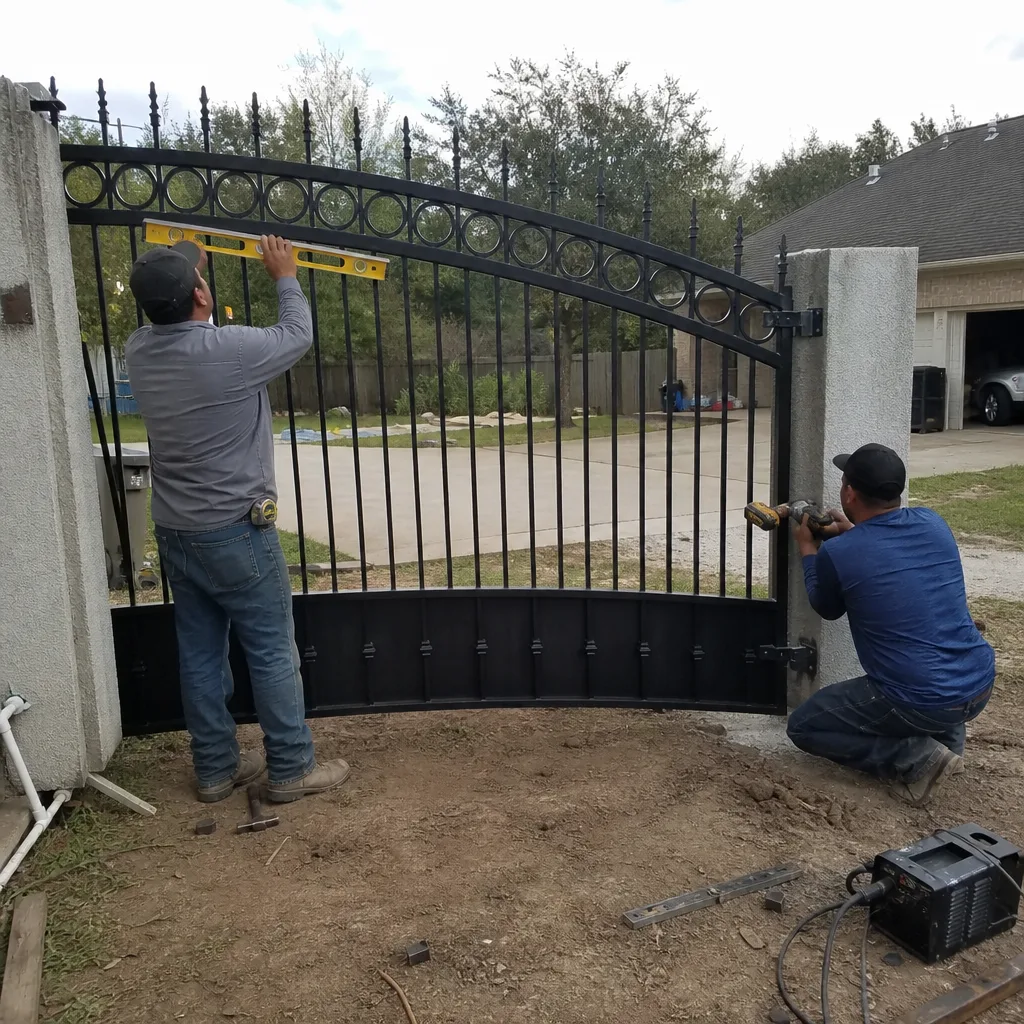
Katy sits on expansive clay soil, the same gumbo clay that runs through much of the Houston metro. That soil absorbs water in spring and early winter rains, swelling in volume by up to 10%, then shrinks dramatically during dry summer and fall months. The expansion and contraction moves gate posts, and moved gate posts are the single most expensive gate problem in Katy that homeowners never see coming.
When a gate post shifts, the gate leaf tilts. The symptoms are subtle at first: the gate starts dragging at one corner, the gap between the two gate leaves becomes uneven, the lock doesn’t line up with the strike plate, or the gate reverses intermittently because the photo-eyes are no longer aligned. Most people notice the symptom and call a technician, and the technician discovers the post has moved enough to pull the hinges out of plane. The fix is not a hinge adjustment. It’s resetting the post in concrete, and that is a half-day job or more depending on access.
What does early post movement look like? Here are the signs to watch at each season transition:
- Spring, after rains: The gate scrapes the ground at one corner that didn’t scrape before. The soil is swelling, and the post is being pushed upward slightly. If the gate still operates, it’s catching the early stage of the problem.
- Fall, after dry months: Hairline cracks appear in the concrete apron around the post base, or the soil pulls away from the post line leaving a visible gap. The soil is shrinking, and the post is losing lateral support.
- Winter, after freezes: The gate hangs up on the latch side or refuses to close fully, because the post has shifted just enough to change the geometry. The freeze didn’t move the post. It finished a process that started months earlier.
The prevention for post movement is drainage. Water pooling around the base of gate posts accelerates clay expansion and contraction cycles. If you see standing water near the post line after rain, correct the grade or add a small French drain to route water away. That’s a $200 to $500 fix on most residential gates in Katy, and it can prevent a $1,500 to $3,000 post reset later.
For gates with significant post movement, the fix often requires removing the gate leaf, excavating the post, resetting it with new concrete, and remounting the gate. It’s structural work, not adjustment work. We cover it under our Gate Installation in Katy services when a full reset or replacement is required.
What Seasonal Gate Care Costs in Katy
Seasonal gate maintenance in Katy runs from about $120 for a basic inspection and lubrication to $400 to $700 for a comprehensive seasonal service that includes wiring inspection, battery testing, photo-eye realignment, and a written condition report. Those are the numbers we quote before any work starts, because quoted price before work begins is how we operate. Here’s the breakdown of typical seasonal service costs in the Katy market:
| Service | Typical Cost Range | What’s Included |
|---|---|---|
| Seasonal inspection and lubrication | $120 - $180 | Full-cycle test, hinge and track lubrication, photo-eye check, visual wiring inspection |
| Pre-freeze service package | $180 - $280 | Connection tightening, battery load test, reversing sensitivity check, cold-weather lubrication |
| Battery replacement (residential operator) | $90 - $220 | Battery cost plus installation, depending on brand and voltage |
| Photo-eye realignment | $75 - $140 | Lens cleaning, beam alignment, reflector or eye replacement if needed |
| Control board replacement | $180 - $450 | Board cost plus installation, varies by brand (DoorKing, LiftMaster, Elite, Mighty Mule) |
| Gate post reset (single post) | $800 - $2,500 | Gate removal, post excavation and reset, concrete, gate remount and adjustment |
| Full seasonal service with documentation | $250 - $400 | Everything in the pre-freeze package plus written condition report, photos of all work, and part numbers installed |
The price range on seasonal service depends on the gate type, the operator brand, and how many issues the technician finds. A swing gate with a LiftMaster operator takes less time to service than a slide gate with a DoorKing operator and two photo-eyes plus a keypad. The important thing is that the price is written before work starts. You don’t approve work on the phone and find a different number on the invoice. That’s been our rule since Adrian Vance started the company in 2014, and it’s the first clause in what we call the Haven Standard.
If you’re budgeting for gate care in Katy, plan on $200 to $350 per year for seasonal maintenance, plus occasional repair costs for wear items. That’s less than the average emergency service call for a gate that hasn’t been maintained, and it keeps the gate operating through the season when you need it most.
Common Mistakes to Avoid
- Using the wrong lubricant. WD-40 is a water displacer, not a lasting lubricant. It washes out hinge grease and leaves the hinge dry within weeks. In Katy’s summer heat, a WD-40-treated hinge is bone dry by mid-July and squealing by August.
- Skipping the photo-eye check until the gate stops working. Photo-eyes drift out of alignment gradually, and the first sign is usually intermittent reversal, not total failure. Checking alignment each season takes five minutes and prevents nuisance calls.
- Ignoring loose terminal screws because “the gate still works.” Thermal cycling in Katy loosens terminal screws on a predictable schedule. A loose screw in November becomes an intermittent failure in January and a no-op gate on the coldest morning.
- Forcing the gate through resistance. When a gate moves slowly or struggles on a cold morning, forcing repeated cycles is how gears get stripped and limit switches get knocked out of adjustment. One slow cycle is information. Three forced cycles is damage.
- Waiting until the gate fails to check the backup battery. Backup batteries fail quietly. You don’t know they’re dead until the power goes out and the gate won’t open. Test the battery each fall before the freeze season, when the test result is still actionable.
- Painting over hinge pins and bearing surfaces. A fresh coat of paint on the gate leaf looks good, but paint on hinge pins gums up the bearing surface and changes the operating clearances. Mask the hinges before painting, or the gate will bind after the paint cures.
- Assuming a sagging gate just needs a hinge adjustment. In Katy, sagging gates usually trace to post movement from clay soil expansion and contraction, not hinge wear. Adjusting the hinge on a moving post is a temporary fix that masks the real problem.
When to Call a Professional
A seasonal inspection catches most problems before they become emergencies, but some conditions need a technician on-site. Call a professional if you see post cracks wider than a quarter inch, if the gate reverses without an obstruction, if you smell burning near the operator, if the operator buzzes but doesn’t move the gate, or if the gate moves unevenly and scrapes the ground at any point in its travel. These are not adjustment issues. They indicate failed components or structural movement. Vance Gate Repair Katy offers free estimates in Katy, with a written price before any work starts. The documented photo record on every visit is part of what we do. Call (346) 818-3319 and a live person answers, any hour.
Frequently Asked Questions
Seasonal gate maintenance in Katy typically costs between $120 and $400 depending on gate type, operator brand, and what the inspection finds. A basic inspection and lubrication runs $120 to $180, while a comprehensive seasonal service with wiring inspection, battery testing, and a written condition report runs $250 to $400. The exact price is written before any work starts. Call (346) 818-3319 for a free estimate with no obligation.
The two critical windows are March through early April, after the last freeze and first heavy spring rains, and November through early December, before the first freeze. Spring maintenance catches freeze damage and alignment issues. Fall maintenance is preventive, tightening connections and testing batteries before cold weather arrives.
Rarely by itself. What a Katy freeze does is expose problems that summer heat and fall thermal cycling created, such as loose connections, stiffened lubricant, and degraded capacitors. A gate that is properly maintained before the freeze season usually operates through short Katy freezes without significant problems.
We service nine major gate automation brands including DoorKing, LiftMaster, Elite, and Mighty Mule, plus FAAC, BFT, Linear, Viking, and Ghost Controls. We repair what’s on the property rather than steering toward a replacement. For operator-specific issues, see our Gate Motor & Opener in Katy page.
Katy’s expansive clay soil swells when wet and shrinks when dry, which moves gate posts over time. Post movement shows up as uneven gate gaps, dragging corners, and alignment problems. Drainage correction around the post base prevents most post movement, but a shifted post usually requires removal and resetting in new concrete.
One inspection per year is better than none, but Katy’s climate pattern works better with two: one in spring for freeze damage assessment and one in late fall for pre-freeze preparation. The two-inspection schedule catches problems during the seasons when they actually surface and prevents the January emergency call pattern we’ve seen every year since 2014.
Yes, written price before any work starts is how Vance Gate Repair Katy has operated since day one. Every visit includes a documented photo record of what was found and what was adjusted, and the written price is yours before the work is approved. No surprise invoices.
The Bottom Line
Seasonal gate care in Katy is about understanding which season creates problems and which season reveals them. Summer heat degrades seals, wiring insulation, and batteries. Fall thermal cycling loosens connections and stiffens moving parts. Winter freezes expose all of that accumulated damage in the form of a gate that fails on the coldest morning. Spring is when alignment problems from clay soil movement become visible. Two inspections per year, one in early spring and one in late fall, catch developing issues before they become emergency calls. The work is predictable, the cost is known upfront, and a two-season maintenance rhythm keeps your gate operating through every Katy weather event, not just the mild ones. Visit our more guides & resources for additional maintenance tips.
Written by Adrian Vance, Owner at Vance Gate Repair Katy, serving Katy since 2014.