
Last updated September 20, 2026
Free on-site gate assessment - hinges, posts, and your LiftMaster or Nice gate operator checked before anything is quoted
The assessment is free and the quote is the invoice.

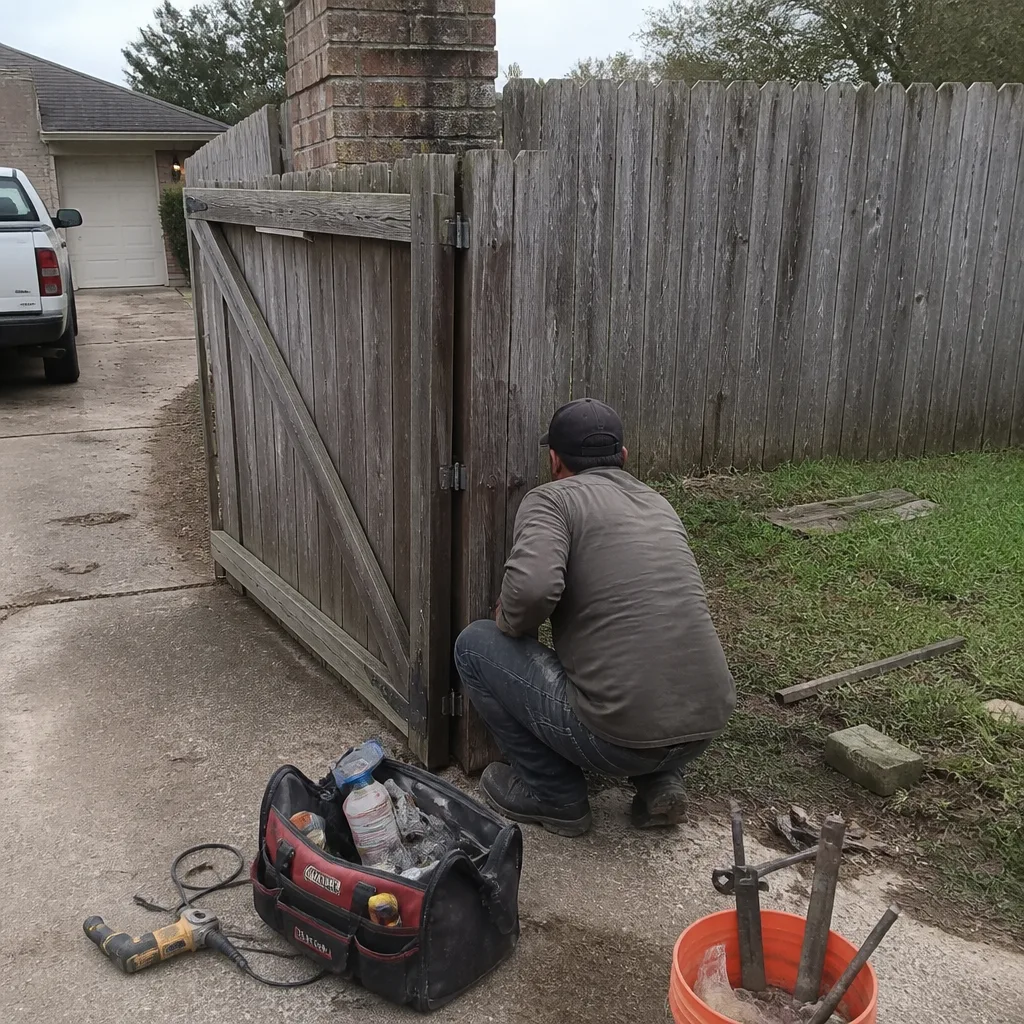 Before
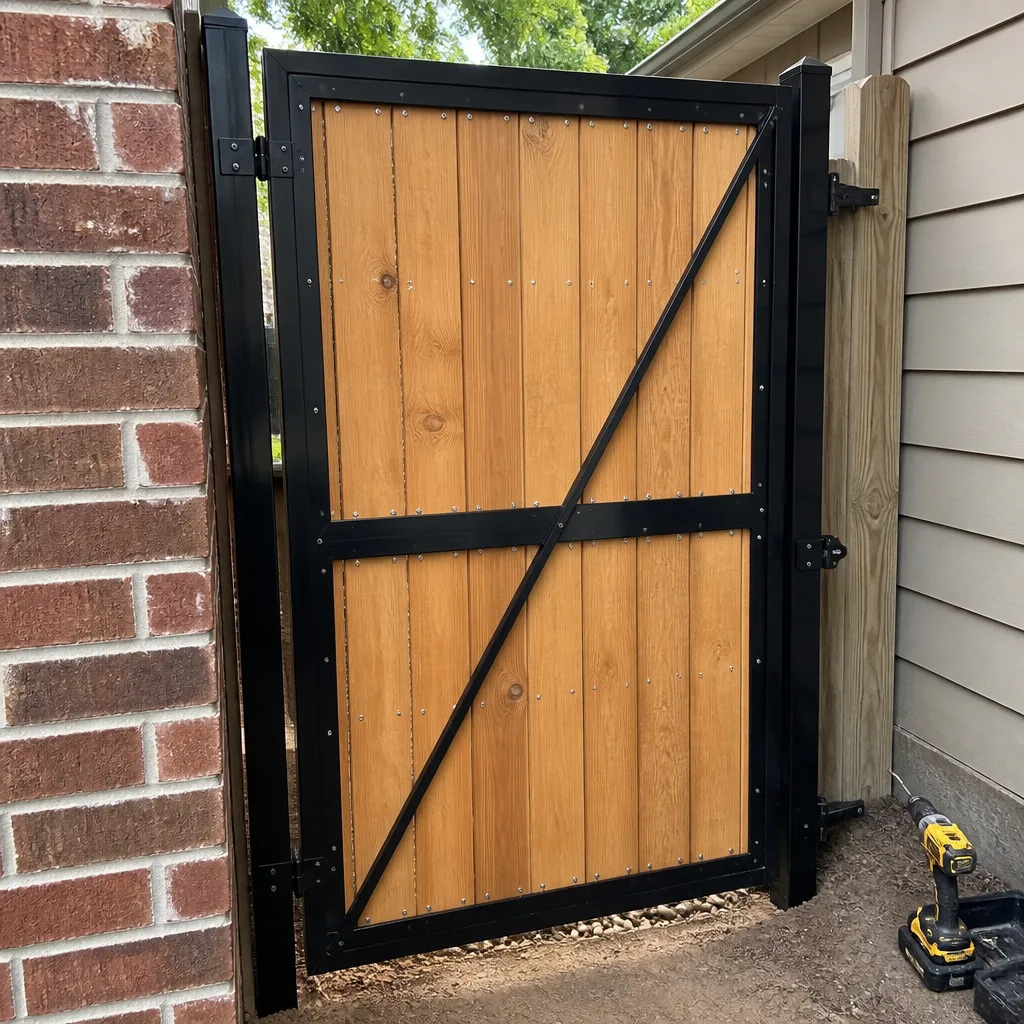 After
After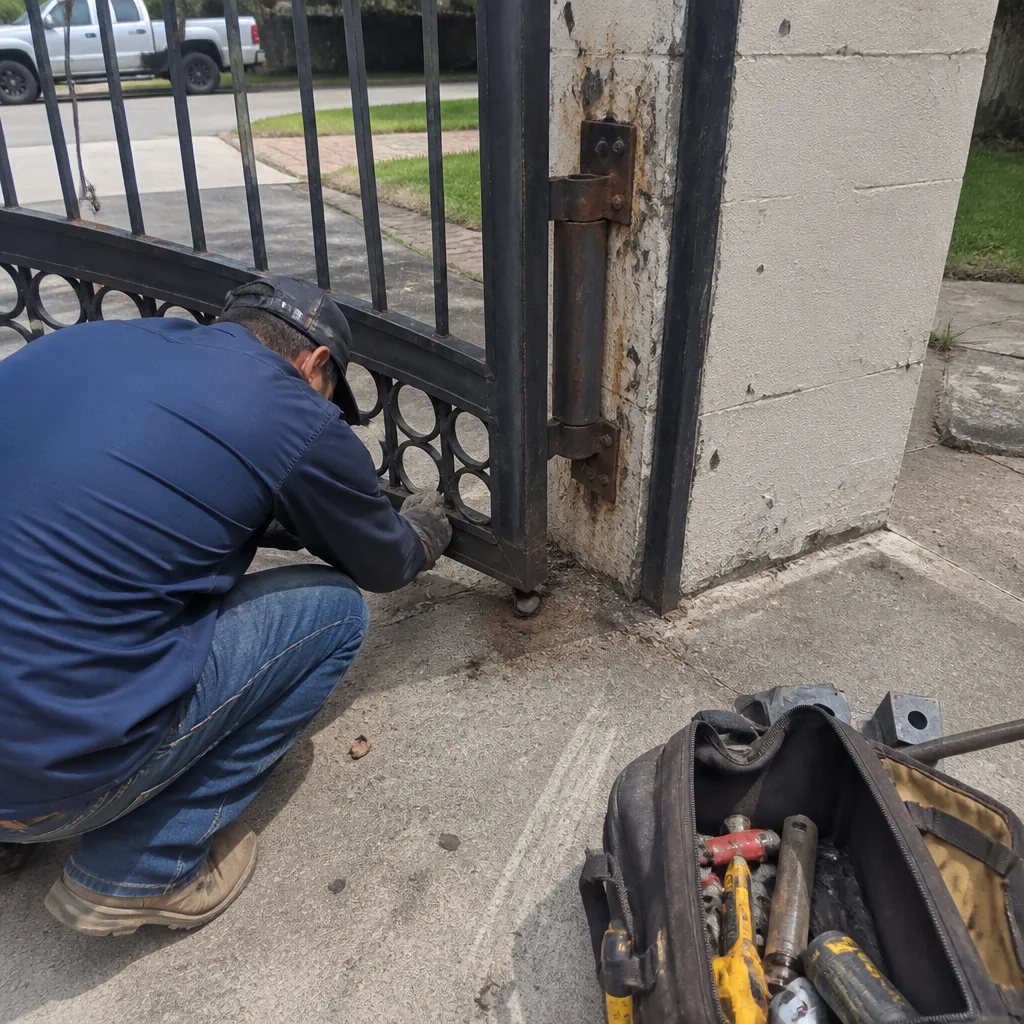 Before
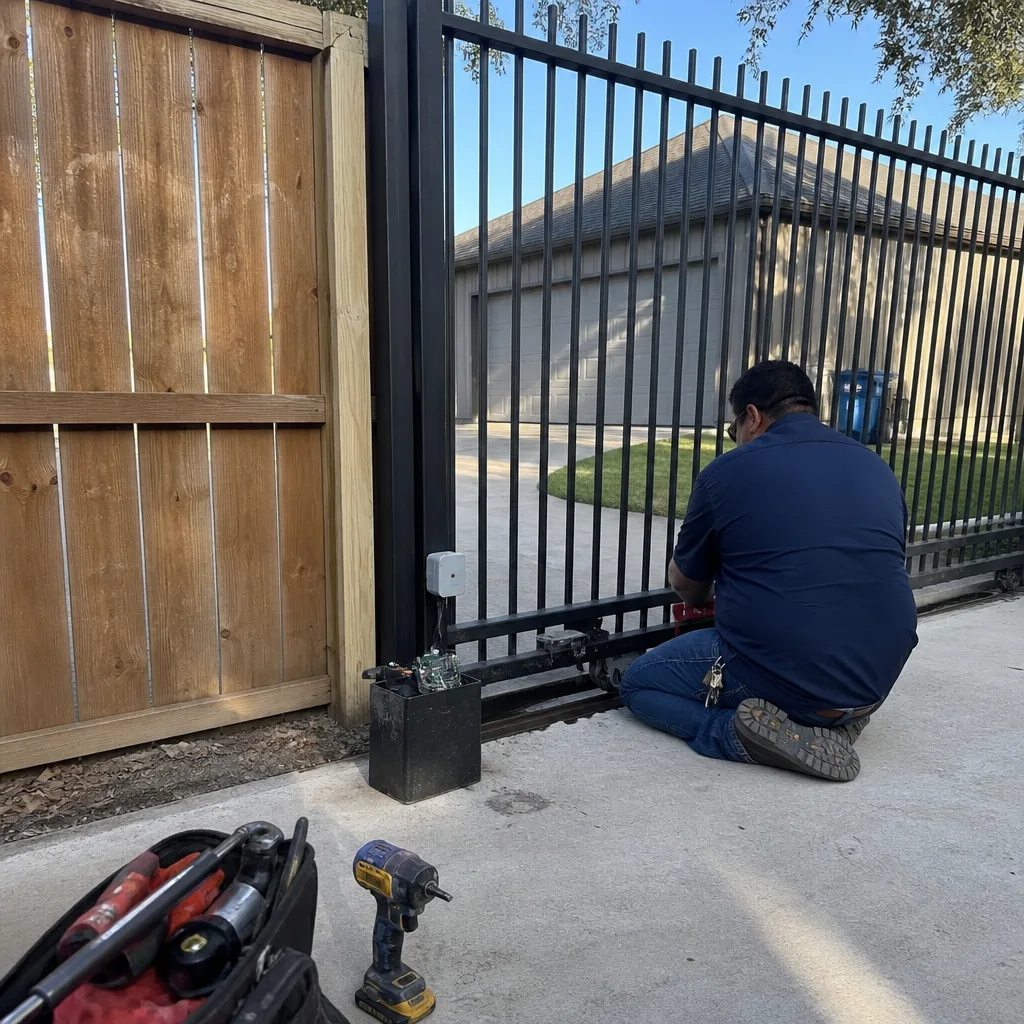 After
After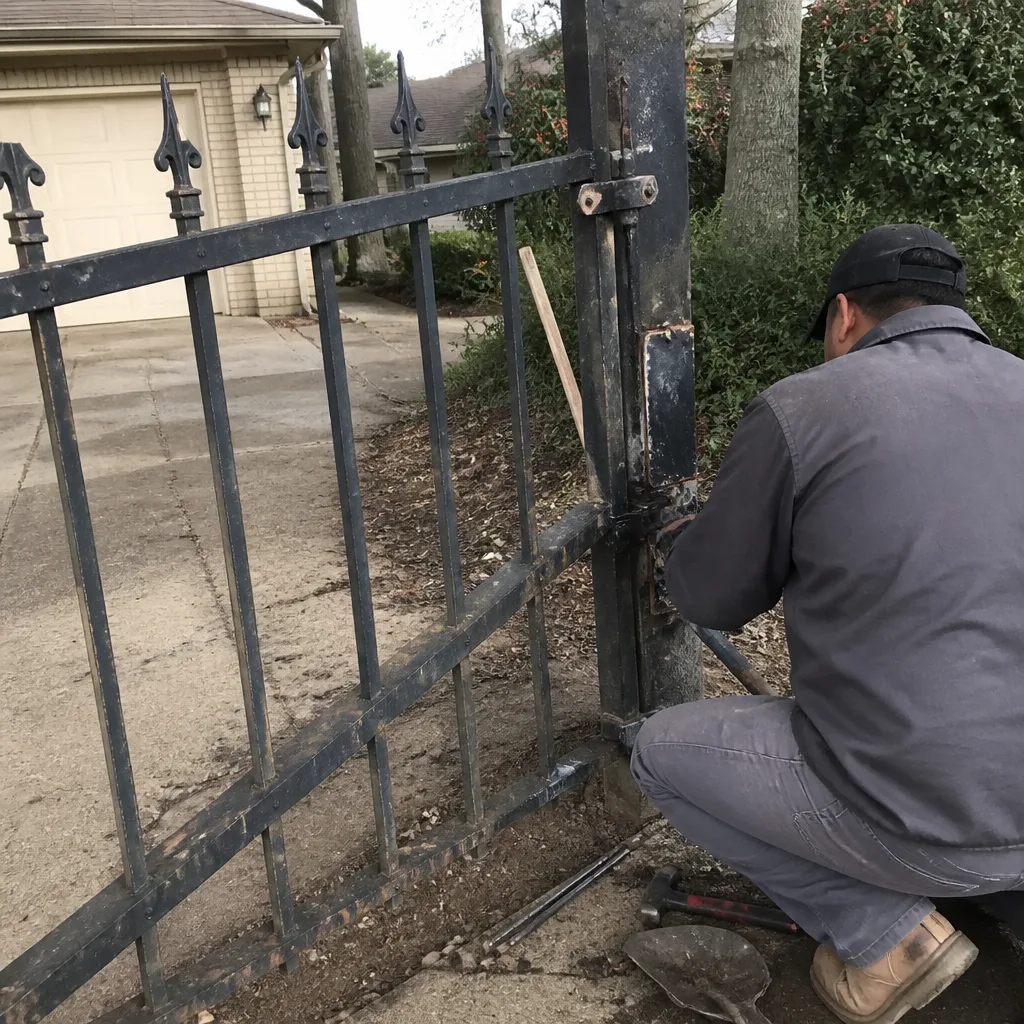 Before
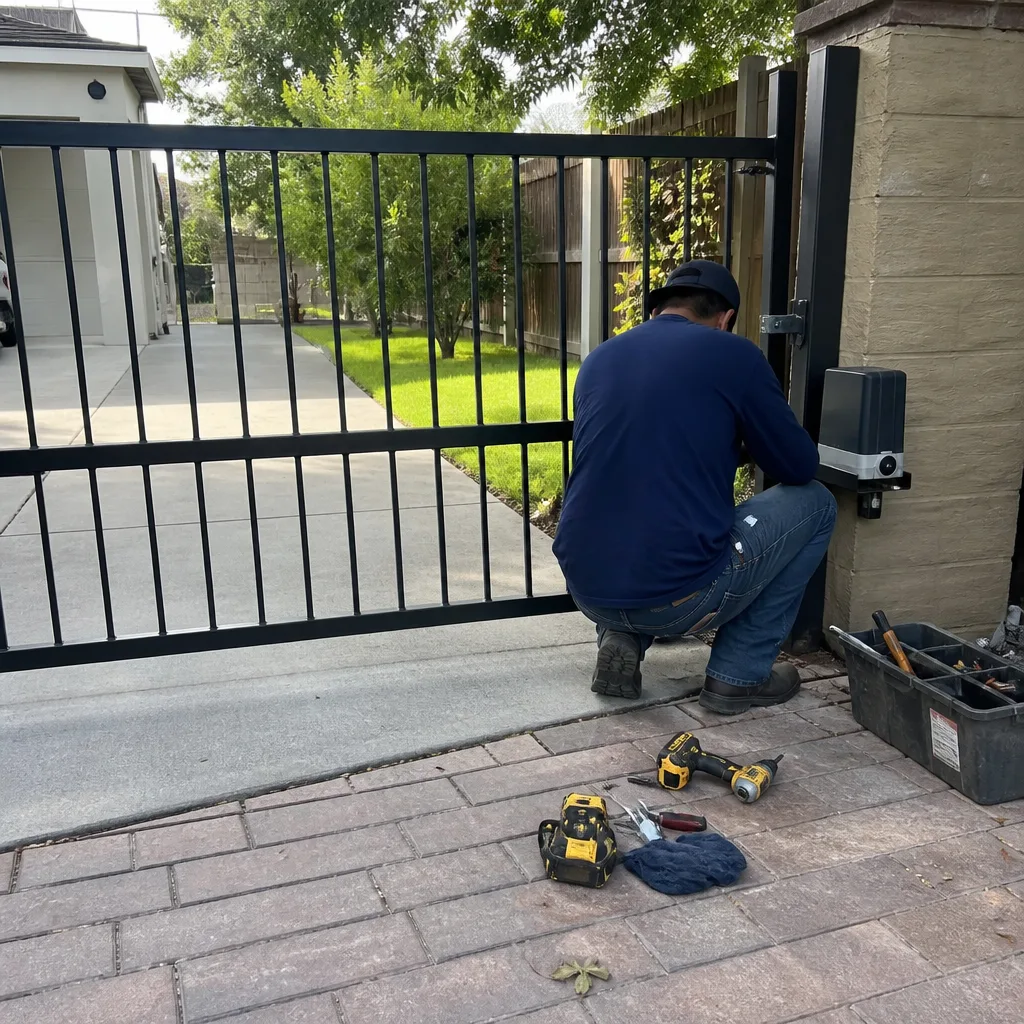 After
AfterDIY vs Professional Gate Repair: The Katy Homeowner’s Decision Guide
The $40 hinge a Katy homeowner replaces themselves is a legitimate repair. But if there’s no photo of the wiring layout taken before the control board was removed, the next technician bills an extra hour to reverse-engineer what was there. This guide walks through which gate repairs genuinely make sense as DIY projects in Katy, which ones cross into licensed-electrician territory, and where the documentation a professional leaves behind is worth more than the labor itself. For more on this topic, see our Gate Repair overview. You’ll find a task-by-task breakdown, real cost math including tools and time, and the recording standard any DIY job should meet so it doesn’t become a future service liability.
Quick Answer
DIY gate repair in Katy is cost-effective for mechanical tasks like hinge lubrication, wheel cleaning, and tightening loose hardware, but electrical work on gate motors and control boards carries real risk of damaging expensive components or voiding the operator warranty. Professional repairs are worth the cost when the job requires diagnostic work on automation systems, when a weld fails, or when you want a written record and documented photo log of what was found and what was changed, which protects you from paying twice for the same diagnosis later. For most Katy homeowners, the honest split is this: handle cleaning, lubrication, and hardware tightening yourself; call a gate specialist for everything involving the motor, the control board, the photo-eyes, or the structural welds.
Table of Contents
- The Task-by-Task Matrix: What You Can Safely Do Yourself
- Electrical Boundaries in Texas: What the Law Actually Says
- The Documentation Standard Every DIY Repair Should Meet
- The Real Cost of DIY: Tools, Time, and Misdiagnosis Risk
- What a Professional Leaves Behind That a DIY Can’t
- Katy-Specific Factors: Climate, Soil, and Code
- Common Mistakes to Avoid
- When to Call a Professional
- Frequently Asked Questions
BeforeAfterThe Task-by-Task Matrix: What You Can Safely Do Yourself
Not all gate repairs are equal. Some are genuinely within reach of a competent homeowner with basic tools. Others require gate-specific training, and a few legally require a licensed electrician. Here’s the honest breakdown, based on what we see in driveways across Katy, from Cinco Ranch to Firethorne to Old Katy.
Safe and cost-effective DIY tasks:
- Hinge lubrication: A can of white lithium grease costs about $9 at any Katy hardware store. Cleaning the hinge pin and applying fresh grease takes 20 minutes and prevents the grinding wear that eventually requires hinge replacement.
- Track and wheel cleaning for slide gates: Katy’s clay soil and construction dust build up in the V-track quickly. Clearing debris with a stiff brush and checking that the wheels turn freely is straightforward, no special tools needed.
- Tightening loose bolts and hardware: Gate panels vibrate with every open-close cycle. A socket set and 30 minutes of methodical tightening, working from hinges outward, prevents lateral sag.
- Replacing a worn-out keyed lock or padlock hardware: Mechanical lock replacement on a manual gate is simple and requires no wiring knowledge.
- Clearing photo-eye lenses: A soft cloth and glass cleaner on the photo-eye (the infrared beam that stops the gate if something crosses the path) often fixes intermittent reversing issues caused by dust or spider webs.
Repairs that require gate-specific expertise:
- Limit switch adjustment: This is the component that tells the motor where to stop. Set it wrong and the gate slams into the post or reverses mid-travel. We’ve corrected limit switches in Katy that homeowners had set 12 degrees past travel, which was burning out the motor’s internal capacitor.
- Control board diagnosis: A FAAC or BFT board is not a plug-and-play component. Misdiagnosing a board failure when the actual fault is a shorted loop detector means buying a $400 board that doesn’t fix the problem.
- Gate motor or operator arm replacement: The weight of a 16-foot iron gate, the swing geometry, and the motor torque rating all have to match. Get it wrong and the motor burns out in six months.
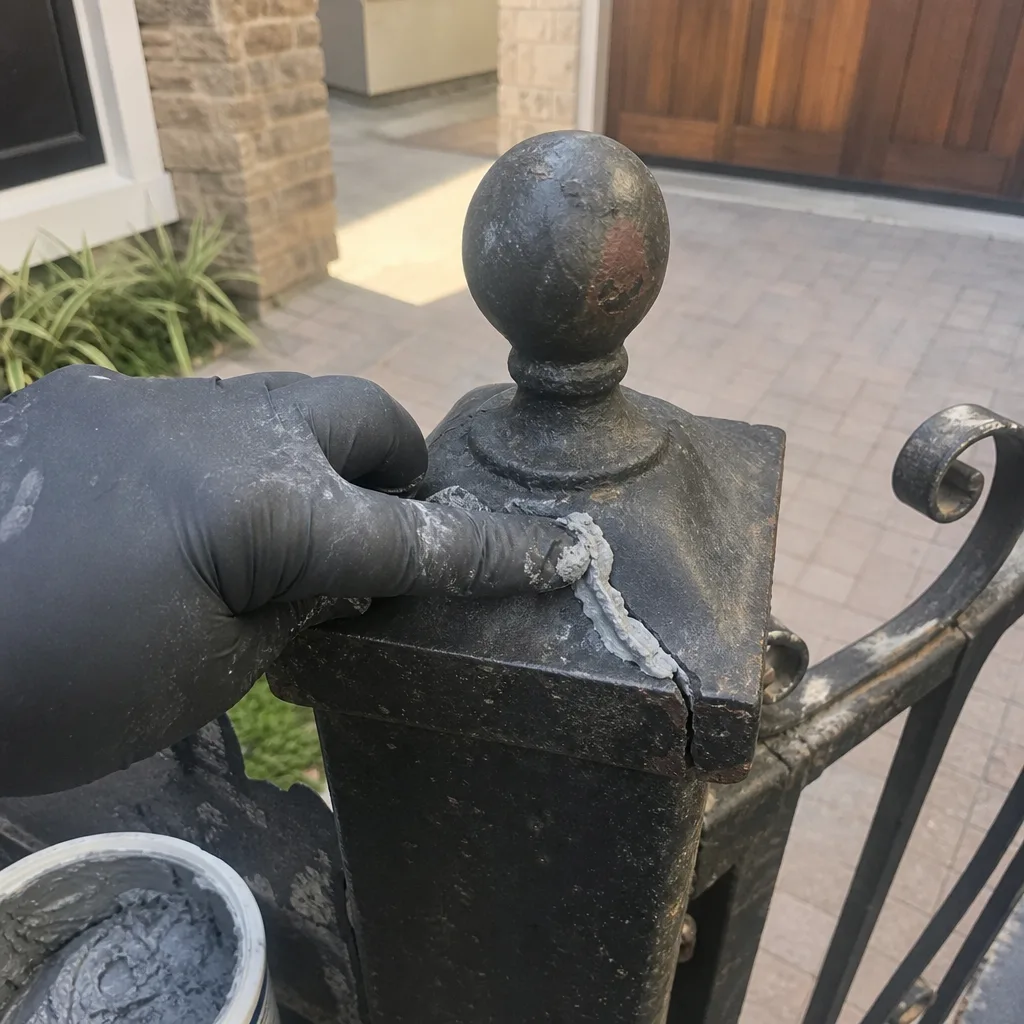
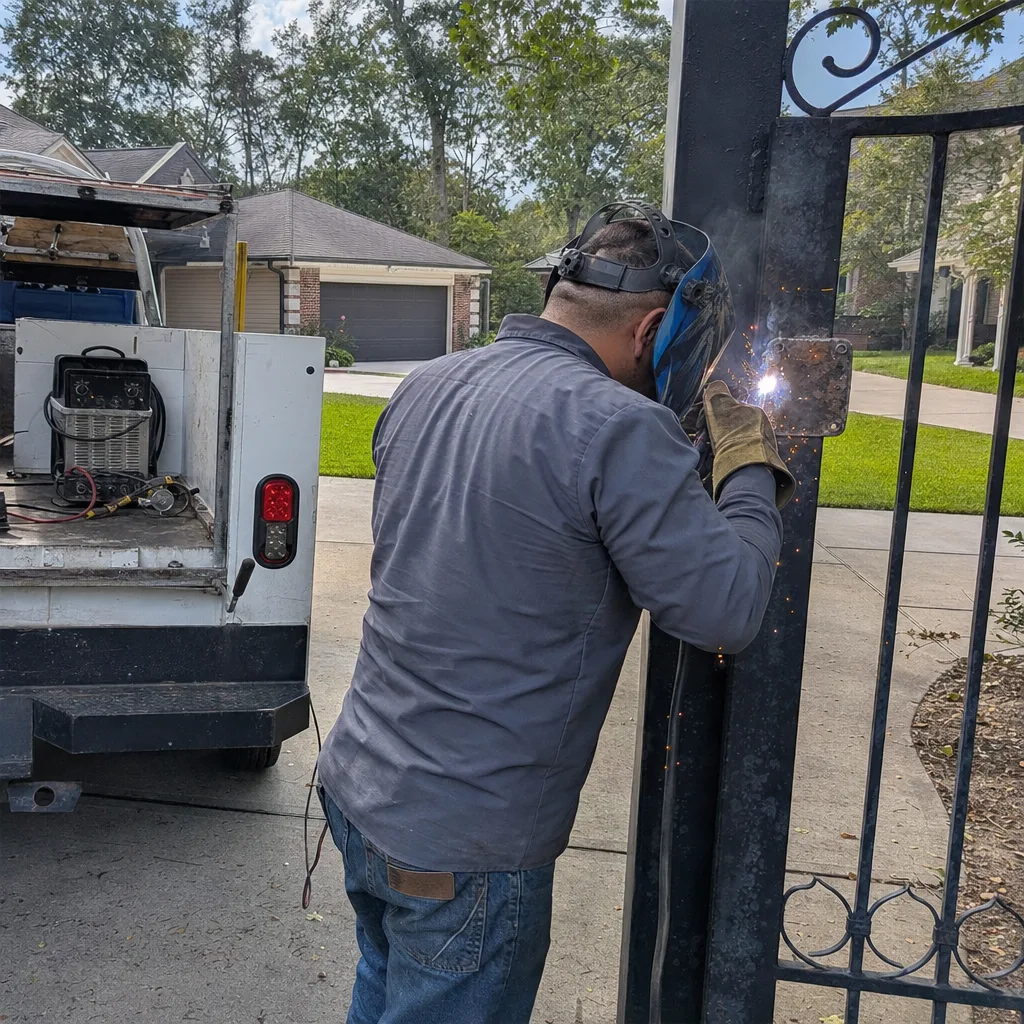
- Weld repair on cracked gate frames or hinge brackets: A cold weld or wrong filler rod on an iron gate fails fast in Katy’s humidity. This is structural, and a bad weld on a gate that weighs several hundred pounds is a safety hazard.
Repairs that legally require a licensed electrician:
- Running new line-voltage power from the house to the gate: Any work on 120V or 240V supply wiring feeding the gate operator falls under electrical work that Texas requires a licensed electrician to perform.
- Installing or modifying a dedicated circuit breaker: Adding a breaker for gate power means opening the main panel, which is electrician work.
For a complete look at what a full repair involves, see our Gate Repair in Katy page, which walks through the diagnostic process step by step.
Electrical Boundaries in Texas: What the Law Actually Says
Texas draws a clear line between low-voltage work and line-voltage work, and that line matters more than skill level. A homeowner can legally work on the low-voltage side of a gate system: the control board, photo-eyes, keypads, loop detectors, and wiring between those components that carries 24V DC or less. That’s true regardless of whether the work is done well.
What a homeowner cannot do, regardless of competence, is any work on the line-voltage side: the 120V or 240V supply from the breaker panel to the gate operator, any conduit run carrying that power, or any connection inside the main electrical panel. In Texas, that work requires a licensed electrician, full stop. The same applies to trenching new electrical service out to a gate that was previously manual.
There’s also a practical boundary that matters in Katy specifically. Many of the neighborhoods here were built in phases, some with gates wired during original construction, some retrofitted later. In retrofitted homes, the power run to the gate is often a DIY job from a previous owner. We’ve found gate circuits spliced into pool-pump circuits, run through unburied PVC, and connected with wire nuts sitting in standing water. When you open a control box and find wiring that doesn’t match any standard, stop. That’s not a repair question anymore. That’s a rewire, and it needs a licensed electrician.
The Documentation Standard Every DIY Repair Should Meet
The thesis of this guide is that the DIY vs. professional decision isn’t really about skill, it’s about documentation. A homeowner can competently replace a wheel or tighten a hinge. The problem arises when that same homeowner opens a control box, disconnects four wires to swap a part, and puts it back from memory. Three months later the gate stops responding and the next technician has to spend an hour tracing wires that no longer match any wiring diagram. That hour is billable.
If you’re going to do your own gate work, here’s the minimum documentation standard that keeps your future costs down:
- Photograph everything before you disconnect anything. Take close-up photos of every wire, every terminal, every connector from multiple angles. A phone camera is sufficient. If there are wire colors, photograph where each color lands.
- Label wires as you remove them. Masking tape and a Sharpie work fine. Write what terminal it came from, not just “wire A” and “wire B.” The next person (including future you) needs the terminal designation.
- Measure and record the limit positions before adjusting. Write down the exact distance the gate travels from closed to open in inches. If you adjust a limit switch, record the before and after measurement.
- Log the part number of anything you replace. Not “a new capacitor,” but “LiftMaster part #K74-30762, 53-64 MFD.” Future diagnosis depends on knowing exactly what’s installed.
- Take photos after the repair is complete. Same angles as the before photos. This proves what was changed and what wasn’t.
This is the same habit Adrian Vance developed on commercial access-control sites starting in 2014, and it carries over to every residential gate job. Under The Haven Standard, every professional repair we complete includes a documented photo record left with the homeowner, wiring diagrams where applicable, and limit-switch readings. When you pay for a professional repair at Vance Gate Repair Katy, part of what you’re buying is the proof of what was found and what was changed, so the next visit starts from a known baseline instead of a fresh diagnosis. For deeper reading, see our Gate Repair Maintenance Checklist for Katy Homeowners.
The Real Cost of DIY: Tools, Time, and Misdiagnosis Risk
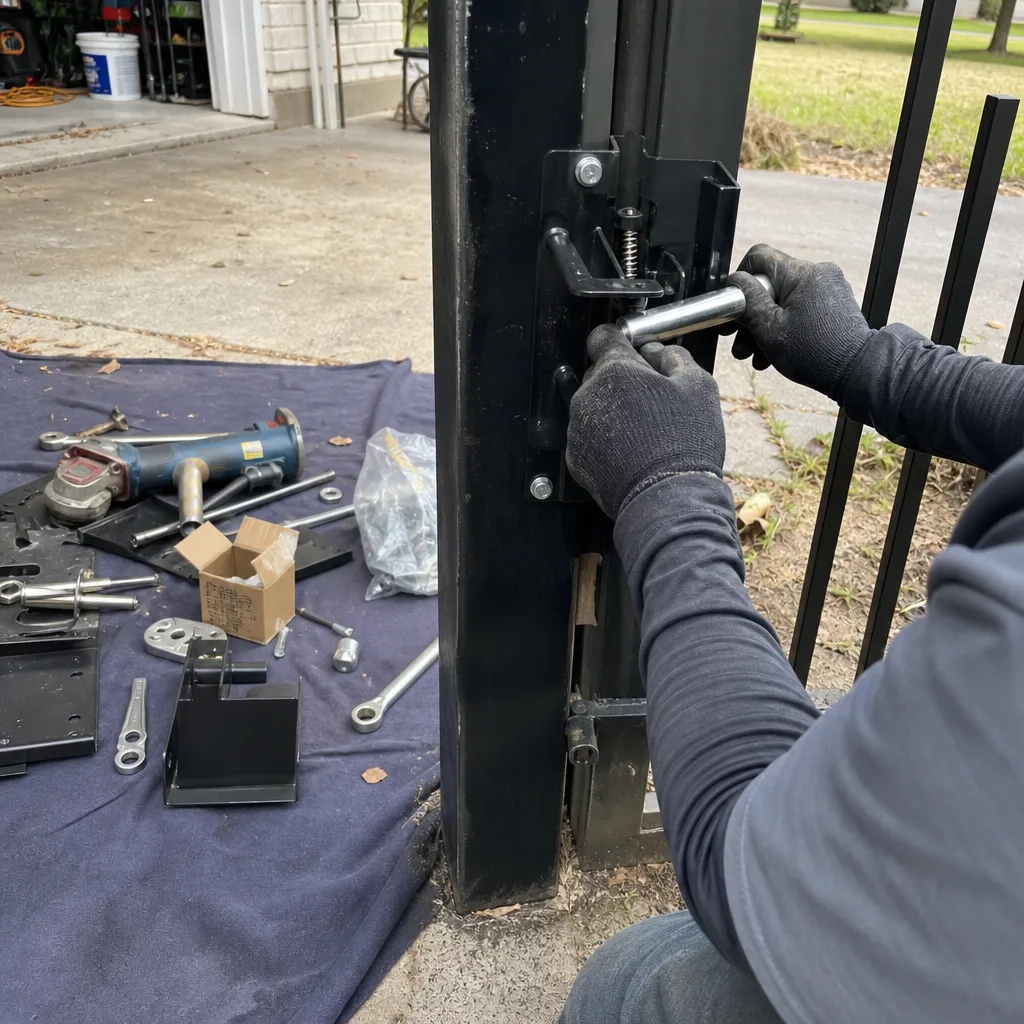
The sticker price of a DIY repair almost never matches the real cost. Here’s the actual math for a common job: replacing a gate wheel on a slide gate.
DIY version: The wheel itself is $18 to $45 at a Katy hardware store. But the job requires removing the gate panel from the track, which means lifting a several-hundred-pound gate. You’ll need a floor jack ($40 to $80 if you don’t own one), a socket set rated for the hardware ($30 to $60), penetrating oil ($8), and likely a second person for two hours. If everything goes right, you’re at roughly $100 to $190 and half a Saturday. If the wheel was seized because the gate is misaligned, which is common in Katy’s shifting clay soil, you’ll replace the wheel and the gate will still scrape because the underlying alignment problem was never corrected.
Professional version: The wheel, the alignment correction, and a check that the gate travels true runs between $150 and $300 in Katy, depending on gate size and access. You get a written price before the work starts, a photo log of the old wheel and the new wheel position, and a documented record of what was adjusted.
The misdiagnosis cost is the variable most homeowners don’t price in. We see a pattern in Katy where a homeowner replaces a gate operator battery or a limit switch based on a YouTube video, the symptom doesn’t change, and the $40 part plus three hours of labor has to be followed by a professional visit anyway. The professional visit now includes untangling whatever was changed. A bad DIY repair often costs more than no repair at all.
Time matters too. A professional with experience on FAAC, BFT, and Linear operators diagnoses most motor faults in under an hour. A homeowner researching the same fault can spend eight to twelve hours across evenings and weekends reading forums and watching videos. If your time is worth anything, that’s a significant hidden cost.
What a Professional Leaves Behind That a DIY Can’t
There’s a specific class of professional gate repair where the value is not the repair itself, it’s the record. When the job involves the control board, the limit switches, the photo-eyes, or any wiring, the leave-behind documentation is the difference between a one-time cost and a recurring cost.
Here’s what a professional repair at Vance Gate Repair Katy produces that a DIY repair does not:
- A written scope and written price before any tool is picked up. Haven Standard Clause 1. No verbal estimate, no surprise invoice at the end. The price you approve is the price you pay.
- A photo log of the entire visit. What the technician found in the control box before touching anything, what was adjusted, and what the final configuration looks like. This is filed in the job record and a copy is left with you.
- Limit-switch baseline readings. The exact travel measurements before and after adjustment. If the gate’s behavior changes six months later, the next technician compares against this baseline rather than starting blind.
- Part numbers and sources for everything installed. Future replacement is a lookup, not a guess.
- A 365-Day Done Right Promise. If the repair isn’t right, Vance makes it right within one full year, no argument, no fee, no expiration date within that window.
The practical consequence: when you hire a professional who documents work properly, you never pay twice to rediscover the same problem. That’s the real financial argument for professional service on anything electrical or diagnostic.
Katy-Specific Factors: Climate, Soil, and Code
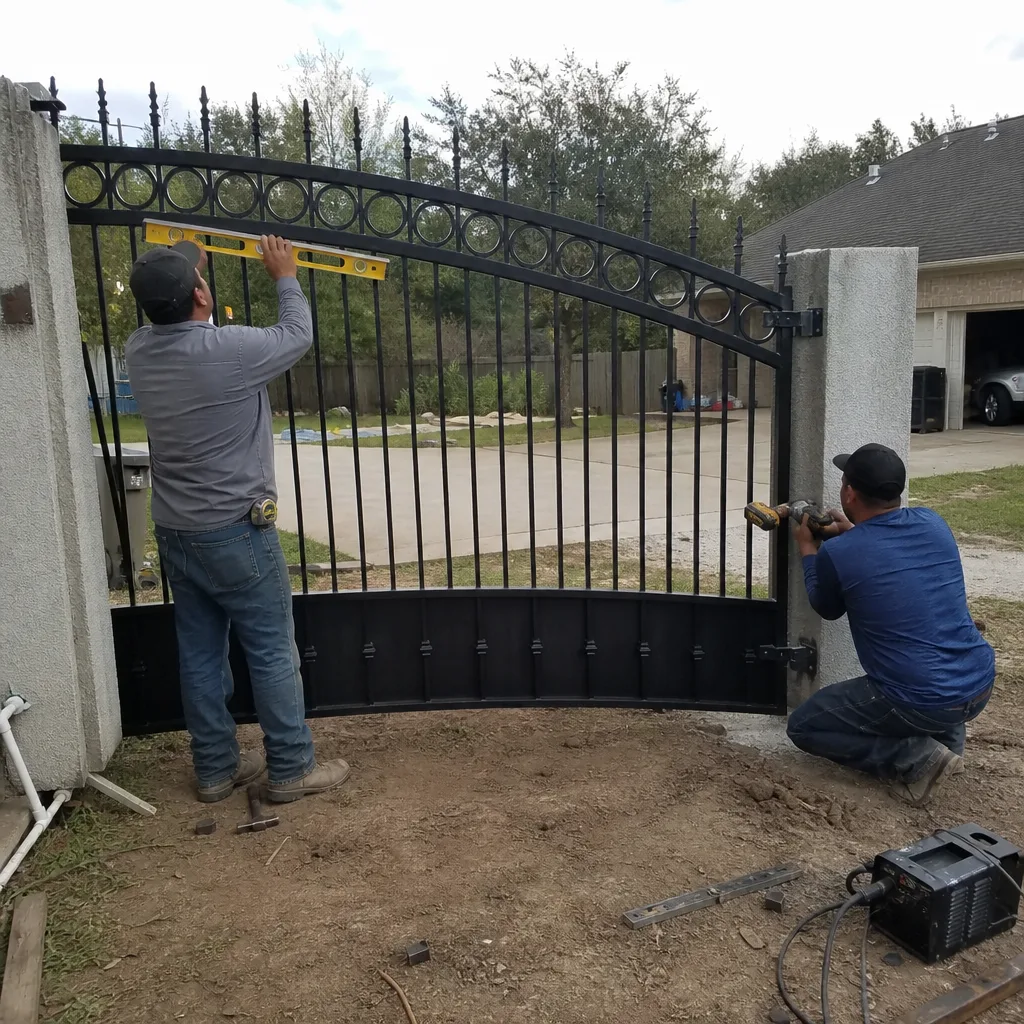
Katy presents a specific set of conditions that affect gate repair decisions, and homeowners who have lived here a while will recognize them.
Clay soil movement. Katy sits on expansive clay soil that swells when wet and contracts in drought. Gates installed on concrete pads poured before the soil stabilized will shift. A gate that scraped last spring and works fine in August isn’t fixed, it’s waiting for the next rain. DIY repairs that address symptoms (replacing the wheel, adjusting the latch) without addressing alignment are temporary. Professional gate repair in Katy includes checking the post alignment against the actual soil conditions, not just the visible symptom.
Humidity and corrosion. Katy’s humidity means gate hinges, brackets, and motor housings corrode faster than they do in drier parts of Texas. Galvanized hardware still eventually fails. When you inspect your gate, look for rust staining at the hinge welds, which indicates water intrusion into a joint that will eventually crack. Rust removal and protective treatment is a reasonable DIY task; repairing a rust-compromised weld is not.
Hurricane-season wind loads. Katy is far enough inland to avoid storm surge, but hurricane-force wind gusts do reach here. A gate that’s misaligned or has a weakened hinge is a projectile risk in high wind. After any major wind event, check the hinge points and the post mounts for movement. If the gate no longer travels smoothly after a storm, something shifted structurally.
HOA and municipal requirements. Much of Katy is governed by HOAs with specific requirements for gate appearance and setback. Some neighborhoods require matching ornamental iron, some restrict gate height, and some regulate how far back a gate can sit from the street. Before a DIY gate replacement, check your deed restrictions. Our Gate Installation in Katy page covers the factors that affect new installs, including HOA considerations.
Common Mistakes to Avoid
- Replacing the control board without testing the photo-eyes first. Photo-eye misalignment is one of the most common causes of gate failure in Katy, and it mimics board failure. We’ve seen homeowners spend $400 on a Linear board when the actual fault was a photo-eye knocked out of alignment by two inches of post settling.
- Lubricating the gate motor or control board. Lubricant does not belong on electrical components. Spraying WD-40 into a motor housing will destroy the brushes. Lubricate mechanical pivots only.
- Disconnecting wires without photographing the terminal block first. This is the single most expensive DIY mistake we correct in Katy. One unlabeled disconnect adds an hour of trace work to the next service call.
- Forcing a gate that’s stuck rather than diagnosing why it’s stuck. If the gate won’t move, something is bound. Forcing it with the manual release or with car power bends the operator arm, strips gears, or cracks the weld at the hinge point.
- Installing a replacement motor with more torque “just to be safe.” An oversized motor on a light gate accelerates wear on the hinge points and can deform the gate frame. Motor torque has to match the gate weight, not exceed it.
- Treating a gate that intermittently reverses as a minor nuisance. Intermittent reversing is usually a safety sensor issue, and leaving it unresolved means the gate may fail to detect a child or pet in the path at the wrong moment.
- Skipping the HOA check before changing the gate’s appearance. In several Katy neighborhoods, an unapproved gate style change will result in a violation notice and a demand to reverse the work. Check the deed restrictions before you buy materials.
When to Call a Professional
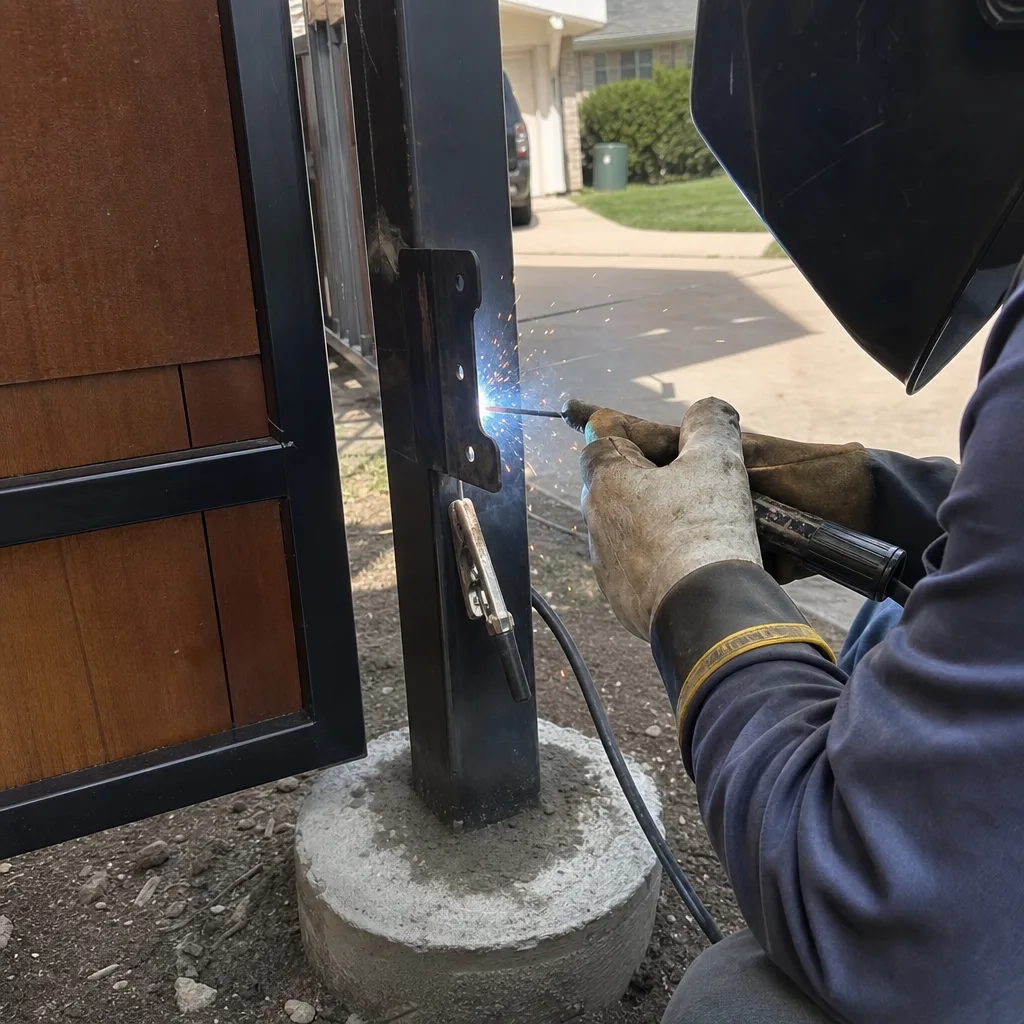
Call a professional when the control board is involved, when the motor shows signs of strain, when a weld has cracked, when the gate is out of alignment due to soil movement, or when you’ve already attempted a repair and the problem persists. Any work on line-voltage wiring requires a licensed electrician, not a gate technician. For the rest, a gate specialist who works on FAAC, BFT, Linear, and Viking operators can diagnose the actual fault and produce a written record of the fix. Vance Gate Repair Katy offers free estimates in Katy, call (346) 818-3319. The price is written and handed to you before any work starts.
For more detail on motor and automation issues, see our Gate Motor & Opener in Katy page.
Frequently Asked Questions
Gate repair in Katy typically runs between $150 and $600, depending on the job. Simple mechanical repairs like wheel replacement or hinge tightening run $150 to $300. Control board diagnosis and replacement runs $250 to $500 including the part. Motor replacement on a swing gate typically runs $500 to $1,200 depending on brand and whether the arm bracket is intact. Structural weld repair runs $150 to $400 depending on the crack location and access. Call (346) 818-3319 for a written quote, estimates are free and the price is agreed before any work starts.
You can work on the low-voltage side of the gate system, including the photo-eyes, keypads, and control board, but if the issue is the motor itself, the repair involves torque specs and arm geometry that matter. A badly installed motor on a FAAC or BFT operator will fail prematurely. If you attempt it, photograph every connection before disconnecting anything and record the limit-switch positions. If the gate operator is still under warranty, confirm whether DIY work voids the coverage before you open anything.
In our experience, the most common gate problem in Katy is photo-eye misalignment caused by post movement in the clay soil. The gate intermittently reverses, stops mid-travel, or refuses to close. It’s often misdiagnosed as a control board failure. The fix is usually a re-alignment and a post-shift check, call for a diagnosis.
If the operator is over 12 to 15 years old and the motor is the failed component, replacement is usually more cost-effective than repair. Motor replacement on an operator that age often means the limit assembly and control board are also near end of life. But if the operator is under 10 years old, repair is almost always the right call. The exception is if the operator is obsolete and parts are no longer available, which is increasingly common with discontinued brands. See our Vance Gate Repair Katy home page for more on how we evaluate repair vs. replacement.
You should get a written price before work starts, a written description of what was found and what was repaired, and photographic evidence of the work performed. Under The Haven Standard, Vance Gate Repair Katy provides all three on every job, plus a 365-Day Done Right Promise covering all completed work. If a company won’t put the price in writing before starting, that’s a red flag.
Yes. A live person answers the phone at Vance Gate Repair Katy 24 hours a day, seven days a week, and a stuck-open gate is a safety issue that we treat as a priority. Call (346) 818-3319 and we’ll dispatch a background-checked, uniformed technician with a name and photo provided before arrival.
The Bottom Line
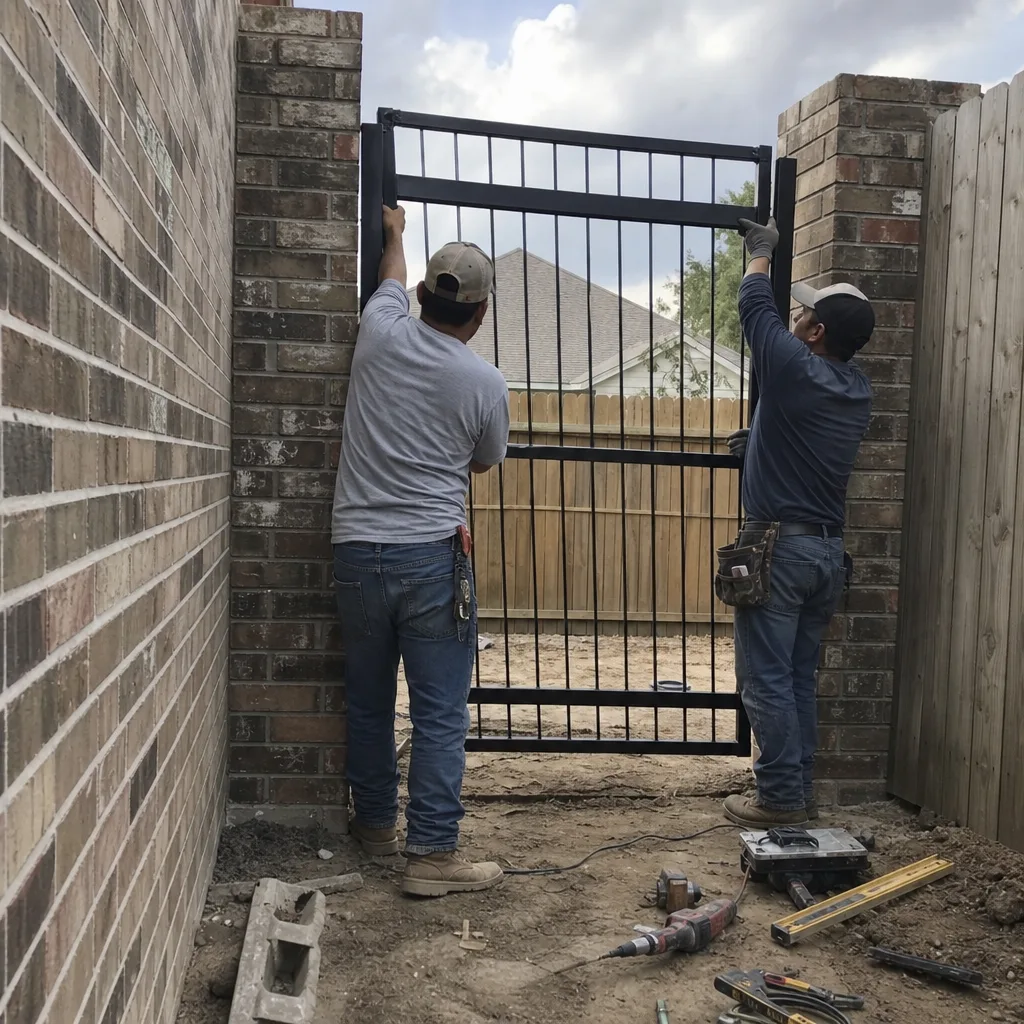
The DIY vs. professional gate repair decision in Katy comes down to three questions. Is the task purely mechanical? Is the wiring involved? And does the repair need to leave a record? Mechanical tasks like cleaning, lubricating, and tightening are reasonable DIY territory. Anything electrical, diagnostic, or structural benefits from a professional, not because homeowners lack skill, but because the written scope, photo documentation, and baseline readings protect the homeowner from paying twice for the same diagnosis. If you take one thing from this guide: photograph everything before you disconnect anything, and if the job involves the motor, the board, or the welds, a written price and a documented record from a gate specialist is the cheaper long-term choice. Explore more guides & resources on our blog. Call (346) 818-3319 for a free estimate, the price is in writing before anyone picks up a tool.
Written by Adrian Vance, Owner at Vance Gate Repair Katy, serving Katy since 2014.