
Last updated September 20, 2026
Free on-site gate assessment - hinges, posts, and your LiftMaster or Nice gate operator checked before anything is quoted
The assessment is free and the quote is the invoice.
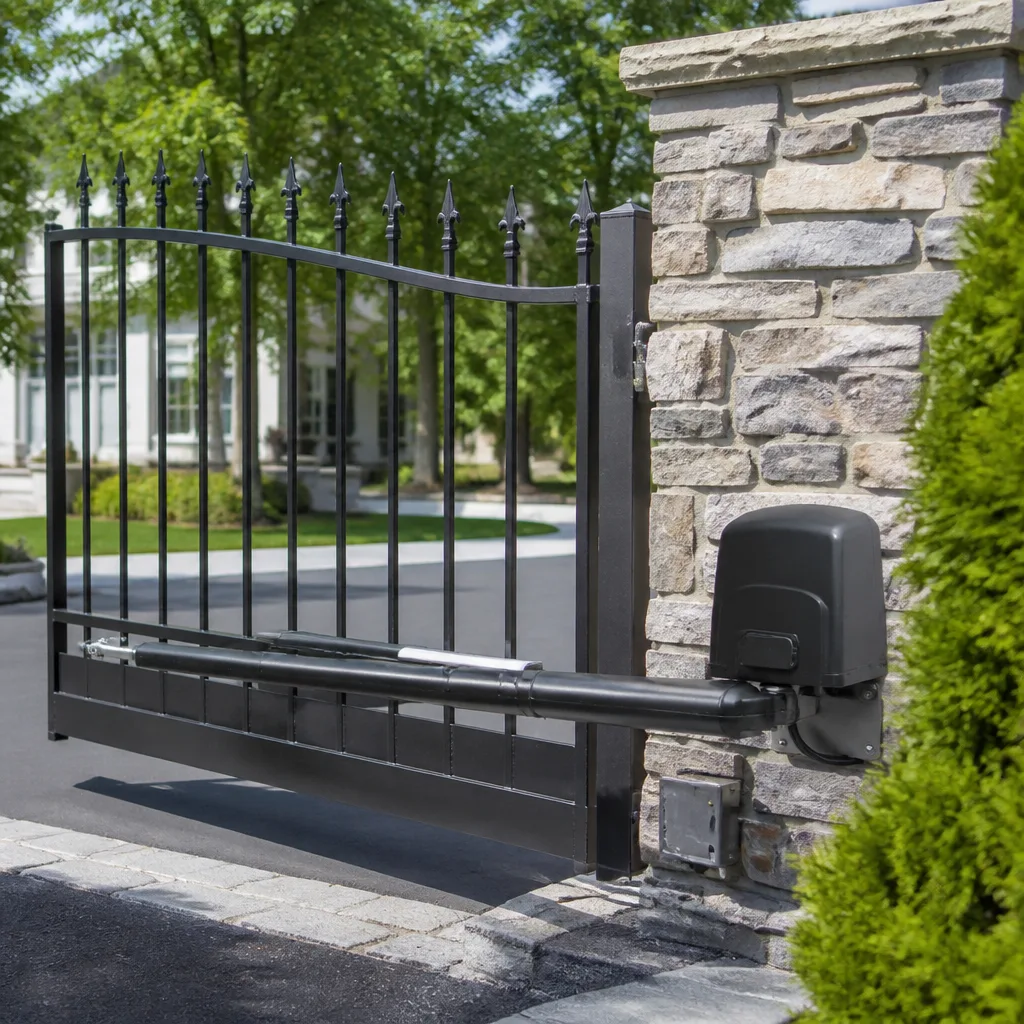
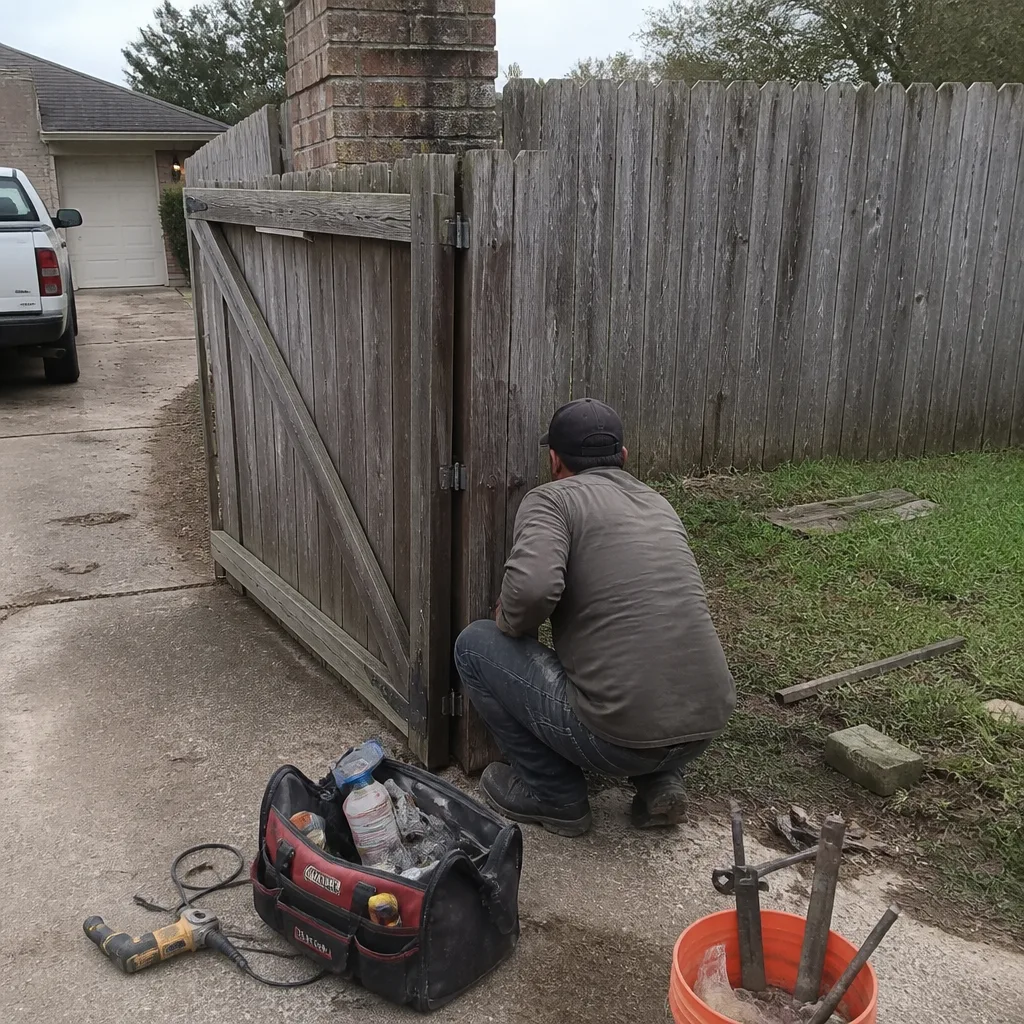 Before
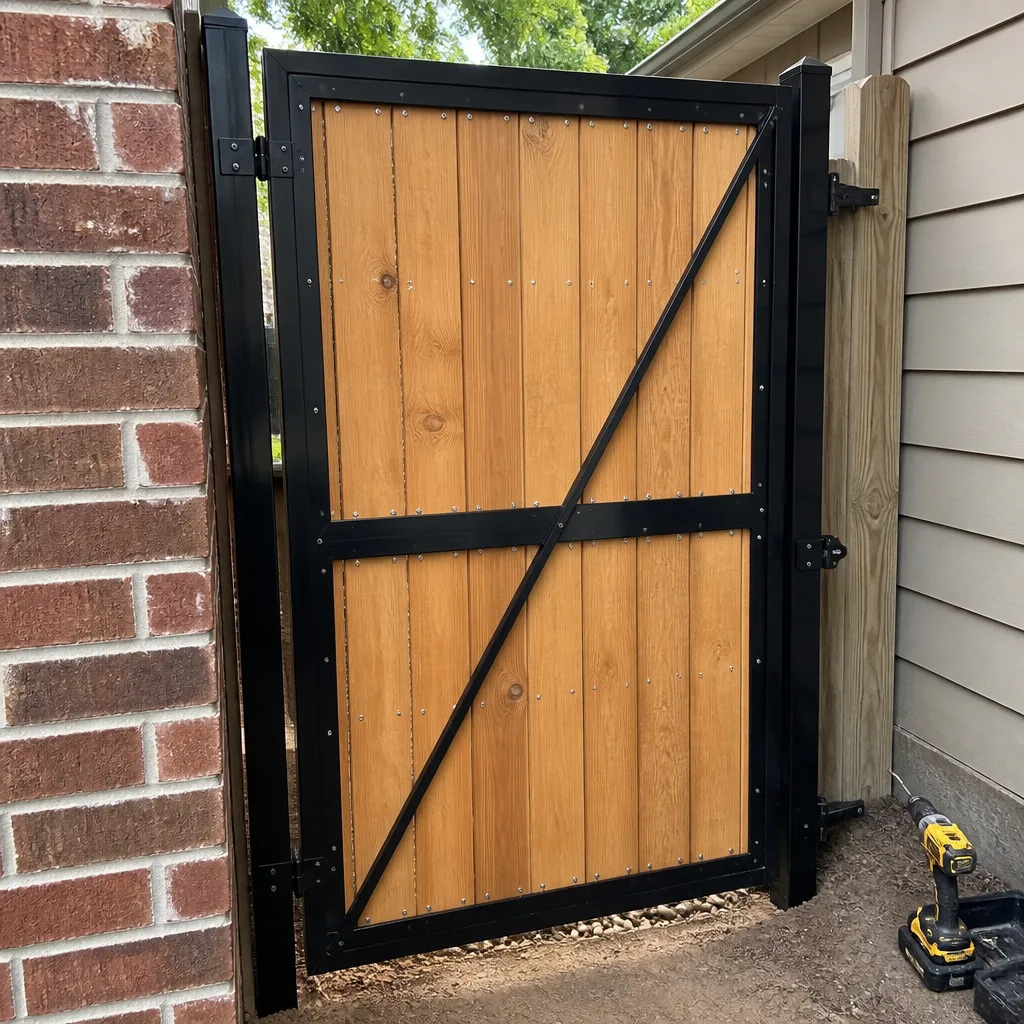 After
After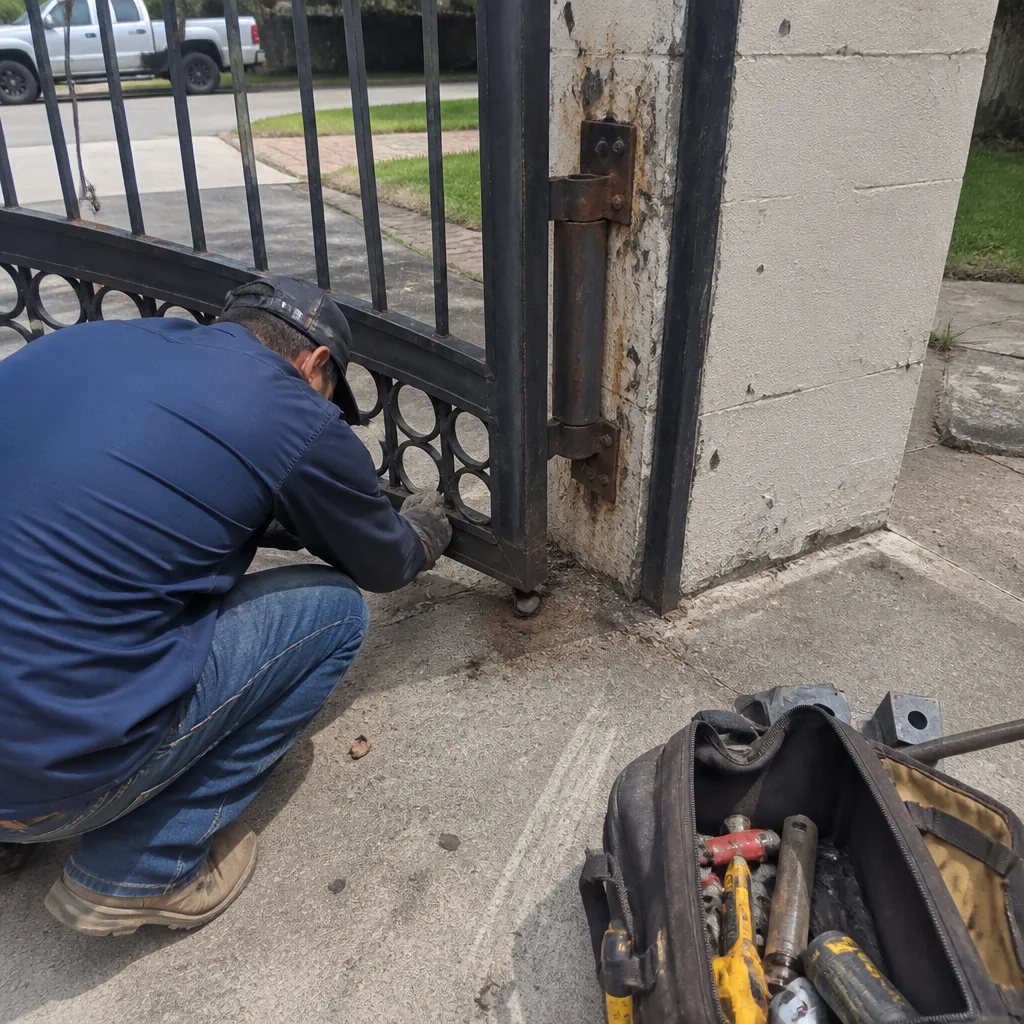 Before
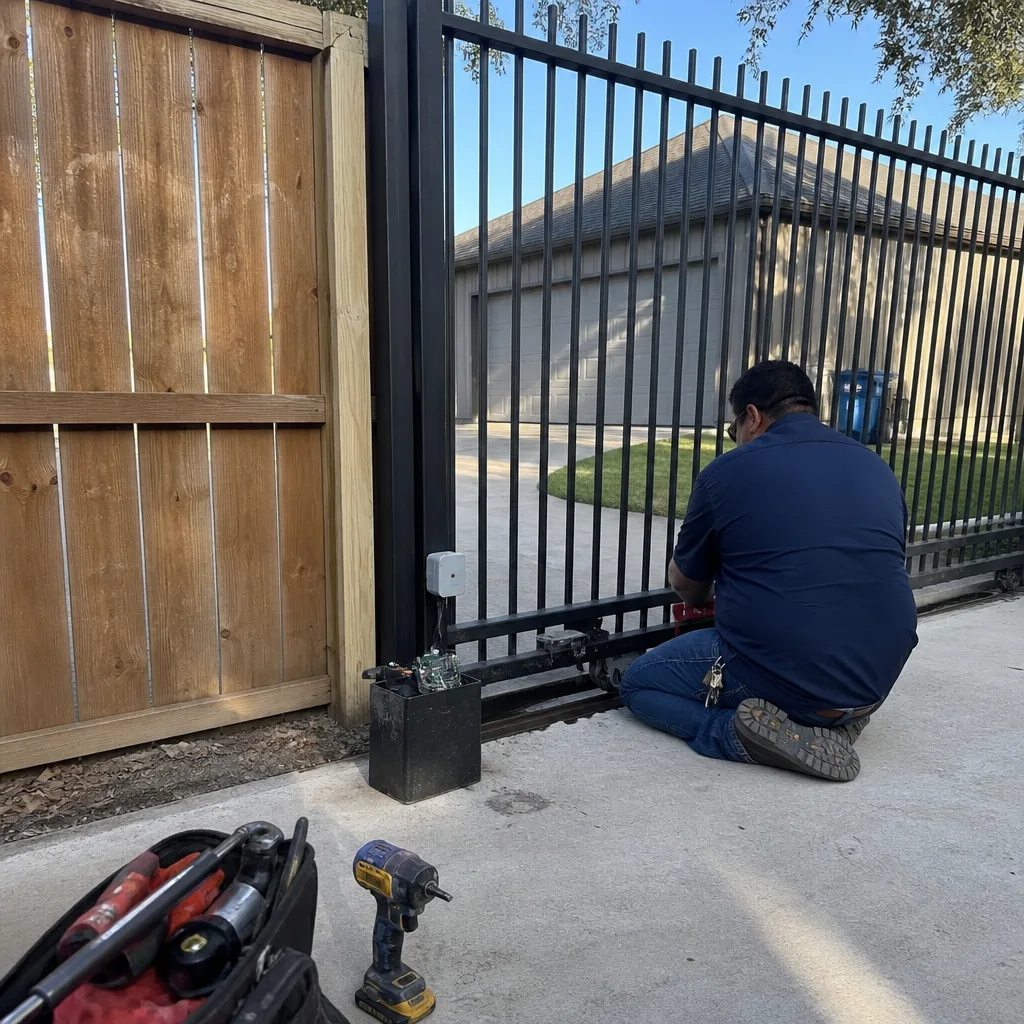 After
After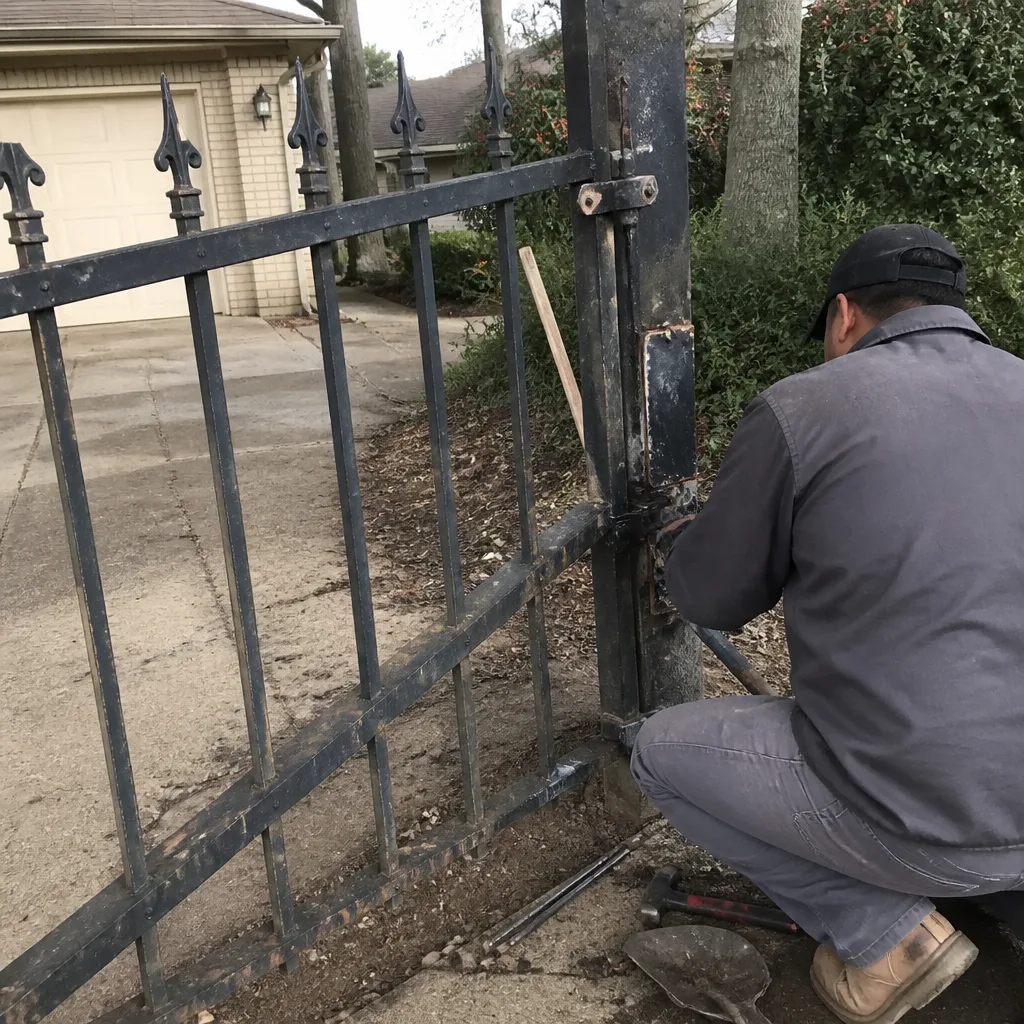 Before
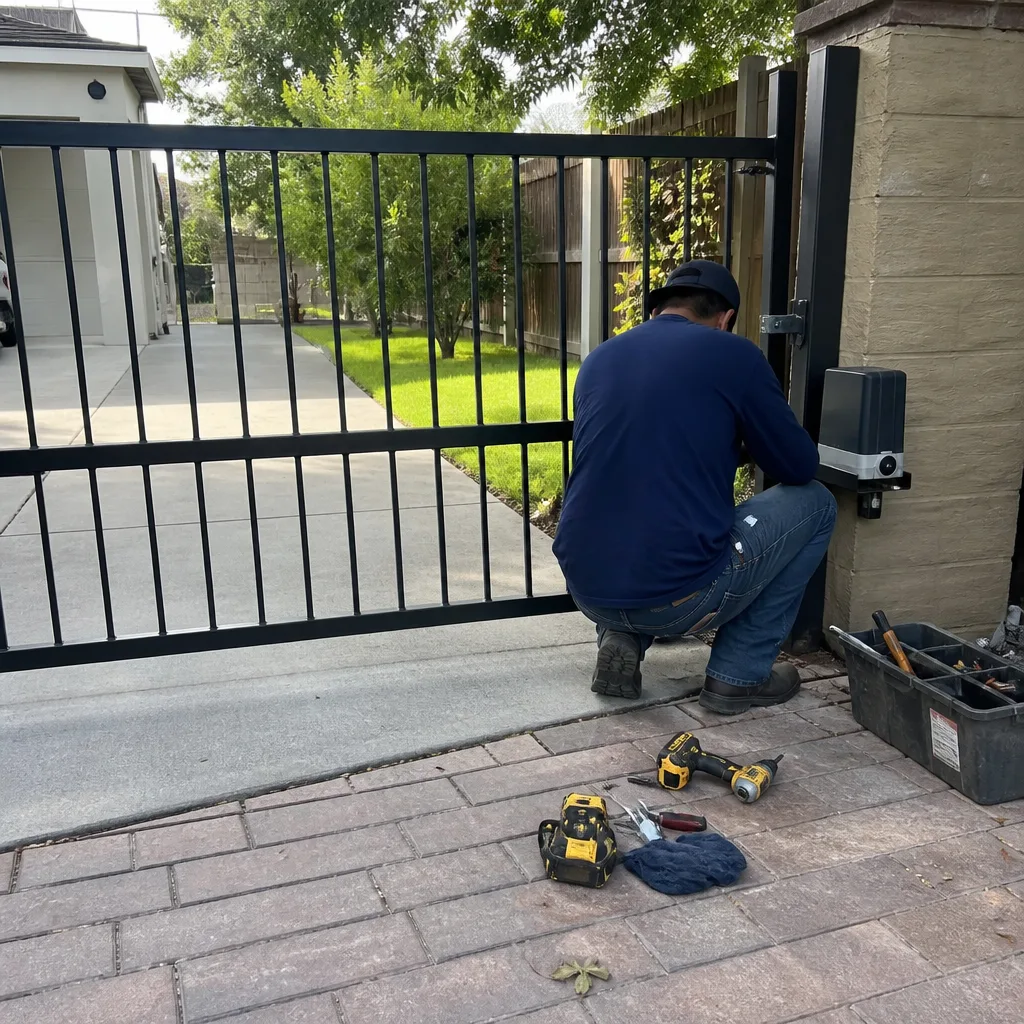 After
AfterThe Complete Guide to Gate Repair in Katy
Most gate failures in Katy look identical from the driveway. The gate won’t open, or it stops halfway, or it reverses for no reason you can see. But a gate that reverses mid-swing and a gate that won’t open at all are often two completely different problems: one is a limit-switch calibration, the other is a failed control board. They’re priced about $300 apart, and if a technician doesn’t know which one they’re looking at before touching a tool, the homeowner pays to find out. This guide teaches you how to tell the difference, what a legitimate repair visit in Katy should produce in writing, and how to avoid paying twice for the same diagnosis.
Quick Answer
Gate repair in Katy TX typically costs between $150 and $650 depending on whether the failure is mechanical, electrical, or structural. A reliable Gate Repair services call should leave you with a written scope and price before any work starts, plus a documented record of what was adjusted or replaced. Vance Gate Repair Katy has repaired 22,000+ gates since 2014, always with a written price handed over before work begins and a photo record left behind when the technician leaves.
Table of Contents
- Why Sorting by Failure Origin Beats Sorting by Gate Style
- Mechanical Failures: What Moves, Wear, and Eventually Won’t
- Electrical Failures: Control Boards, Limit Switches, and Katy Humidity
- Structural Failures: Katy Clay Soil and Hinge Post Movement
- What a Legitimate Katy Gate Repair Visit Should Leave Behind
- How to Read a Technician’s Diagnosis Without Being a Technician
- The Difference Between Restoring Function and Documenting Baseline Readings
- What Gate Repair Costs in Katy: A Straightforward Price Guide
- Common Mistakes to Avoid
- When to Call a Professional
- Frequently Asked Questions
- The Bottom Line
BeforeAfterWhy Sorting by Failure Origin Beats Sorting by Gate Style
Most gate repair guides sort problems by gate type: swing gates, slide gates, cantilever gates, barrier arm gates. For DIY vs Professional Gate Repair: The Katy Homeowner’s Decision Guide and other perspectives, see our blog. That’s how catalogs are organized, not how diagnosis works. A slide gate with a bent wheel and a swing gate with a worn hinge share the same failure origin: mechanical wear at the point of movement. A swing gate that won’t open after a thunderstorm and a slide gate that trips its breaker share the same origin: electrical fault, often moisture intrusion in Katy’s humid climate. A gate post leaning in clay soil is structural regardless of whether the gate swings or slides.
Technicians think in failure origins because the origin determines the repair approach, the parts inventory, and whether the fix is temporary or permanent. In our experience in gate repair in Katy, homeowners who understand this framework walk into the conversation better equipped. You don’t need to know how to fix the gate. You need to know whether the person quoting you $500 for a control board is addressing an electrical failure or guessing because the easy mechanical fixes didn’t survive inspection.
Adrian Vance developed this framework out of commercial access-control work starting in 2014. On commercial sites, a wrong diagnosis doesn’t just waste money; it compromises site security until someone with better notes arrives to find the real problem. We brought that discipline to residential gates: identify the origin first, document what we found, write the price, then do the work.
Mechanical Failures: What Moves, Wear, and Eventually Won’t
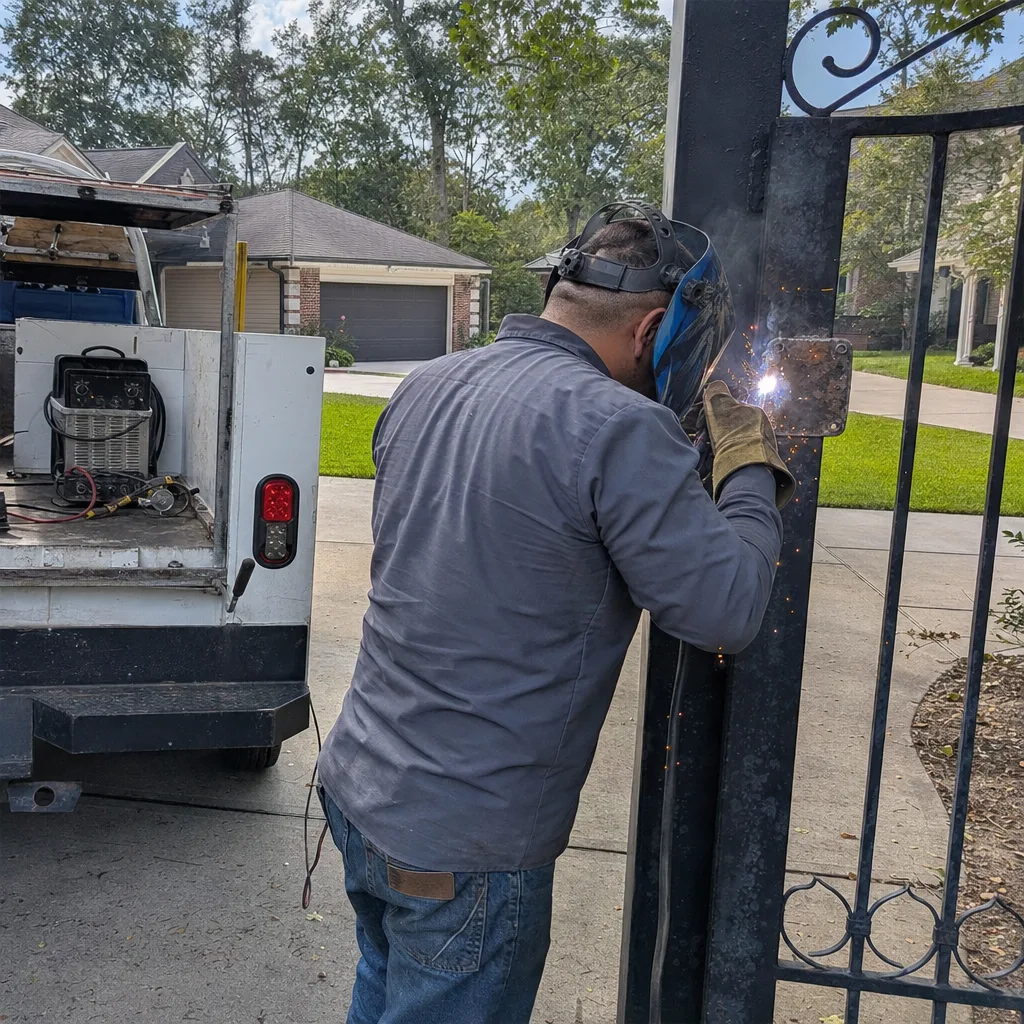
Mechanical failures are the most common gate repairs we see in Katy, and the easiest for a homeowner to understand. Something physical is worn, misaligned, or obstructed. The gate is trying to move but the mechanical path is fighting back.
Typical mechanical failures in Katy gates:
- Worn hinge bearings on swing gates - the gate sags, scrapes the ground at the latch side, and strains the motor. Symptoms get worse over months, not days.
- Wheel or roller failure on slide gates - flat spots, seized bearings, or debris packed into the track after a storm. The gate moves in jerks or not at all.
- Chain or belt slack on slide gate operators - the motor turns but the gate barely responds, or the chain slaps the cover.
- Limit switch drift - the gate travels too far and slams the stop, or stops a foot short and won’t close the gap.
- Debris in the travel path - maybe leaf litter shoved against the rail, maybe a moving stone under the gate leaf. Katy wind storms regularly drop branches across gate tracks.
Mechanical repairs are typically straightforward and priced on the lower end, but only if they’re caught early. A sagging gate that keeps operating for six months can bend the hinge posts, then you’re looking at a structural repair with a different price class. This is why we document baseline mechanical readings on every visit, part of the Haven Standard: knowing how far a hinge has worn in a week matters more than guessing how far it’s worn in a year.
Electrical Failures: Control Boards, Limit Switches, and Katy Humidity
Electrical failures start with the control board, the limit switches, the photo-eyes (the infrared beams that stop the gate if something crosses the path), and the wiring that connects them. In Katy, humidity is a real variable. We see corrosion on control board terminals inside sealed enclosures, moisture wicking through jacket cracks into low-voltage wiring, and photo-eyes misaligned after a storm does the work of nine service calls. Our average humidity through the summer routinely pushes past 70 percent, and electronics in an unvented gate box don’t love it.
Electrical failure symptoms:
- Gate won’t respond at all from any input. This points at power, the control board, or a blown fuse before it points at the motor.
- Gate opens but won’t close, or closes but won’t reopen. Often a photo-eye misalignment or a limit switch that’s lost its setting.
- Gate reverses mid-travel for no visible obstruction. Classic limit-switch calibration issue, though a failing capacitor can also do it.
- Gate works intermittently, especially after rain. Moisture in a connector or corroded board traces.
We service nine major gate-automation brands including LiftMaster, FAAC, BFT, Linear, Viking, Ghost Controls, DoorKing, Elite, and Mighty Mule. If we have to say the board is dead, we photograph the failed component, note the part number, and hand you a written price for the replacement before any order is placed. No one should be surprised by an electrical repair invoice in Katy. A documented diagnosis takes longer than a guess, but a guess costs you the second service call when the first guy’s guess turns out wrong.
Structural Failures: Katy Clay Soil and Hinge Post Movement
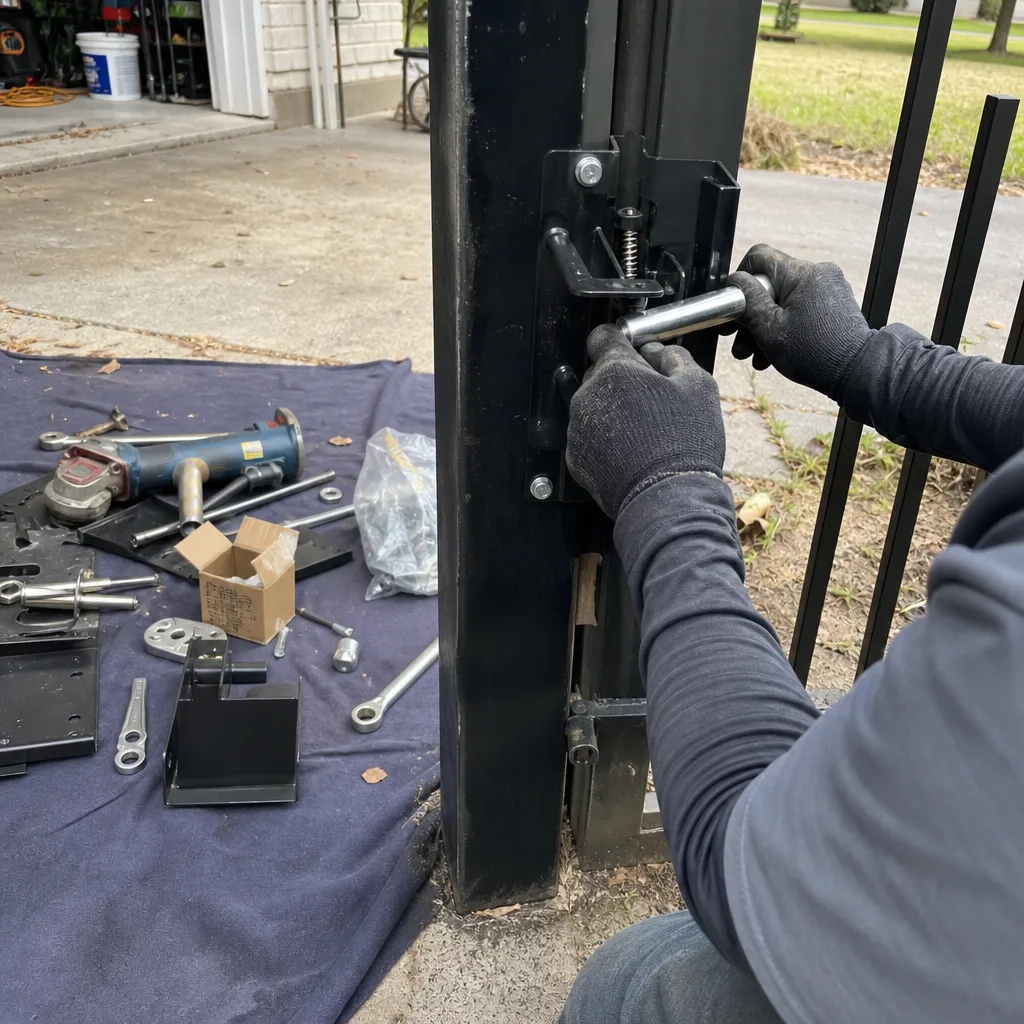
Structural failures are the ones nobody writes guides about, because the fix doesn’t fit a camera-friendly outline. Katy sits on clay soil that expands when wet and contracts during dry spells. Gate posts set shallow or set without proper concrete mass move. The gate sags. The latch plate stops lining up. The opener strains against the new geometry until something fails, usually the board, the motor, or the hinge assembly.
Structural repair isn’t glamorous, but it’s usually the real repair. A technician who replaces a control board on a gate whose post has moved 3 degrees has billed you for an electrical repair while the structural cause just waits for the next wet spring. We’ve seen it in Katy neighborhoods across the board, from Cinco Ranch to Young Ranch to five-acre lots west of 99: the gate fails in April, the electrical patch gets it through summer, and October brings the same complaint back with a different technician.
Signs of structural failure:
- Gap at the latch opens wider at the bottom than the top.
- Hinge post visibly out of plumb when you sight down it from the edge.
- Gate scrapes the driveway only after sustained rain.
- Cracked concrete collar at the base of the post.
- Gate worked fine for years, then suddenly goes out of adjustment every few weeks.
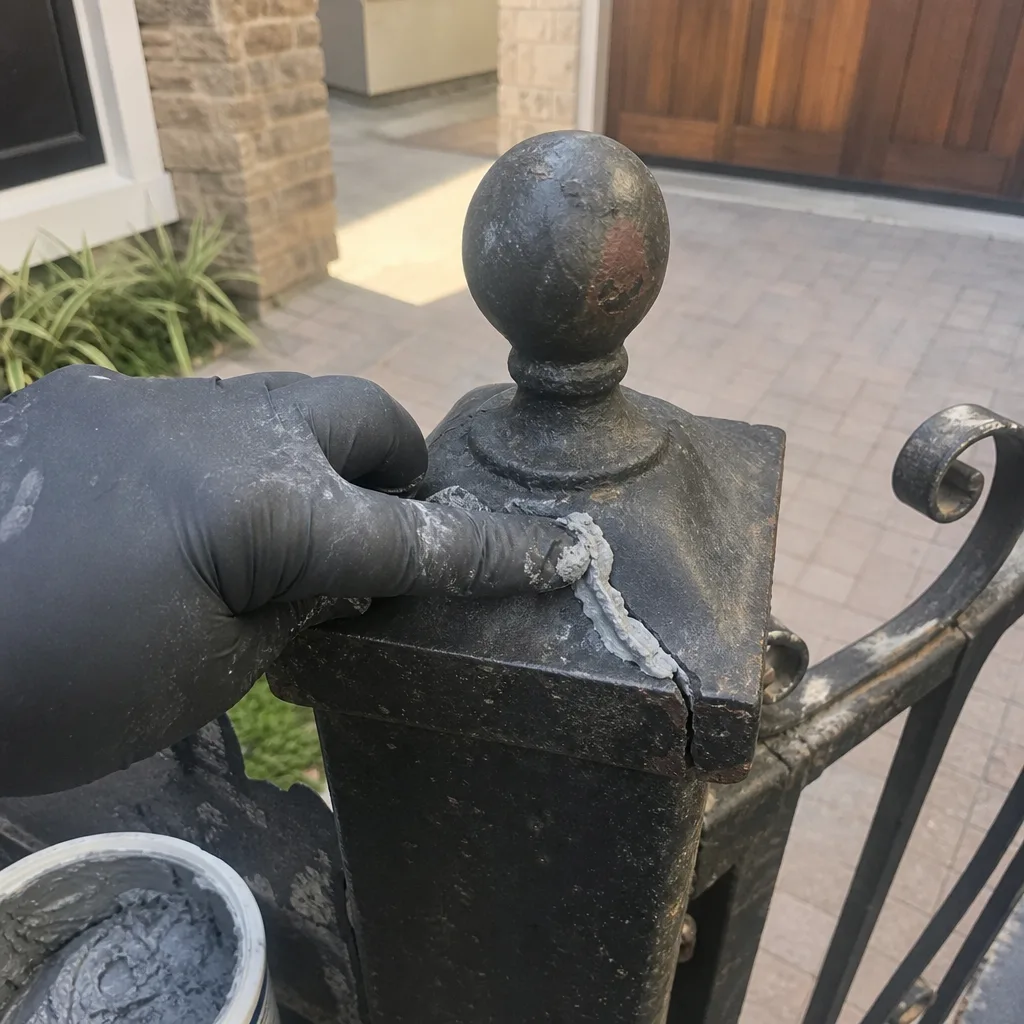
Permanent structural fix means re-setting posts or adding mass and remediation around the foundation. We photograph the post displacement, document the measurement, and write the scope. You’ll see the plumb reading before we quote the fix.
What a Legitimate Katy Gate Repair Visit Should Leave Behind
Before digging into how to read a diagnosis, let’s define what a responsible technician actually leaves with you. This is the difference between a repair you can trust and one you have to take on faith. It shouldn’t be verbal. A gate is mechanical, electrical, and structural; all three have measurable states, and measurements can be written down.
A legitimate Katy gate repair visit should produce:
- A written scope naming the failure origin - mechanical, electrical, structural - and the specific component involved.
- A written price, in dollars, before any work starts. Not a range, not a “we’ll see how it goes.” A firm number.
- A documented record of what was found: the limit-switch reading, the hinge wear measurement, the board voltage test, the photo-eye alignment check.
- A photographic record of what was adjusted or replaced, tied to the written scope.
- Before-and-after photos, not just a photo of the finished gate.
- A part number for anything replaced, so future troubleshooting doesn’t start from scratch.
We’ve operated under the Haven Standard since 2014, and Clause 1 is simple: have it in writing. Clause 4 requires evidence on every job. Every visitor from Vance Gate Repair Katy leaves with a photo log of what was found, what was set, and what was installed. That documentation habit came from commercial access-control, where a missing wiring diagram means the next technician burns six hours rediscovering what someone else already knew. It costs us nothing to hand you the evidence. It costs you plenty when the last technician didn’t.
How to Read a Technician’s Diagnosis Without Being a Technician
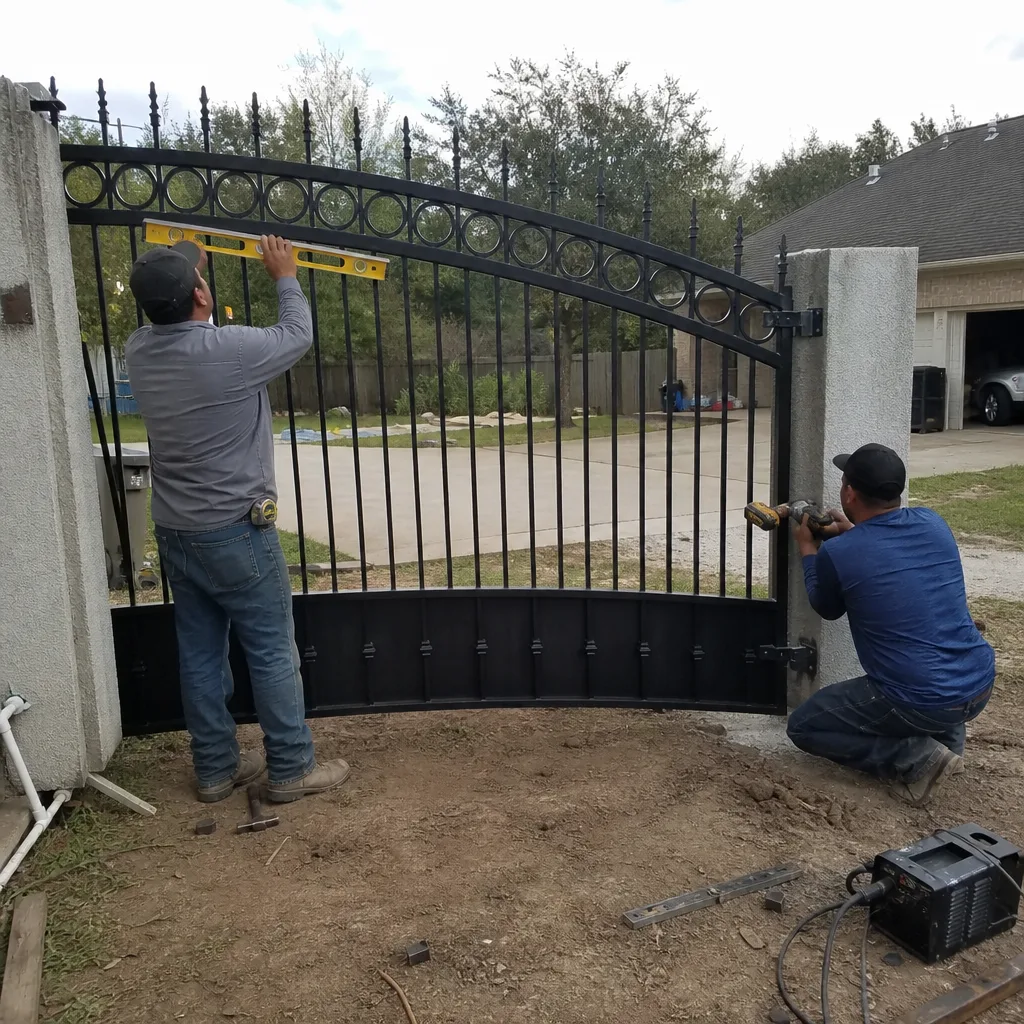
When the technician tells you what’s wrong, you should be able to tell whether you’re hearing a diagnosis or a guess. A diagnosis names the origin, the component, the reading, and the specific fix. A guess names the problem in vague terms and jumps to the price.
Compare these two statements:
- “Your gate’s not working because the motor’s burned out. We’ll need to replace it. It’ll run about $700.”
- “Your gate’s not working because the limit switch is set 12 degrees past travel. The motor is fine. I measured the voltage at the board and it’s within spec. The fix is a calibration and a new switch, and it’s $220 written.”
The first statement is a guess, and the $700 is the cost of guessing with your money. The second is a diagnosis: origin (electrical), component (limit switch), reading (12 degrees past travel), specific fix (calibration and switch), price ($220). If a technician can’t tell you the reading that told them what’s broken, they haven’t done the diagnostic work. They’ve just priced a likely part.
This isn’t about making the technician feel interrogated. It’s about the fact that a gate is a system. When one part of the system fails, other parts compensate. A gate that’s been slamming for six months because the limit switch drifted may also have a cracked weld from the repeated impact. A real diagnosed scope accounts for both. A guess fixes the switch and ignores the weld.
We see this pattern in Vance Gate Repair Katy home service calls regularly: a homeowner was told the board was dead, we find a misaligned photo-eye that’s been sending a false obstruction signal. The gate works after an alignment and we write the price we quoted. No surprise invoice at the end.
The Difference Between Restoring Function and Documenting Baseline Readings
A repair that restores function gets the gate moving again. A repair that documents baseline readings ensures the next problem costs less to find. Most people only receive the first one, because baseline documentation takes effort and years of habit.
Here’s the practical difference:
- Restoring function: The technician adjusts the limit switch, the gate works, the invoice is paid, and life moves on.
- Documenting baseline: The technician measures the limit-switch setting, records the new position, photographs the control board, notes the voltage readings, and leaves a written record. Six months later, when the gate drifts again, the next technician starts from the documented baseline instead of re-diagnosing from zero.
For a homeowner, baseline documentation means the $180 diagnosis you paid for last year isn’t lost. The next technician doesn’t need to re-discover what was already known. The gate’s service history becomes a record, not a memory. For us, it’s the commercial habit that carried over when Adrian Vance started applying access-control documentation standards to residential gates. Commercial sites keep records because security depends on it. Your driveway gate is the same concept, at a smaller scale.
Every Vance Gate Repair visit in Katy ends with that record in your hands and filed in the job history. If the gate fails again within our 365-Day Done Right Promise, the original record tells us exactly what changed.
What Gate Repair Costs in Katy: A Straightforward Price Guide
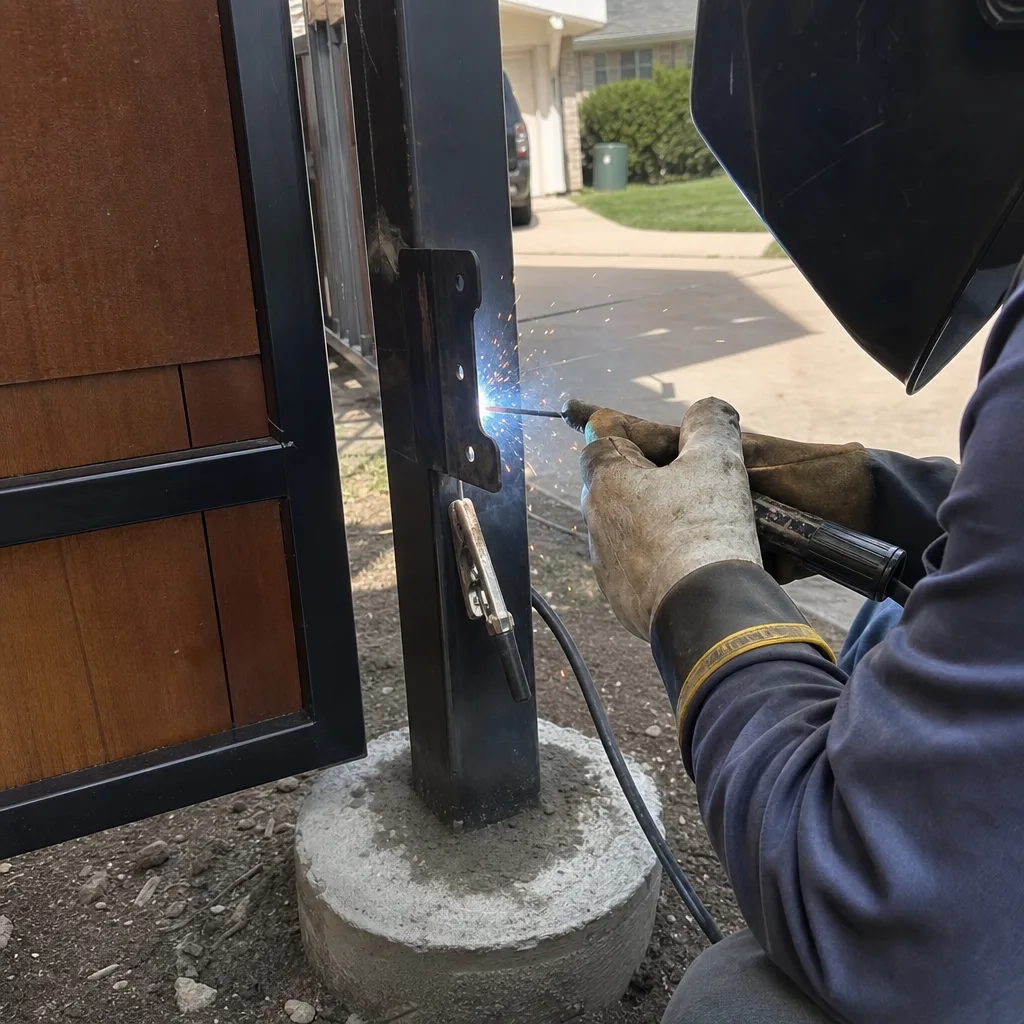
We say “straightforward” because the range is genuinely wide, and a guide that pretends otherwise is doing you a disservice. The price depends on the failure origin, the component, and whether the parts are still in production. Here’s what we see across gate installation in Katy and repair jobs over the last several years.
Typical gate repair price ranges in Katy:
| Repair Type | Typical Price Range | Notes |
|---|---|---|
| Photo-eye alignment or cleaning | $85-$150 | Includes re-aiming and verification. |
| Limit switch calibration | $120-$220 | Prices vary by brand and whether a switch replacement is needed. |
| Limit switch replacement | $180-$300 | Includes the part, installation, and re-calibration. |
| Hinge replacement (single gate) | $200-$450 | Depends on gate weight and whether the post is still sound. |
| Control board replacement | $350-$650 | Brand-dependent. Some Linear and Viking boards are under $200 wholesale plus labor; DoorKing and FAAC boards run higher. |
| Swing gate motor replacement | $450-$900 | Depends on the brand and whether the arm bracket is intact. |
| Slide gate wheel or roller replacement | $250-$500 | Includes freeing seized hardware and checking the track. |
| Post reset (structural) | $600-$1,400 | Katy clay soil typically requires deeper footings and more concrete mass. |
These are the prices we quote and write down before the work starts. A written price means exactly that: the number you see is the number you pay. If the scope changes mid-job, we stop and write a new price before doing the new work. No one should ever get to the end of a gate repair in Katy with an invoice that bears no relationship to the estimate.
Everything we install or repair falls under the 365-Day Done Right Promise. If it’s not right within a year, we make it right at no additional charge.
Common Mistakes to Avoid
- Replacing the motor before checking the limit switch. We see this constantly - a tech declares the motor dead, swaps it, returns a week later because the real culprit was a drifted limit switch. The motor was fine. The switch was $180.
- Ignoring post movement because the gate still operates. In Katy’s clay soil, a moving post is a countdown. Every month you wait adds stress to the hinges, the motor, and the board.
- Accepting a verbal price. If it’s not written down before the work starts, you have no way to hold anyone to it. Clause 1 of our Haven Standard exists for exactly this reason.
- Using a pressure washer on the control box or around the photo-eyes. Water intrusion kills boards and corrodes connectors. We see it in Katy every spring when homeowners prep their driveways.
- Letting a gate run with a broken safety edge or misaligned photo-eye. The gate may still function, but it’s a liability risk. Repair it immediately.
- DIY spring or cable replacement on a large swing or slide gate. Tensioned components under load can cause serious injury. If you can see the spring is broken, leave it and call a professional.
- Paying for a “free estimate” that produces no documentation. A free estimate that isn’t written down is just a conversation. Get it in writing.
When to Call a Professional
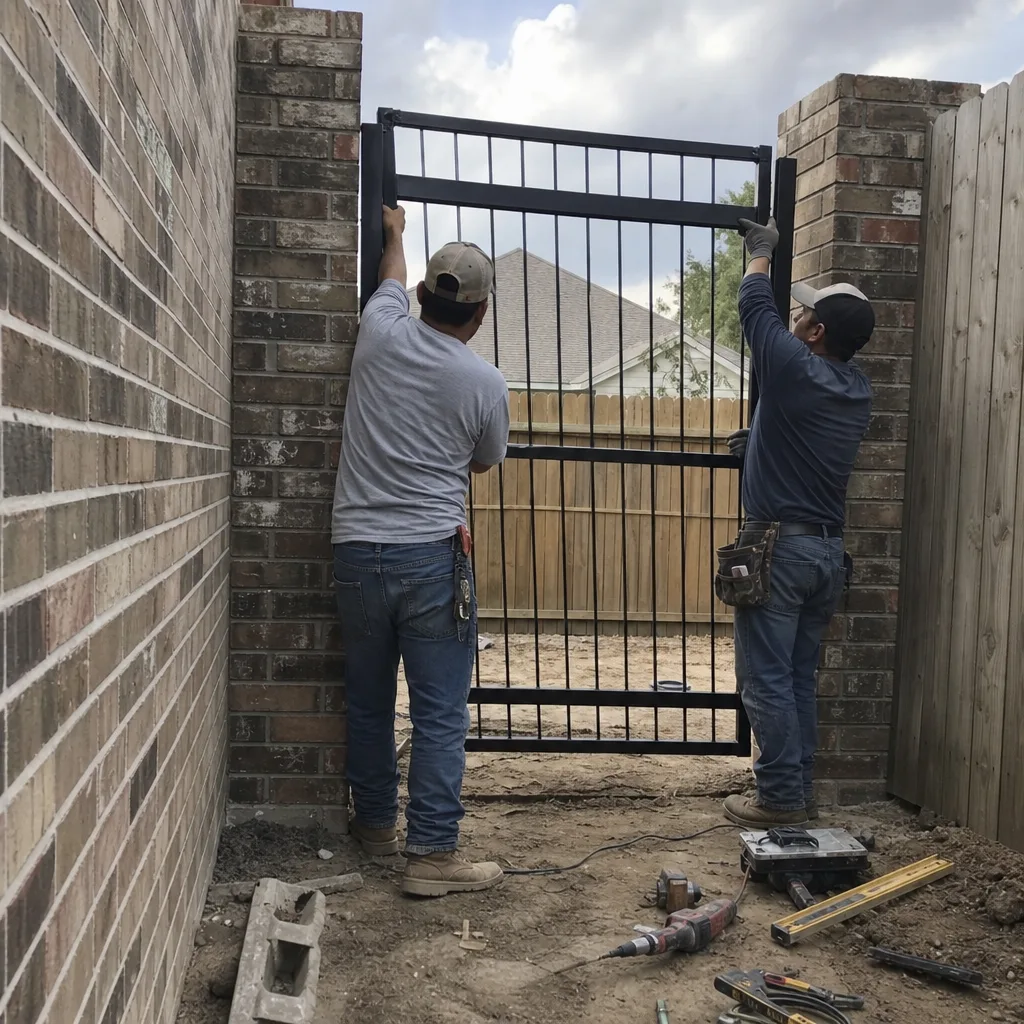
Call a professional when the gate stops responding, moves erratically, scrapes the ground, or won’t stay in adjustment. Call today if the gate fails to close and you can’t secure the property; an open driveway gate is an invitation. Call today if a safety edge or photo-eye is damaged. Call today if you smell burning near the operator or hear grinding from the motor. These are not diagnostics you want to run by watching a video.
Vance Gate Repair Katy offers free estimates in Katy. A live person answers the phone 24/7 at (346) 818-3319. You’ll get a written price before any work starts, and a documented record when the technician leaves.
Frequently Asked Questions
Most gate repairs in Katy run between $150 and $650 depending on the failure origin. Simple adjustments like photo-eye alignment or limit-switch calibration run $85 to $300; control board or motor replacements run $350 to $900. Every Vance Gate Repair price is written and handed to you before the work begins. Call (346) 818-3319 for a free estimate.
Same-day gate repair in Katy is available for most mechanical and electrical issues. We dispatch background-checked, uniformed technicians from our Katy location, and a live person answers the phone 24 hours a day, seven days a week. Call (346) 818-3319 and tell us the symptom; we’ll tell you what we can do today.
A gate that reverses mid-swing is usually an electrical failure: the limit switch is set past the proper travel point, or the photo-eye is seeing an obstruction that isn’t there. In Katy’s humid climate, corrosion on board terminals can also cause false obstruction signals. The fix is typically a calibration and switch adjustment, not a motor replacement. We’ll write the diagnosis and price before any work starts.
We service nine major gate-automation brands including Linear, Viking, Ghost Controls, DoorKing, and more. We don’t steer you toward a replacement because we’re not comfortable with the brand you have. We repair what’s on your property; if a replacement is genuinely less expensive than continued repair, we’ll show you the numbers on paper.
Yes. Katy’s clay soil expands and contracts with moisture, which means posts shift and gates sag. Structural repairs include re-setting hinge posts in proper concrete mass, correcting plumb, and restoring the gate to correct operating geometry. We measure and document the displacement before quoting the fix. The repair is priced in writing before we dig.
We leave you with a written scope and a written price before work starts, and a documented photo record when we’re done. The record includes what was found, what was adjusted, and what was installed, with part numbers for anything replaced. That’s Clause 1 and Clause 4 of the Haven Standard, and it’s on every job we do. For more guides & resources, visit our blog, or call (346) 818-3319 to schedule a repair and see what a documented visit looks like.
The Bottom Line
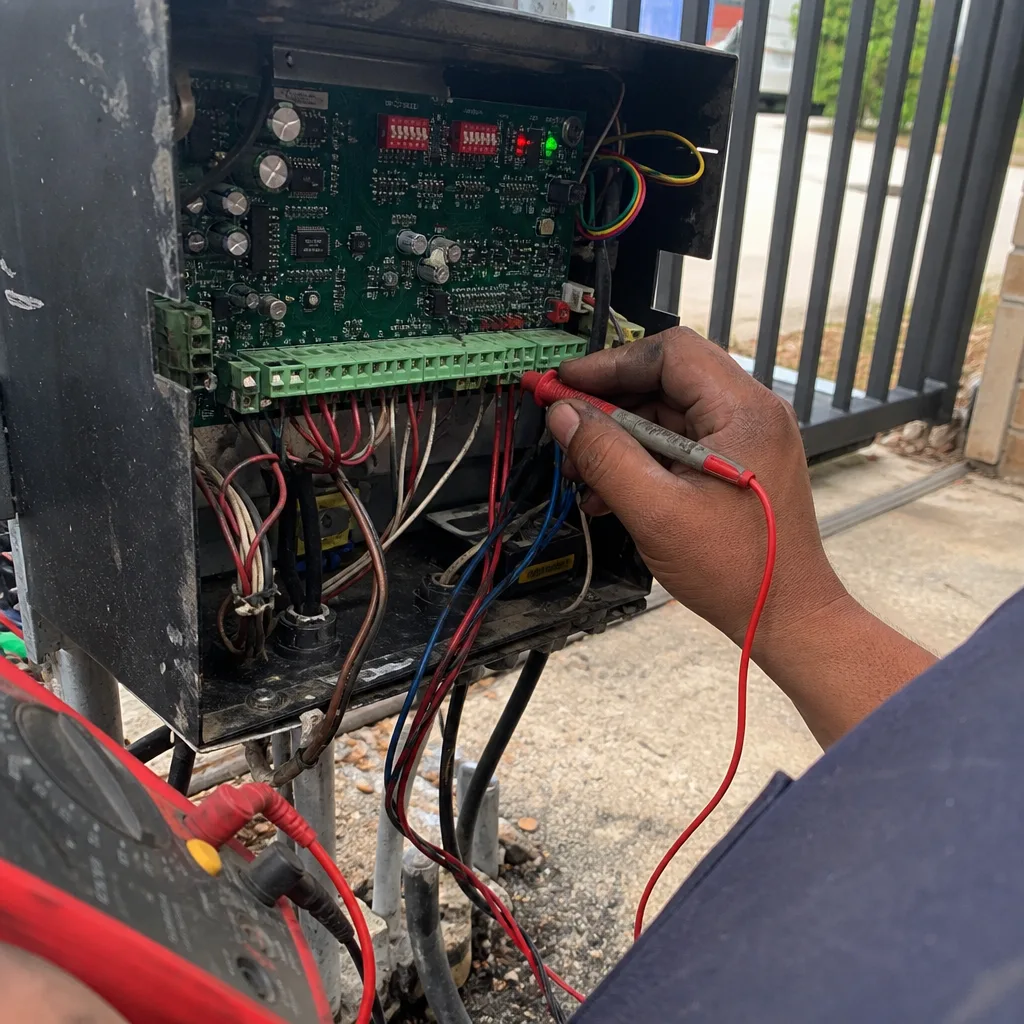
Gate repair in Katy isn’t about swapping parts until the gate works again. It’s about identifying the failure origin - mechanical, electrical, or structural - and fixing the actual cause, not the symptom. A gate that reverses mid-swing is a different problem from a gate that won’t open at all, even if both look identical from the driveway. What separates a legitimate repair from a guess is documentation: a written scope, a written price, and a record of what was found. That’s what our gate motor and opener services in Katy are built around, and that’s what we leave behind on every visit, including gate installations in Katy when new hardware is required. When you’re ready, we’ll write it all down and hand it to you before we pick up a tool.
Written by Adrian Vance, Owner at Vance Gate Repair Katy, serving Katy since 2014.